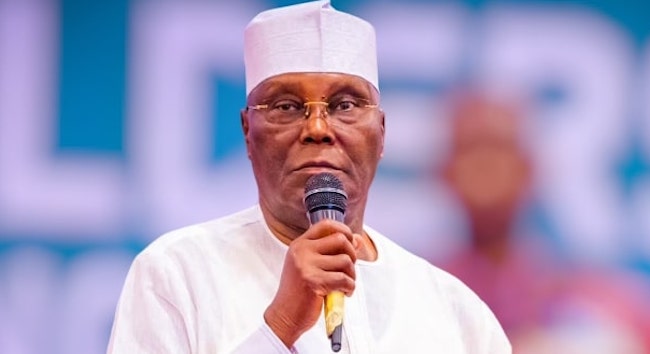
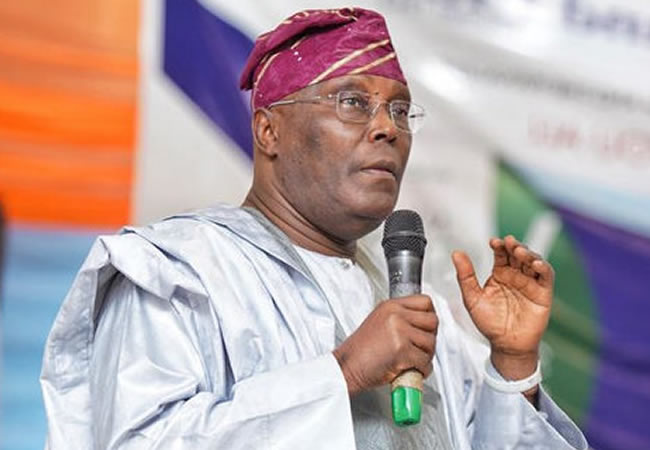
 Former Vice President Atiku Abubakar has formally severed ties with the Peoples Democratic Party (PDP), marking a dramatic climax to his tumultuous three-decade relationship with the opposition powerhouse. The development comes as the culmination of months of simmering discontent from the six-time presidential aspirant, whose ambitions have repeatedly been thwarted by both electoral defeats and internal party crises.
Atiku’s exit represents more than just another defection—it is the implosion of a political marriage that once defined Nigerian democracy. Since first contesting the presidency in 1993 under the Social Democratic Party (SDP), the Wazirin Adamawa has been a perpetual contender, switching between the PDP, Action Congress (AC), and even the ruling All Progressives Congress (APC) in his relentless pursuit of Aso Rock.
His 2019 and 2023 bids under the PDP banner were widely seen as his best shots, yet both campaigns ended in bitter disappointment—first against Muhammadu Buhari and then Bola Tinubu. But while electoral losses are part of politics, sources close to Atiku say his breaking point was the PDP’s post-2023 inertia.
Multiple insiders confirm that Atiku had grown weary of the PDP’s failure to reorganize after its 2023 defeat. A senior aide, speaking on condition of anonymity, revealed: “He expected a total overhaul—a new leadership, a clear opposition strategy, and a roadmap for 2027. Instead, the party remained fractured, with the same old power struggles playing out.”
The zoning controversy, which saw the PDP oscillate between regional interests, further alienated Atiku. Many believed the party’s refusal to zone its 2027 ticket to the South-East was a deliberate move to keep his hopes alive, but insiders say Atiku saw it as another sign of indecisiveness.
The political veteran has yet to announce his next move, but speculation is rife:
-
ADC Option: Following Dele Momodu’s footsteps into the African Democratic Congress (ADC), which is emerging as a coalition hub for opposition forces.
-
Third Force Alliance: Positioning himself as a unifying figure for a new mega-party ahead of 2027.
-
Retirement from Politics: A less likely but possible exit from active politicking, focusing instead on statesmanship and business.
Atiku’s departure is the latest—and arguably most damaging—blow to the PDP, which has been hemorrhaging key members. Just weeks ago, media mogul Dele Momodu also quit, declaring the party a “carcass.” Analysts warn that without urgent restructuring, the PDP risks fading into irrelevance before 2027.
Atiku’s political career has been defined by comebacks. After losing the 2007 election, he left the PDP for the AC, only to return years later. But at 78, time may no longer be on his side. If this is truly the end of his presidential quest, it marks the closing chapter of one of Nigeria’s most persistent political sagas.