 In a decisive move that has temporarily staved off a significant disruption to Nigeria’s critical oil and gas sector, the National Industrial Court sitting in Abuja has wielded its judicial authority to maintain a fragile peace.
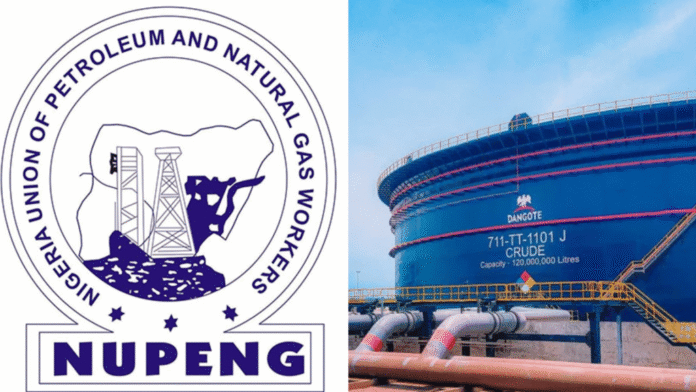
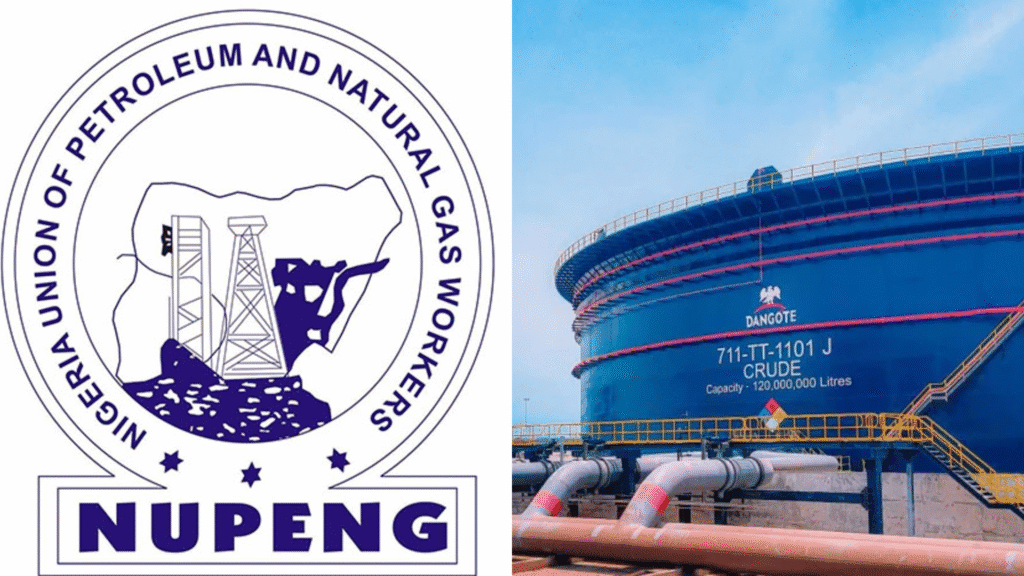
Presiding Judge, Justice E.D. Subilim, delivered a ruling on Wednesday that grants an interim injunction, effectively putting a forceful halt to the planned industrial action threatened by the Nigeria Union of Petroleum and Natural Gas Workers (NUPENG) and the Direct Trucking Company Drivers Association.
This legal intervention, valid for an initial period of seven days, serves as a cooling-off period, preventing the unions from embarking on a strike, coercing other drivers to participate, or engaging in any acts of disruption such as blocking access roads to key energy installations.
The ruling came swiftly in response to an urgent motion ex parte filed by the esteemed counsel for Dangote Refinery, George Ibrahim, a Senior Advocate of Nigeria (SAN). Ibrahim passionately argued before the court that the specter of a strike posed an imminent threat of “irreparable harm” to the colossal operations of the Dangote Refinery, as well as to affiliates MRS Oil Nigeria Plc and MRS Oil and Gas Company Ltd.
His submissions painted a picture of a national supply chain on the brink, compelling the court to act to prevent a paralysis that would resonate far beyond the refinery’s gates, potentially affecting the wider public.
Justice Subilim, in a meticulously considered ruling, found compelling merit in the applicant’s fears. The judge concurred that the matter unveiled “a serious issue to be tried” and that the delicate balance of convenience tilted overwhelmingly in favor of safeguarding the refinery’s operations for the greater economic good.
The court’s orders are explicit and far-reaching: NUPENG is restrained from initiating or compelling the Drivers Association to participate in any strike aimed at crippling refinery operations. Conversely, the Drivers Association itself is barred from joining or continuing with any planned industrial action. Most critically, both entities are mandated to ensure that the vital petroleum trucking services continue unabated, maintaining a steady supply of products until the substantive motion can be heard on notice.
Underpinning the legal argument was a foundational principle of Nigerian labour law. Ibrahim contended that the planned strike would contravene Section 40 of the 1999 Constitution and Section 12(4) of the Trade Union Act, emphasizing the court’s rightful jurisdiction to intervene in such disputes to protect economic stability and the rights of all parties.
In a show of good faith, the refinery, through an affidavit sworn by its Group General Manager for Government and Strategic Relations, Ahmed Hashem, pledged to pay damages should it be later established that this interim injunction was wrongly issued.
With the court’s vacation jurisdiction set to expire on September 23, Justice Subilim has ensured the matter’s continuity by ordering that the case file be reassigned by the President of the National Industrial Court to another judge who will hear the substantive suit, setting the stage for a fuller legal confrontation.
In a clarifying statement issued amidst this legal tumult, the Dangote Petroleum Refinery sought to frame its position not as an opponent to organized labour but as a defender of choice. The refinery asserted its full recognition of workers’ rights to join or, just as importantly, to abstain from joining unions, a principle known as voluntarism.
“While we are committed to protecting the rights of workers who choose to join unions, we are equally obliged to safeguard the rights of those who opt not to,” the company stated, urging all parties to respect these dual rights to preserve peace in the volatile oil and gas industry. Furthermore, the company firmly rejected any allegations of seeking a monopoly, pointing to the over thirty refinery licenses issued to other private operators as evidence of a competitive and open market.
Thus, the gavel has fallen, not as a final judgment, but as a crucial pause button. For the next seven days, the trucks will continue to roll, the refinery will continue to hum, and the delicate negotiations between capital and labour will continue under the watchful eye of the judiciary, all under the shadow of a larger legal battle yet to come.