


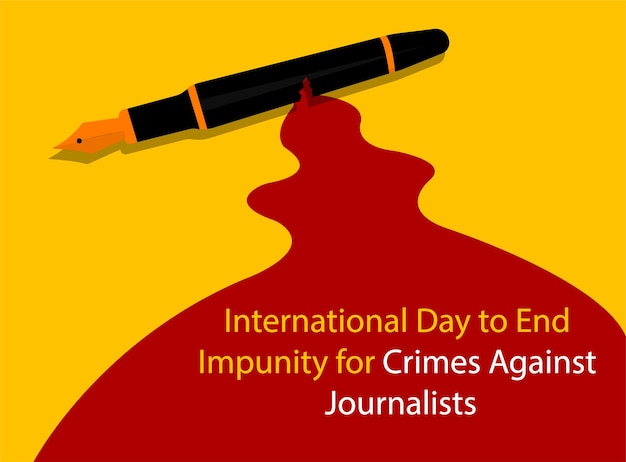
 On the occasion of the International Day to End Impunity for Crimes Against Journalists 2025, the Committee to Protect Journalists (CPJ) is issuing a stark declaration: the global systems designed to protect press freedom are failing.
Following the deadliest three-year period for journalists and media workers since CPJ began recording data, the organization is calling for a radical reform of the mechanisms that investigate journalist killings and hold perpetrators accountable. Despite decades of advocacy, impunity remains the norm, not the exception, compelling CPJ to fundamentally overhaul its own approach to confront this crisis with renewed force and strategic innovation.
The pervasive culture of impunity is more than a statistic; it is a chilling mechanism that corrodes democracy.
When killers are allowed to walk free for taking a journalist’s life, they ignite a chain reaction of fear that silences other reporters, devastates families with unresolved grief, and deliberately robs the public of the vital information needed to combat crime, corruption, and government abuse.
This failure to deliver justice sends a clear and dangerous message to perpetrators worldwide: you can target journalists with impunity.
In response, CPJ is pivoting from traditional methods to a more aggressive, multi-pronged strategy designed to shatter this cycle of violence and silence.
This new, action-oriented framework prioritizes four key pillars of accountability:
1. Establishing an International Investigative Task Force: CPJ is advocating for the creation of a standing, independent international task force dedicated exclusively to investigating violent crimes against journalists, ensuring that no case is forgotten or sidelined by national inaction.
2. Pursuing Justice in Key Cases: The organization will intensify its focus on strategic litigation and advocacy for specific, emblematic cases to break the logjam of impunity and set legal precedents.
3. Increasing Corporate Accountability: Recognizing that companies often play a key role in enabling attacks—through surveillance technology, insecure digital platforms, or commercial relationships—CPJ will ramp up pressure on the private sector to uphold human rights.
4. Leveraging Sanctions and Incentives: CPJ will champion the increased use of targeted sanctions, such as the Magnitsky Act, against individuals implicated in crimes against journalists, while also promoting incentives for governments that demonstrate a commitment to protecting press freedom.
This comprehensive shift marks a critical juncture in the global fight for press freedom, moving beyond condemnation to the active, strategic pursuit of justice for every journalist targeted for telling the truth.