

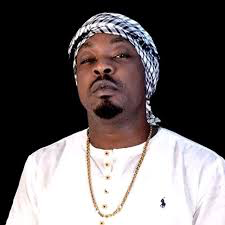
 Veteran Nigerian rapper and activist Eedris Abdulkareem finds himself confronting a new frontier of silencing: the abrupt disappearance of his primary social media platforms.
The artist announced on Sunday that his official Facebook and Instagram pages have been taken down, a move he directly links to the recent release of his politically charged new track, “Open Letter to Donald Trump.”
This development has effectively severed a critical line of communication between the firebrand musician and his vast audience, raising urgent questions about artistic freedom and digital platform governance in Nigeria’s heated political climate.
Abdulkareem revealed that he lost access to both accounts shortly after the song’s release under his Lakreem Entertainment imprint, with independent checks confirming the pages are no longer accessible.
As of now, the rapper—renowned for his unflinching commentary on politics and governance—has not received clarification from Meta, the parent company of both platforms, regarding the duration of the suspension or the specific reasons for the action.
This lack of transparency has fueled speculation and concern among his supporters, who see a direct correlation between the song’s content and the digital blackout.
The track in question, “Open Letter to Donald Trump,” employs a clever rhetorical device, using the figure of the U.S. president as a pretext to launch a searing critique of Nigeria’s own leadership.
The song lambasts systemic corruption, pervasive insecurity, and the stark disconnect between the opulent lives of the political elite and the acute hardship faced by ordinary citizens. With pointed lyrics highlighting the rise in kidnappings, killings, and general lawlessness, Abdulkareem aims to project Nigeria’s internal crises onto a global stage, hoping to attract international scrutiny.
This method continues the tradition established by his iconic 2004 hit, “Jaga Jaga,” which was famously banned under President Olusegun Obasanjo’s administration for its raw depiction of national decay.
This incident is not an isolated one in Abdulkareem’s career. It forms a pattern of institutional pushback against his music. Most recently, in April 2025, the National Broadcasting Commission (NBC) issued an order banning radio and TV stations from airing his song “Tell Your Papa,” deeming it in violation of broadcast codes.
The sequential nature of these actions—from traditional media bans to social media de-platforming—paints a picture of an artist perpetually navigating the narrow space allotted for dissent.
The disappearance of his social media accounts represents more than just a technical glitch; it is a modern-day silencing, cutting off a vital megaphone for a voice that has, for over two decades, dared to hold power to account through the potent combination of rhythm and rhyme.
The silence now surrounding his pages speaks volumes about the ongoing tensions between artistic expression and political comfort in Africa’s most populous nation.