

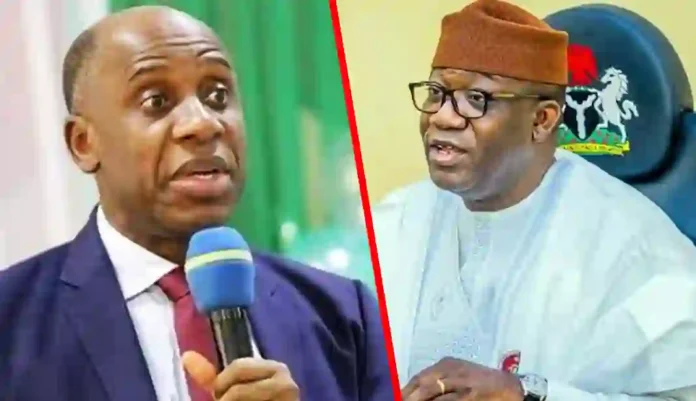
The political atmosphere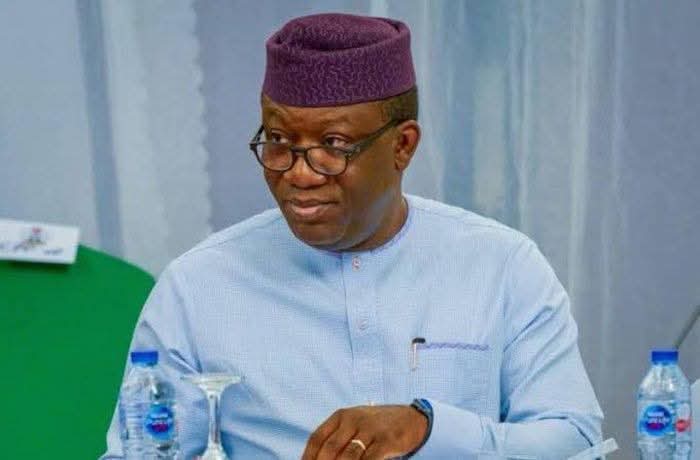 crackled with tension as Dr. Kayode Fayemi’s media office issued a stern rebuttal to what they term “manufactured controversy” – the circulating narrative that the former Ekiti governor had secretly co-founded an African Democratic Congress (ADC) coalition with ex-Rivers State governor Rotimi Amaechi. In a statement dripping with both diplomacy and defiance, Mallam Ahmad Sajoh, head of Fayemi’s media office, systematically dismantled the viral claims that had set political circles abuzz.
The denial comes after what appears to have been an exhaustive fact-checking mission failed to unearth any credible evidence – no video footage, no reputable media reports – to substantiate Amaechi’s alleged statements about the phantom political alliance. “In this era of deepfakes and digital mischief,” the statement cautioned, “we must be wary of statements designed to provoke reactions or generate traffic at the expense of truth.” The carefully worded response leaves room for the possibility that Amaechi might have been misquoted or that his words were taken out of context.
What emerges most strikingly from the rebuttal is Fayemi’s ironclad commitment to the All Progressives Congress (APC), punctuated by his very public endorsement of Ekiti Governor Biodun Oyebanji’s reelection bid. The statement paints Fayemi as a party stalwart actively involved in APC leadership caucus meetings in Ekiti State, even while balancing academic commitments at King’s College London and running his Amandla Institute think tank.
The media office didn’t shy away from addressing the elephant in the room – persistent speculation about Fayemi’s political affiliations. With the precision of a surgeon, Sajoh explained that while the former governor engages in cross-party conversations about Nigeria’s democratic development (as any seasoned statesman would), these intellectual exchanges shouldn’t be misconstrued as political defection. “If Dr. Fayemi were to leave APC,” the statement emphasized, “he would have the courage to announce it himself.”
As Ekiti’s political temperature rises ahead of gubernatorial elections, this clarification serves both as a loyalty pledge and a warning shot across the bow of rumor peddlers. The message to political observers is clear: treat social media claims about Fayemi’s movements with healthy skepticism, and expect any genuine political transitions to come straight from the horse’s mouth. In Nigeria’s often murky political waters, Fayemi’s camp appears determined to keep their cards transparently on the table.