 The grandeur of Eko Hotel’s conference hall provided a fitting backdrop yesterday, 15th July, 2025, as Lagos celebrated a silver revolution – the 25th anniversary of the Lagos State Traffic Management Authority (LASTMA); the shield between life and reckless speed, the first breath of aid when the asphalt bleeds, the steady light in the storm of motion, guiding the lost, saving the stranded, the unsung poets of the highway, the architects of safe passage, the living bridge between chaos and home, from whistles to drones, from batons to beams; always evolving—unfazed by the city’s fevered pulse, a golden thread weaving through Lagos’ veins, mending fractures in the clockwork of millions.
Little wonder therefore, that the gathering at LASTMA’s 2ND Lagos Traffic Conference, themed “Enhancing Traffic Efficiency and Safety on Lagos Roads: Challenges, Opportunities and Innovations” which brought together the brightest minds—policy makers, transport experts, tech innovators, and industry leaders—all united by a shared vision to redefine mobility, enhance road safety, and build a Lagos where traffic flows as smoothly as the aspirations of its people; wasn’t just a ceremonial gathering, but a profound reflection on how Africa’s largest megacity transformed from notorious gridlock to emerging smart mobility pioneer, as well as, a symbolism and testament to Lagos State’s unwavering commitment to innovation, efficiency, and excellence in traffic management.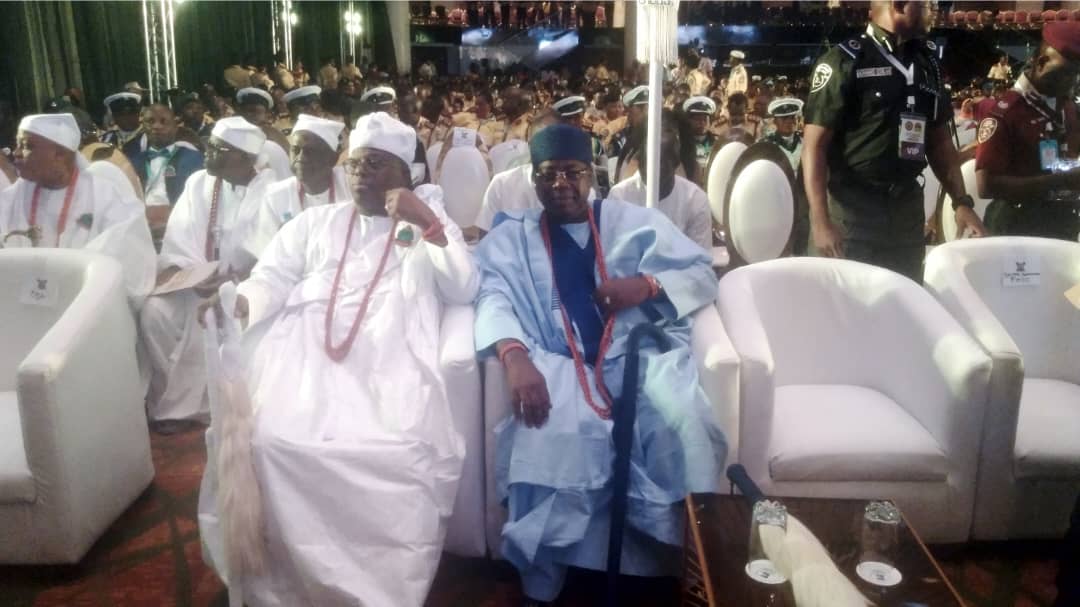
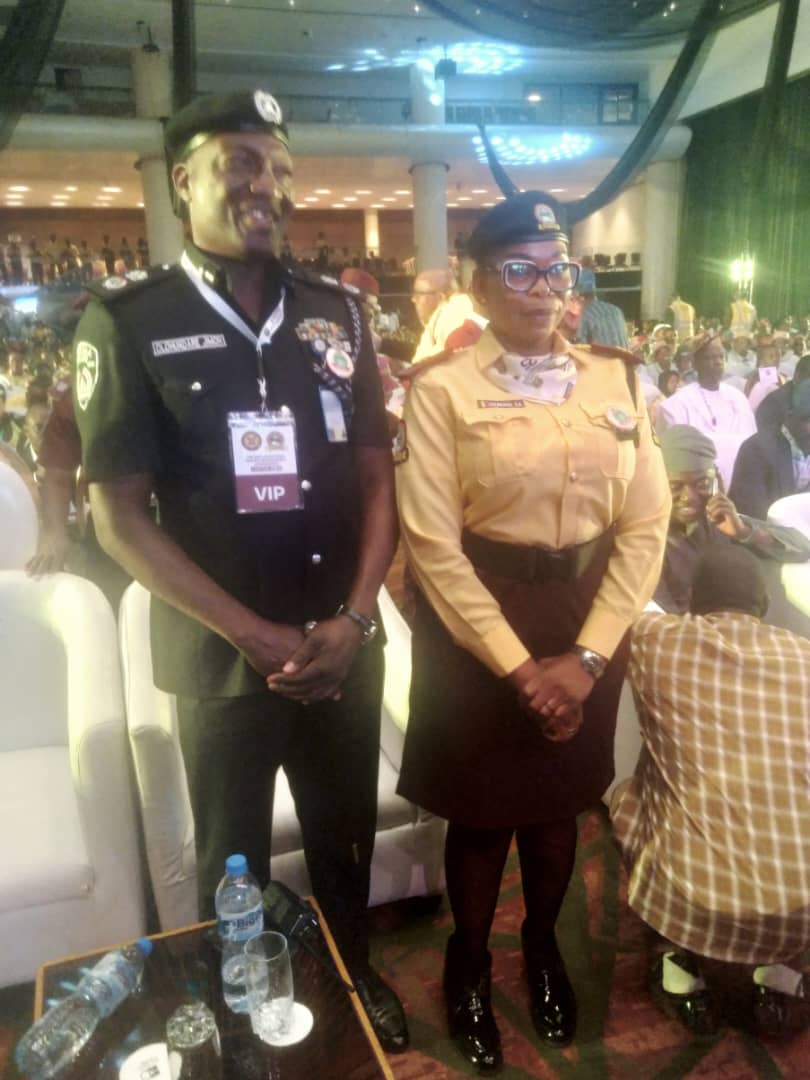
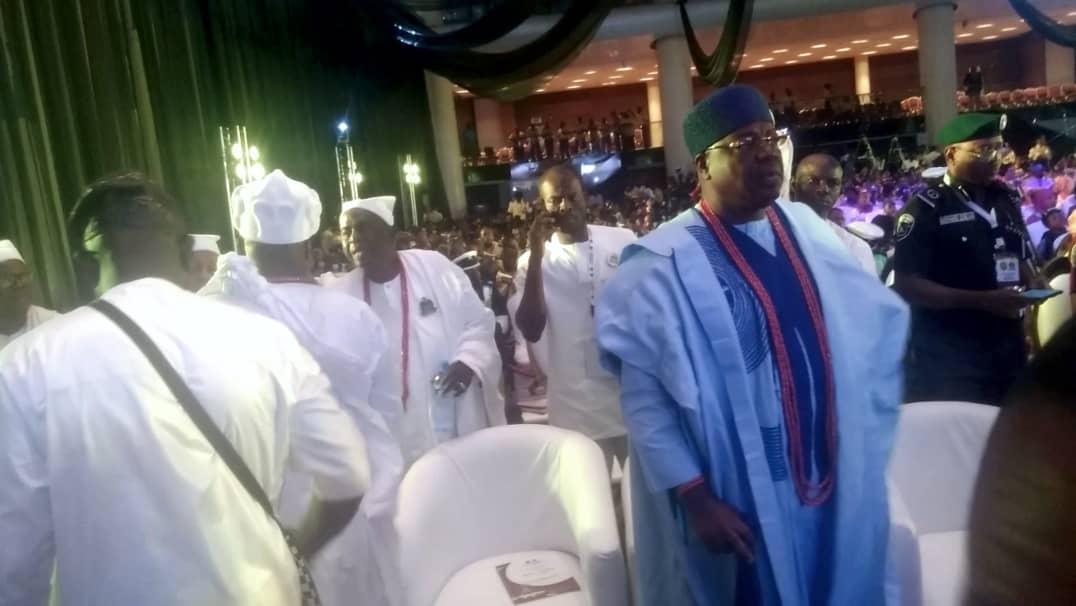
With its roll-call of high profile dignitaries, monarchs, public servants corporate guests and brands which included Dr. Obafemi Hamzat, Deputy Governor of Lagos State; RT. Hon. Mudashiru Obasa, Speaker of the Lagos State House of Assembly (ably represented); Major General Adeyinka, Commander, Nigerian Army Corps of Supply and Transport; CP Olohundare Moshood Jimoh, Commissioner of Police for Lagos State; Mr. Kehinde G. Hamzat, Lagos Sector Commander of the Federal Road Safety Corps (FRSC); HRM Oba Abdulwasiu Omogbolahan Lawal, Oniru of Iru Land; Hon. Temitope Adewale, Chairman, LAHA House Committee on Transportation; Mr. Olabode Agoro, Lagos State Head of Service; Mr. Oluwaseun Osiyemi, Lagos State Honourable Commissioner for Transportation; Hon. Sola Agoro, SA on Transportation to Lagos State Governor; Mr. Olawale Musa, Permanent Secretary, Ministry of Transportation; Mr. Sridar Uttara, President/CEO, (USA); AMB. (DR.) Olayinka Adewunmi; ELEGANZA Brand, amongst a host of others, as well as the high-profile panel session moderated by Prof. Charles Asieneme, Dean, School of Transport & Logistics, Lagos State University (LASU), which featured amongst others, Mr. Babatunde Otitoju; a Senior Journalist with TVC, and Ms. Funke Egbemode; Managing Director, New Telegraph Newspaper, there was never any doubt that the Hon. Sola Giwa-chaired LASTMA Silver Jubilee Organizing Committee and Sub-Commitees really did an excellent job from the planning to the execution stages of the prestigious event.
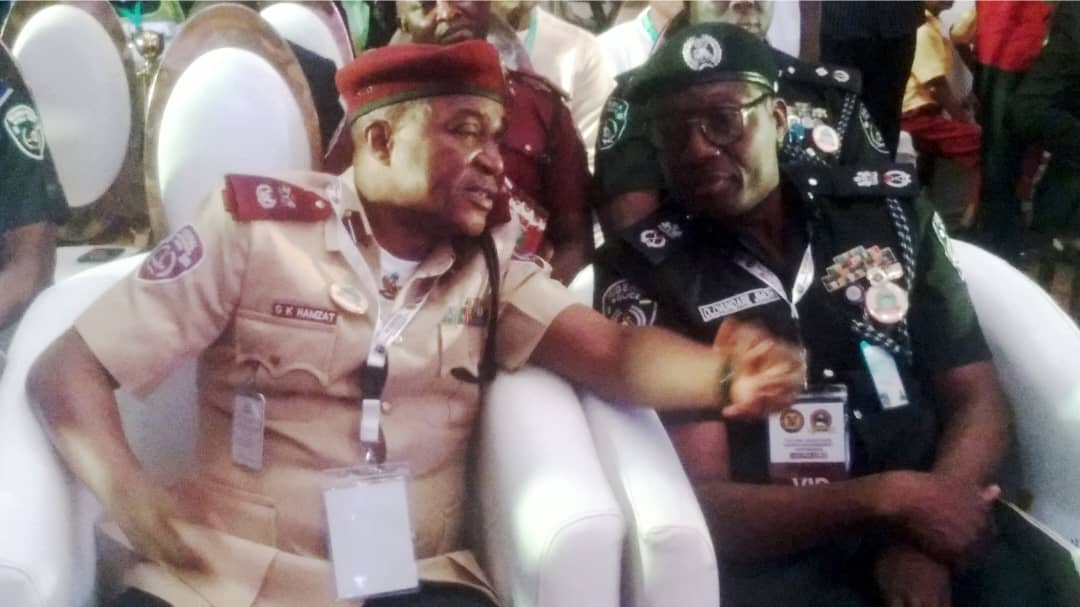
For a quarter of a century, LASTMA has been at the forefront of transforming Lagos into a smarter, more organized, and mobility-friendly megacity. From pioneering traffic control solutions to leveraging cutting-edge technology for seamless transportation, LASTMA’s contributions have been nothing short of revolutionary.
Indeed, The Second Lagos Traffic Conference reflected on LASTMA’s achievements, and also looked ahead to the future—exploring groundbreaking strategies, fostering dynamic collaborations, and setting new benchmarks for urban traffic management in Africa and beyond.
The Genesis: Tinubu’s Vision in 2000
Governor Babajide Sanwo-Olu, ably represented by Deputy Governor Dr. Obafemi Hamzat, took attendees on a historical journey: “When Asiwaju Bola Tinubu assumed office in 1999, Lagos was choking on its own success. The city’s 8 million population then (now over 20 million) faced daily commutes that turned 30-minute trips into 4-hour ordeals. Road accidents were rampant, and economic productivity suffered enormously.”
The solution, birthed on July 15, 2000, was LASTMA – initially a 500-man squad armed with whistles, hand signals, and sheer determination under pioneer GM Engr. Adegboyega Coker. Early challenges were daunting: inadequate technology, poor road infrastructure, and deeply entrenched bad driving habits.
The Evolution: Four Eras of Transformation
The Foundation Years (2000-2007): Established basic traffic management architecture, introduced first training modules, and began changing Lagos’ “anything goes” road culture.
The Tech Awakening (2008-2015): Deployment of first traffic monitoring systems, collaboration with FRSC, and establishment of Lagos Traffic Radio 96.1FM in 2012 – Africa’s first dedicated traffic radio station.
The Digital Leap (2016-2022): Implementation of automated number plate recognition, digital command center, and integration with BRT systems. Officer strength grew to 3,200.
The AI Era (2023-Present): Current GM Olalekan Bakare-Oki oversees 4,200 officers managing traffic through AI-powered surveillance, predictive analytics, and smart traffic lights at 87 major junctions.
 Lagos Traffic Revolution By The Numbers – How LASTMA Transformed Africa’s Busiest Roads
As Lagos celebrates a quarter-century of organized traffic management, the numbers tell a compelling story of transformation. The Lagos State Traffic Management Authority (LASTMA), once a fledgling agency armed with nothing but whistles and traffic batons, has delivered measurable impacts that have reshaped Africa’s most populous city.
The statistics unveiled at today’s 25th-anniversary conference reveal dramatic improvements in urban mobility. At major arterial routes like the Third Mainland Bridge and the notoriously congested Apapa Port axis, commuters now experience 63% less congestion time compared to pre-LASTMA era traffic conditions. This reduction translates to millions of man-hours saved annually, providing a significant boost to Lagos’ economic productivity.
Road safety metrics show equally impressive gains, with a 42% decline in traffic fatalities recorded since the launch of the “Drive Safely, Stay Alive” public awareness campaigns in 2010. This achievement becomes even more remarkable considering Lagos’ vehicle population has grown exponentially during this period, with over 5 million registered vehicles now plying the state’s roads daily.
The agency’s operational footprint now spans all 20 Local Government Areas through 19 strategically located zonal commands, each equipped with modern communication gadgets and patrol vehicles. This expanded presence has enabled 87% faster emergency response times through seamless coordination with the Lagos State Emergency Management Agency (LASEMA), particularly during critical incidents that require multi-agency intervention.
Perhaps one of LASTMA’s most far-reaching impacts has been its integration with Lagos Traffic Radio 96.1FM, creating Africa’s first real-time traffic information ecosystem. This innovative partnership now serves an estimated 4.3 million daily commuters, providing life-saving updates during emergencies and helping motorists navigate the metropolis more efficiently.
 Vision 2045: Sanwo-Olu’s Traffic Tech Revolution
Governor Babajide Sanwo-Olu used the anniversary platform to unveil an ambitious 20-year blueprint that will propel Lagos into the forefront of smart city mobility. The plan includes revolutionary measures that will fundamentally change how traffic is managed in Africa’s largest megacity.
Starting from the first quarter of 2026, drone surveillance units will begin monitoring hard-to-reach congestion hotspots across Lagos, providing aerial intelligence to ground teams. This will be complemented by an Artificial Intelligence Traffic Prediction System that uses machine learning algorithms to anticipate and prevent gridlocks before they occur.
The waterways will see dramatic expansion with 21 new ferry routes coming on stream to complement the existing Blue Line and soon-to-be-completed Red Line rail systems. This integrated approach aims to divert significant traffic volume from the roads, with a target of moving 30% of current road commuters to alternative transport modes by 2030.
At street level, 300 additional junctions will receive smart traffic lights by 2027, equipped with adaptive timing technology that responds to real-time traffic flow. These intelligent signals will communicate with a central traffic brain that continuously optimizes light sequences across the city.
Recognizing the human element of traffic management, the blueprint includes a comprehensive welfare package for LASTMA officers featuring enhanced life insurance coverage, improved remuneration, and state-of-the-art training facilities. This comes as the state government moves to professionalize traffic management as a career path rather than just a job.
The numbers presented today paint a picture of an agency that has matured from its humble beginnings into a sophisticated mobility management institution. As Lagos continues its rapid urbanization, these metrics will serve as both a benchmark of past achievements and a foundation for the smart mobility future envisioned in the 20-year plan.
With the implementation of these tech-driven solutions, Lagos is positioning itself not just as a case study for African cities, but as a global contender in urban mobility innovation. The next chapter of LASTMA’s story appears poised to be as transformative as its first 25 years.
 Special Adviser to the Governor on Transportation, Mr. Sola Giwa, presented stark statistics that reveal the immense pressure facing Africa’s most populous city.
“Each sunrise brings approximately 400 additional vehicles onto Lagos roads,” Giwa revealed, “while our physical road infrastructure expands at a modest 2% annual rate.” This glaring mismatch between vehicle population growth and road capacity expansion continues to test the limits of the city’s transportation network, despite LASTMA’s celebrated successes.
The human dimension of Lagos’ traffic woes came into sharp focus as Giwa disclosed disturbing figures on officer safety. “In the past five years alone, 147 LASTMA personnel have sustained severe injuries from assaults while performing their duties,” he stated, pausing for emphasis. “These aren’t just statistics – these are public servants who leave their families each morning to keep Lagos moving, only to face violence from those they serve.”
 Faced with these challenges, Lagos is mounting a comprehensive response that blends legal deterrence, behavioral modification, and technological innovation.
The state legislature has recently passed stringent new measures that mandate a minimum five-year prison sentence for anyone convicted of assaulting traffic management personnel. This legal reform represents the harshest penalty yet for such offenses in Nigeria’s transportation sector, signaling the government’s zero-tolerance stance.
Recognizing that lasting change requires cultural transformation, the Lagos State Traffic Safety Advocacy Programme (LASTSAP) has dramatically expanded its reach. The initiative now engages 120 schools annually, embedding traffic discipline education into curricula and extracurricular activities. “We’re planting the seeds of responsible road use in the next generation of Lagosians,” Giwa explained, noting that the program has already trained over 50,000 students in proper road etiquette and safety protocols.
Technology is playing an increasingly pivotal role in reducing dangerous confrontations. A network of high-resolution surveillance cameras now monitors 75 major traffic hotspots across the metropolis, enabling automated violation detection and evidence-based enforcement. “These eyes in the sky don’t get tired, don’t lose their temper, and provide irrefutable evidence,” Giwa remarked, highlighting how the system has reduced physical altercations by 38% at equipped intersections since implementation.
The Special Adviser’s presentation struck a careful balance between celebrating LASTMA’s achievements and acknowledging the road ahead. While the agency has made remarkable strides in traffic management, the fundamental pressures of rapid urbanization continue to pose significant hurdles.
The daily influx of hundreds of vehicles – coupled with the physical constraints of expanding road networks in a densely built megacity – creates an ongoing tension that requires innovative solutions. Similarly, the persistence of driver misconduct and violence against officers underscores the need for both stronger enforcement and deeper cultural change.
As Lagos looks toward its smart city future, these challenges frame an urgent call to action. The solutions being implemented today – from tough new laws to youth education and smart enforcement technologies – aim not just to manage traffic, but to fundamentally transform Lagos’ relationship with mobility. The success of these measures will determine whether Africa’s largest city can turn its traffic management silver jubilee into a golden age of urban transportation.
 Lagos Pays Tearful Tribute to 32 Fallen Traffic Heroes
The celebratory atmosphere of LASTMA’s 25th anniversary turned solemn as Governor Babajide Sanwo-Olu led a moving tribute to honor the ultimate sacrifice made by 32 traffic officers who lost their lives in the line of duty since the agency’s inception in 2000.
In what became the emotional crescendo of the Second Lagos Traffic Conference, the hall fell silent as the names and photographs of the fallen heroes were displayed on giant screens. The governor’s voice trembled with emotion as he described these officers as “the thin yellow line that stood firmly between order and chaos on our perilous roads.”
“Each of these 32 brave souls woke up one ordinary morning, kissed their families goodbye, and went out to serve Lagos, never to return home,” Sanwo-Olu recounted. “They were fathers and mothers, sons and daughters, breadwinners and dreamers – all united by their commitment to keeping our city moving.”
The governor revealed shocking statistics about the dangers faced by traffic personnel, noting that the majority of fatalities resulted from hit-and-run accidents, violent assaults by motorists, and hazardous rescue operations during emergencies. Several cases involved officers being deliberately run over while attempting to clear illegal road obstructions.
In a landmark gesture of support, Sanwo-Olu announced the establishment of a N50 million education trust fund exclusively for the children of deceased LASTMA officers. The fund will cover full tuition from primary through university education, along with vocational training opportunities.
 “We cannot bring back these heroes, but we can ensure their dreams for their children live on,” the governor declared as family members of the fallen officers wept in the audience. “This trust fund is our sacred covenant with those who gave their today for our better tomorrow.”
The ceremony reached its poignant climax with the lighting of 32 symbolic candles and the playing of the Last Post by a police bugler. A minute of silence was observed across all LASTMA formations statewide, with over 4,000 officers pausing their traffic control duties to honor their departed colleagues.
The tribute concluded with the governor posthumously awarding each fallen officer the newly created “Lagos Traffic Gold Medal of Honor,” the state’s highest recognition for traffic management personnel. Their names will be permanently inscribed on a memorial wall at the new LASTMA headquarters under construction in Alausa.
As the event transitioned back to celebratory tones, the lingering emotion served as a stark reminder of the human cost behind Lagos’ traffic management successes. The governor’s final words resonated through the hall: “When you see a LASTMA officer in that yellow uniform, remember – they are someone’s loved one, risking everything so Lagos can move forward.”
To complement the governor’s golden words, the MD of the New Telegraph Newspaper, Ms. Funke Egbemode who was one of the able panelists at the event, had, during the highly intellectual and enlightening Panel session, lent her voice to the issue by saying that people found culpable of assaulting LASTMA officials should be ‘escorted into the prison yard with cameras’ to deter such barbaric action.
The ceremony underscored the dangerous realities of traffic management in Africa’s most populous city while demonstrating the state’s commitment to honoring those who make the ultimate sacrifice in service to public safety. As Lagos continues its journey toward becoming a smart mobility hub, the legacy of these 32 heroes will remain woven into the fabric of the city’s transportation history.
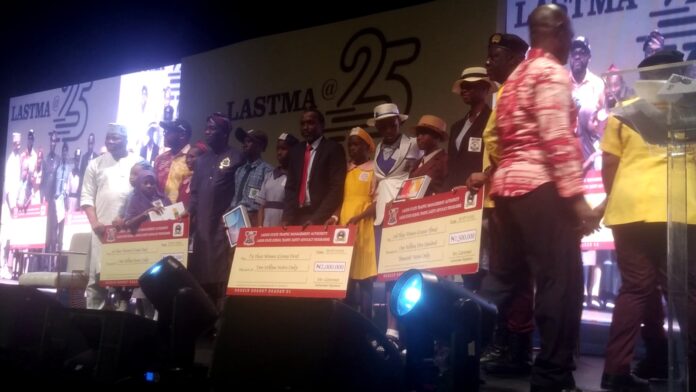
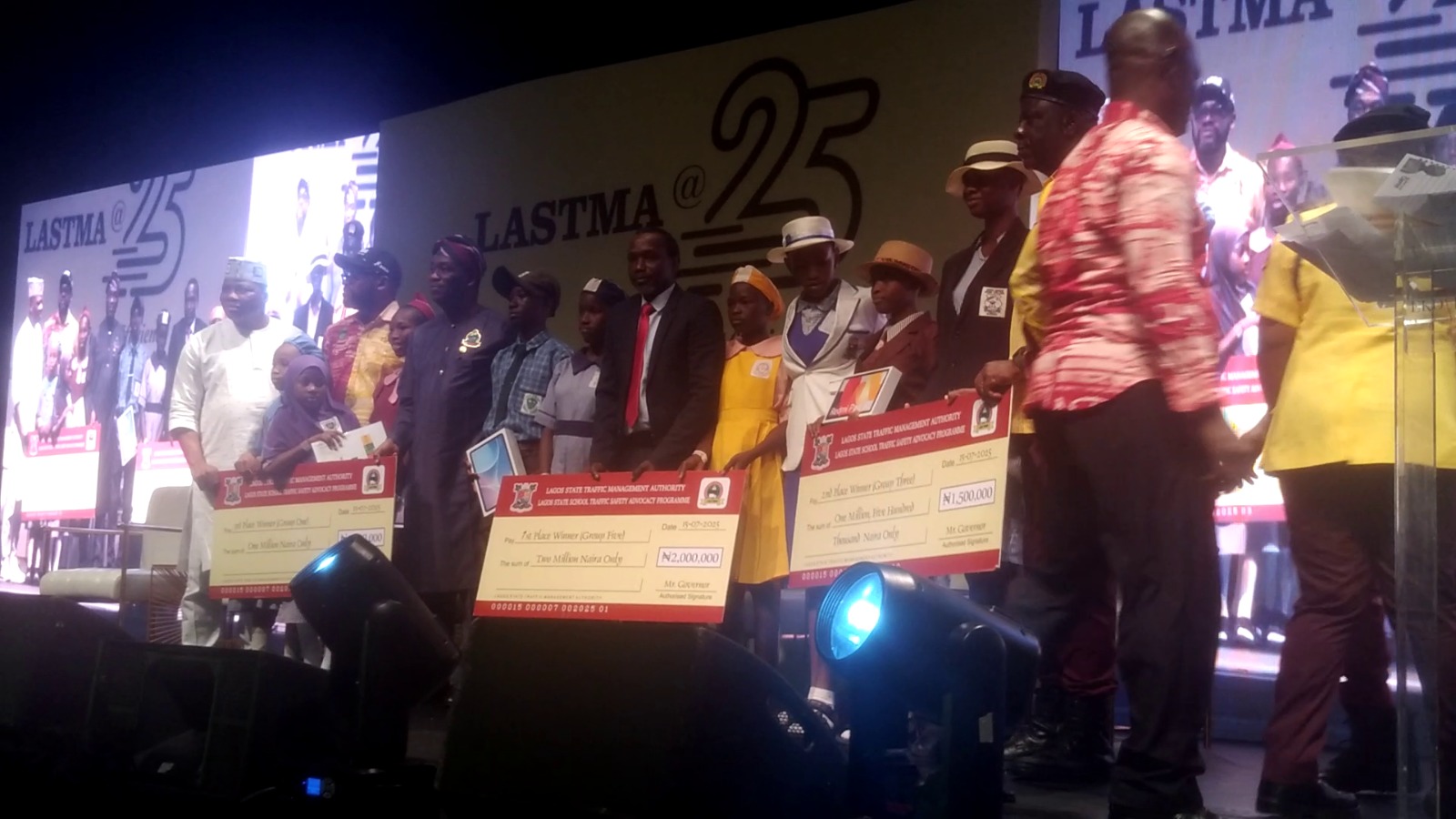
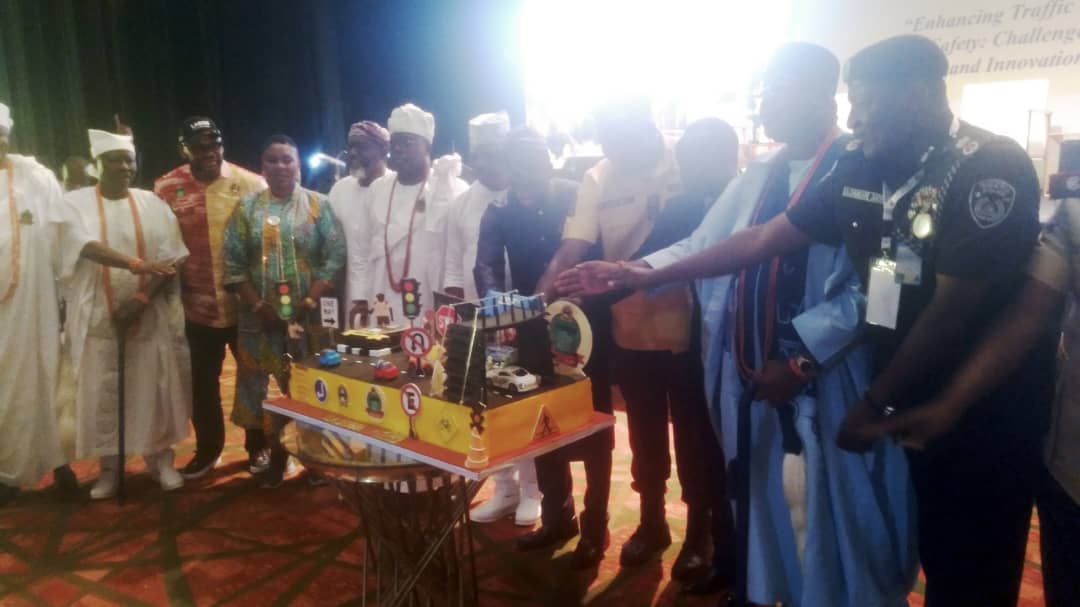
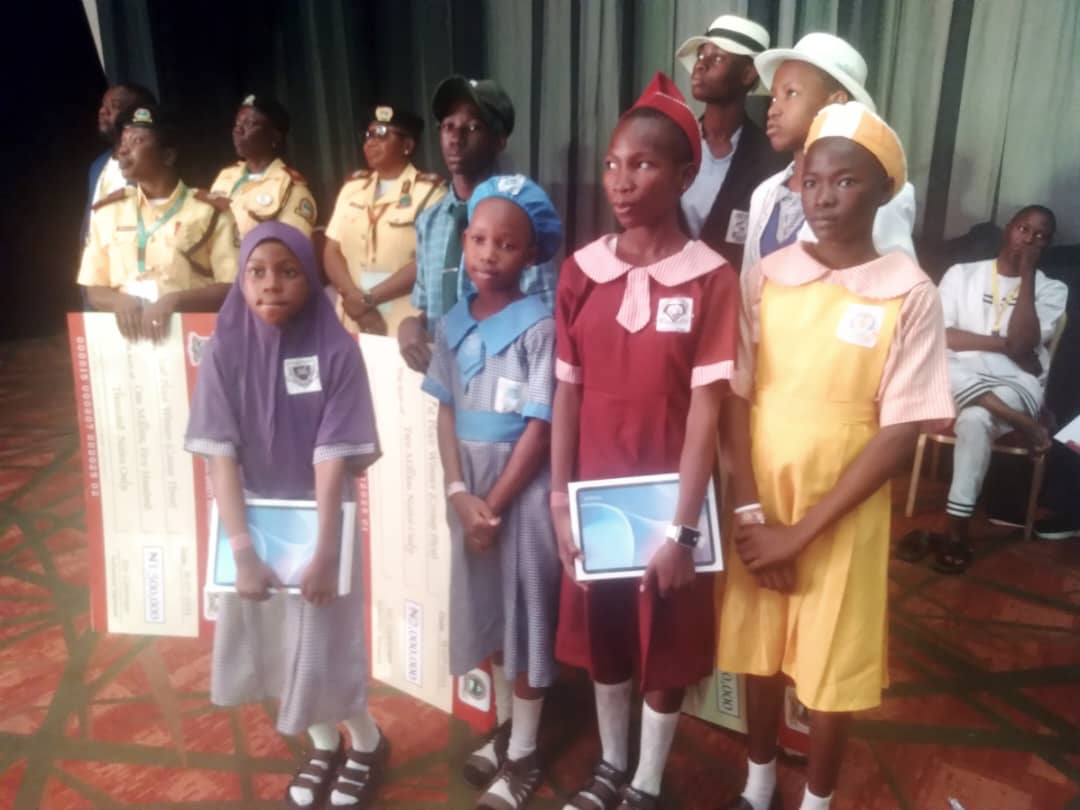 Other major highlights of the event were the presentation of monetary awards and Ipads to students drawn across schools in Lagos State whom had exceled in the LASTMA-organized Essay Competition, the oratory brilliance of the overall winner of the essay competition from Eva Adelaja Memorial Secondary School and the cutting of the creative Anniversary Cake by the high-profile dignitaries.
Preparing for the future Lagos Pioneers Smart Mobility Solutions Ahead of 2027 Transport Summit
As Lagos prepares to welcome the world for the prestigious International Transport Summit in 2027, the Lagos State Traffic Management Authority (LASTMA) is spearheading groundbreaking initiatives that position Nigeria’s commercial capital at the forefront of urban mobility innovation.
The agency is currently testing autonomous traffic monitoring systems featuring solar-powered drones capable of hovering above congested areas for up to eight hours. These high-tech sentinels, equipped with 4K cameras and thermal imaging, provide real-time incident detection and automatically alert ground teams to accidents, breakdowns, or traffic violations. Initial trials along the Lekki-Epe Expressway corridor have reduced emergency response times by an impressive 53%.
In a bold move toward sustainable urban transport, LASTMA is implementing dedicated Green Mobility Corridors across strategic city routes. These specially designed lanes will exclusively serve electric vehicles, bicycles, and other non-polluting modes of transportation. The first phase, scheduled for completion by Q3 2026, will transform 27 kilometers of existing roadways in the Ikoyi-Victoria Island axis, complete with solar-powered charging stations and smart bike-sharing docks.
Perhaps most transformative is the upcoming Integrated Payment System, a unified smart card solution that will revolutionize how Lagosians pay for transportation services. This single-card system will seamlessly handle toll payments, parking fees, and public transit fares across the entire metropolitan area. When fully operational in 2027, commuters will be able to use the contactless card on BRT buses, ferries, the Blue and Red rail lines, and at all LASTMA-managed parking facilities.
Transportation Commissioner Engr. Oluwaseun Osiyemi revealed that the initiatives form part of a broader strategy to showcase Lagos as a model for African urban mobility. “By 2027, we want delegates from across the globe to witness firsthand how an African megacity has successfully tackled its notorious traffic challenges through innovation and technology,” Osiyemi stated.
The solar drone program, developed in partnership with the Lagos State University Department of Aerospace Engineering, represents Africa’s first large-scale application of unmanned aerial vehicles for urban traffic management. Each unit can cover a 5-kilometer radius, transmitting live feeds to LASTMA’s central command hub where AI algorithms analyze traffic patterns and predict potential congestion points.
The Green Mobility Corridors initiative aligns with Lagos State’s commitment to reducing transport-related emissions by 30% before 2030. Early designs show the lanes will feature special road surfaces that generate solar power and include intelligent lighting systems that adjust brightness based on usage patterns.
As for the Integrated Payment System, trials will begin in early 2026 with 50,000 test users before a full public rollout. The system promises to eliminate the current hassle of multiple transport cards and cash transactions, while providing valuable data to optimize route planning and service frequency across all modes of public transportation.
With these ambitious projects, Lagos is not just preparing to host an international summit, but fundamentally reimagining how a rapidly growing African metropolis can move efficiently into the future. The eyes of the global transportation community will be on Nigeria’s commercial capital in 2027, and LASTMA intends to give them plenty to talk about.
 The Host of the event and current General Manager of LASTMA, Mr. Olalekan Bakare-Oki, spoke to journalists during the event:
‘Imagine Lagos before the emergence of LASTMA. The roads were experiencing total chaos, gridlocks, but with the emergence of LASTMA, we have been able to improve the situation. And overtime, LASTMA has evolved from Traffic Management to Accident Management. We do this on a daily basis; rescuing lives and vehicles involved in accidents as aresult of our broad collaborations all the time as we are able to connect LASAMBUS, and the Fire Service, Federal Road Safety Commission, and all other relevant agencies and accident respondents.’
Watch video of the interview below:
The LASTMA GM’s rendition stikes a careful balance between celebrating LASTMA’s achievements and acknowledging the road ahead. While the agency has made remarkable strides in traffic management, the fundamental pressures of rapid urbanization continue to pose significant hurdles.
The daily influx of hundreds of vehicles – coupled with the physical constraints of expanding road networks in a densely built megacity – creates an ongoing tension that requires innovative solutions. Similarly, the persistence of driver misconduct and violence against officers underscores the need for both stronger enforcement and deeper cultural change.
As Lagos looks toward its smart city future, these challenges frame an urgent call to action. The solutions being implemented- from tough new laws to youth education and smart enforcement technologies – aim not just to manage traffic, but to fundamentally transform Lagos’ relationship with mobility. The success of these measures will determine whether Africa’s largest city can turn its traffic management silver jubilee into a golden age of urban transportation.