

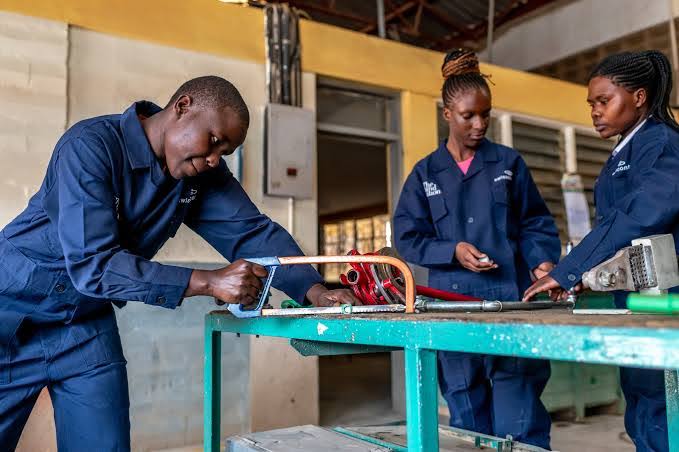
 In a strategic move to bridge the gap between academic learning and practical skills, the Nigerian government has introduced 15 new trade subjects into the Basic Education curriculum. This initiative aims to equip students with essential competencies aligned with the demands of the 21st-century economy.
The National Orientation Agency (NOA) announced that the updated curriculum will be implemented starting January 2025 for primary and junior secondary students nationwide. The newly added subjects encompass a diverse range of trades, including:
Plumbing
Tiling and Floor Works
POP (Plaster of Paris) Installation
Event Decoration and Management
Bakery and Confectioneries
Hairstyling
Makeup
Interior Design
GSM Repairs
Satellite/TV Antenna Installation
CCTV and Intercom Installation and Maintenance
Solar Installation and Maintenance
Garment Making
Agriculture and Processing (including crop production, beekeeping, horticulture, and livestock farming such as poultry and rabbit rearing)
Basic Digital Literacy (encompassing IT and robotics)
 Education Minister Prof. Tahir Mamman described this development as a transformative step toward aligning Nigeria’s education system with global standards. He emphasized that the reform is designed to prepare students for both local and international opportunities by providing them with practical skills.
The Permanent Secretary of the Ministry, Dr. Nasir Sani-Gwarzo, commended the Nigerian Educational Research and Development Council (NERDC) for expediting the curriculum review process despite significant challenges. He highlighted that the initiative would ensure students graduate with skills that meet the economic and industrial needs of their regions.
Acting Executive Secretary of NERDC, Dr. Margret Lawani, added that the updated curriculum would include over 20 occupational subjects tailored to Nigeria’s regional and economic priorities. She stated that the goal is to prepare students for industries of the future while addressing unemployment challenges.
Preparations are already underway to train teachers, develop infrastructure, and integrate technology to support the new curriculum, ensuring a seamless transition and effective implementation across the nation’s educational institutions.