
 In the vibrant, often tumultuous arena of Nigerian social commentary, the voice of Nobel laureate Wole Soyinka has long resonated with the authority of a moral oracle. Yet, from the quiet of a mission in Gambia, a question is being posed that echoes the unspoken thoughts of many: what happens when the trumpet of criticism falls silent?
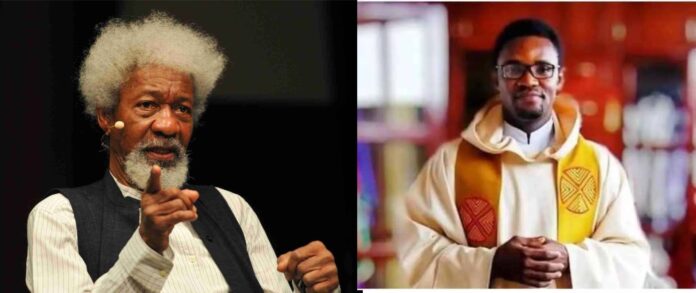
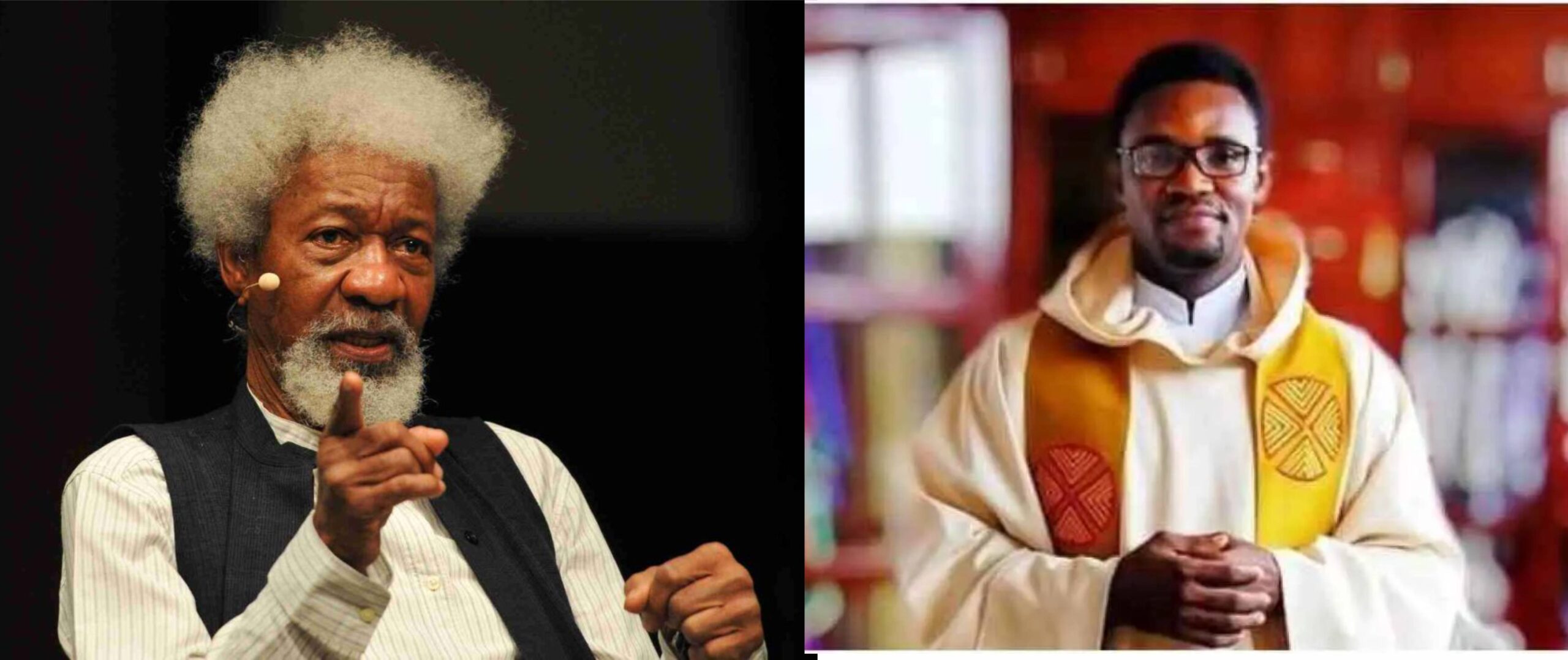
Rev. Fr. Kelvin Ugwu, a Catholic missionary priest, has cast a public and poignant spotlight on this very enigma, publishing a sharp critique of what he describes as the playwright’s disconcerting quietude under President Bola Tinubu’s administration.
In a Facebook post pointedly titled ‘Prof Soyinka then vs Prof Soyinka now,’ Fr. Ugwu meticulously drew a timeline of vocal activism and its subsequent dimming. He recalled the Soyinka of yesteryears—the “movement” and “social crusader” who stood as a formidable bulwark against governmental excesses during the administrations of former presidents Olusegun Obasanjo and Goodluck Jonathan. This was a Soyinka whose pen was a sword and whose voice was a clarion call for accountability, embodying the conscience of a nation perpetually in search of ethical leadership.
The priest’s narrative then pivots to a stark contrast. He observed that this formidable voice became less vocal under President Muhammadu Buhari and has become virtually “deaf and dumb” under the current Tinubu government.
Fr. Ugwu did not mince words in his assessment of the Tinubu presidency, describing a leader “with no clear identity” whose tenure has, in just two years, “plunged Nigeria into deeper debt and Nigerians into multidimensional poverty.” Against this backdrop of national struggle, the silence of a once-prominent voice for the masses is, for the priest, not just noticeable but profoundly lamentable.
Dismissing the simplistic explanation of ethnic loyalty, given Soyinka’s past criticisms of Yoruba leaders like Obasanjo, Fr. Ugwu ventured into the realm of the speculative with a touch of dark humor. He insinuated that Tinubu’s influence over potential critics might be of an inexplicable nature, wryly noting that “if this is what people mean by juju, then juju is powerful.”
This rhetorical flourish underscores a deeper, more troubling question about the sources of political power and intimidation in the Nigerian landscape.
The critique from Fr. Ugwu transcends a mere personal grievance; it touches on the role of the intellectual in society. It challenges the very essence of a legacy built on speaking truth to power.
By framing his argument as a “then vs. now” dichotomy, he holds up a mirror not only to Soyinka but to the entire civic society, forcing a confrontation with an uncomfortable reality: the unsettling quiet from one of the nation’s most revered moral compasses in a time that seems to demand its guidance most urgently.