
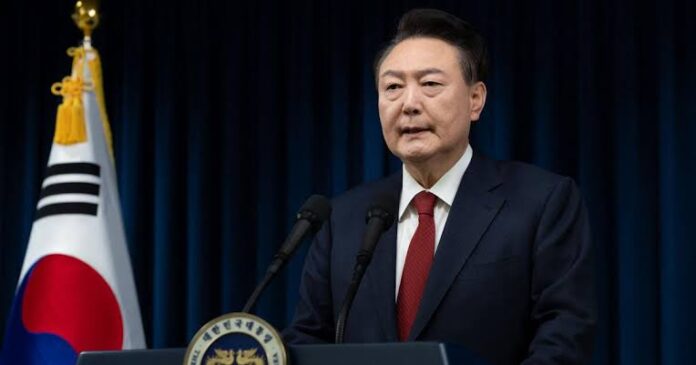
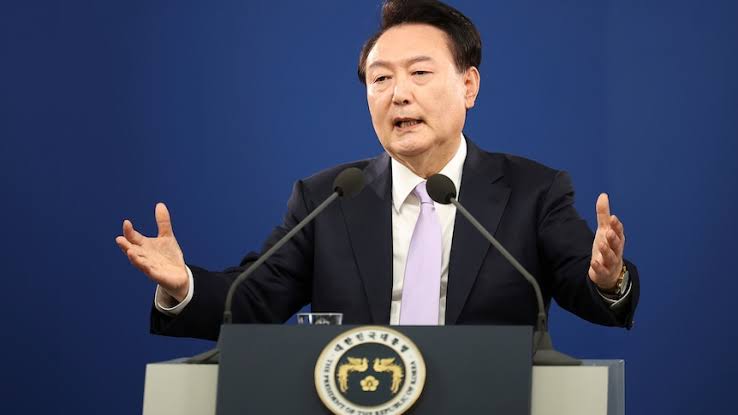
 In an unprecedented development, South Korean President Yoon Suk Yeol has been arrested following his impeachment, marking the first time a sitting president in the nation has faced such legal action.
The arrest stems from Yoon’s contentious declaration of martial law on December 3, a move that plunged the country into political turmoil.
Martial Law Declaration and Impeachment
President Yoon’s brief imposition of martial law was intended to address legislative gridlock but was swiftly overturned by the National Assembly. The decree led to widespread unrest and prompted the opposition-controlled parliament to impeach Yoon, suspending him from his duties pending a Constitutional Court decision on his permanent removal.
Arrest and Detention
On January 15, investigators from the Corruption Investigation Office for High-Ranking Officials (CIO), supported by approximately 1,000 police officers, executed an arrest warrant at Yoon’s residence in central Seoul. The operation involved scaling barricades and cutting through barbed wire to apprehend the president, who had been resisting previous summonses. In a video message released prior to his arrest, Yoon stated his intention to cooperate to prevent “unsavoury bloodshed,” while maintaining that the investigation was illegal.
Following his arrest, Yoon was transported to the Seoul Detention Centre, where he underwent standard processing, including a mugshot and allocation of a solitary cell. He is being held on suspicion of insurrection related to his martial law declaration, a charge that could result in severe penalties, including life imprisonment or the death penalty, though South Korea has not carried out executions in nearly 30 years.
Legal Proceedings and Political Implications
The Seoul Western District Court approved Yoon’s formal arrest, citing concerns about potential evidence destruction. Investigators have been granted up to 20 days to detain Yoon for questioning before transferring the case to public prosecutors for indictment. Yoon’s legal team has contested the legality of the arrest, arguing that the CIO lacks jurisdiction over insurrection charges.
The Constitutional Court is concurrently conducting a trial to determine whether to uphold Yoon’s impeachment, a decision that could lead to a new presidential election. The political landscape remains volatile, with ongoing protests from both supporters and opponents of Yoon, reflecting deep divisions within South Korean society.
This situation underscores the resilience of South Korea’s democratic institutions in addressing executive overreach, while also highlighting the nation’s historical challenges with political polarization and the legal repercussions faced by its leaders.