
The letter arrived without fanfare —a simple envelope, handwritten, its weight measured not in paper but in half a century of friendship. When Robert Redford opened it, the words inside were few, but they carried the echo of a lifetime. Paul Newman, his health fading, had written to thank him—for loyalty, for partnership, for never competing, for being more than a co-star. Redford would later say those words shook him to his core. He framed the letter not for display, but to keep Newman close.
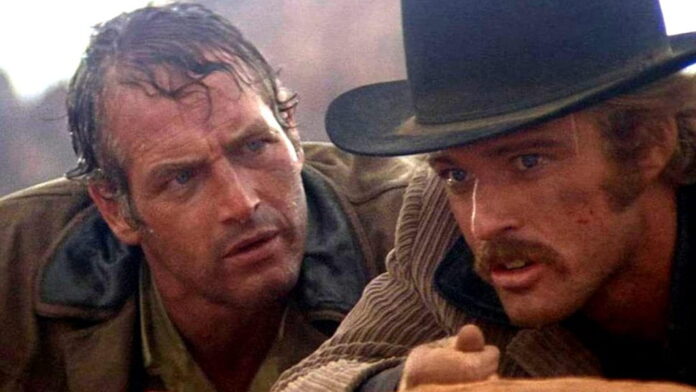
Their story began in 1969, on the sunbaked set of Butch Cassidy and the Sundance Kid. Newman was already a legend; Redford, still rising. Some questioned the pairing, fearing imbalance. But Newman insisted—he wanted Redford. That decision, that early act of faith, set the tone for everything that followed. There was never rivalry, only trust.
On set, Newman disarmed the pressure with humor. His first words to Redford weren’t about scenes or scripts but about lunch. “He made everything lighter,” Redford recalled. “He taught me not to take the work so seriously that you forget to enjoy it.” That ease carried into The Sting, where their chemistry crackled effortlessly.
Off-screen, their bond thrived in quietude. No tabloid declarations, no staged camaraderie—just fishing trips with long silences, phone calls with few words, an understanding that needed no explanation. They respected each other’s space, even when their political views diverged. Redford once said Newman was the only actor he could truly relax around.
When Newman’s cancer advanced, he kept his circle small. Redford didn’t push. He waited. Then came the letter—Newman’s way of saying what had always been understood but never spoken aloud. He thanked Redford for believing in him before the world did, for accepting his flaws, for never competing. The closing line lingered like a final scene: “You were the Sundance to my Cassidy—always.”
After Newman’s death in 2008, Redford stayed quiet. Years later, when pressed, he mentioned the letter. “It meant more than any award,” he said. It hangs in his home, not for show, but to feel Newman near.
Their friendship wasn’t built for headlines. It was carved in sidelong glances between takes, in laughter on set, in the unspoken trust of two men who never needed words—until the last one was written.