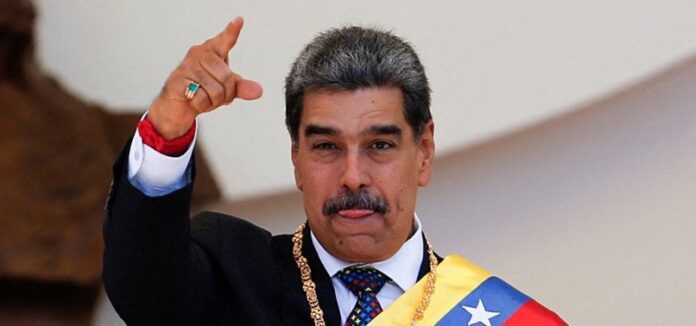
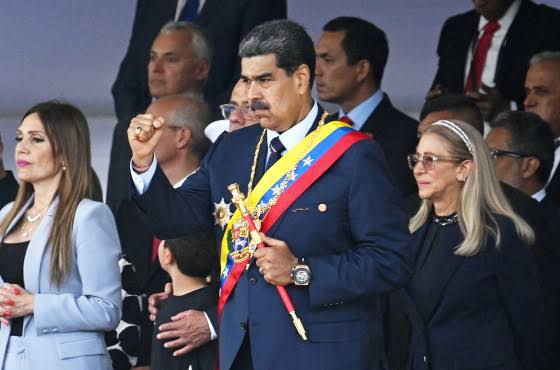
 The United States has announced an increased reward of $25 million for information leading to the arrest of Venezuelan President Nicolás Maduro. The announcement coincided with Maduro’s inauguration for a controversial third six-year term, which has been widely condemned by the international community and opposition leaders in Venezuela.
The U.S. Department of State’s reward also includes offers for information on other key Venezuelan officials. Interior Minister Diosdado Cabello has a standing bounty, while a new reward of $15 million has been placed on Defence Minister Vladimir Padrino. These figures are accused of corruption, human rights abuses, and involvement in a narco-terrorism network.
Global Sanctions and Condemnations
The announcement is part of a broader international push to isolate Maduro’s regime. The United Kingdom issued sanctions on 15 top Venezuelan officials, including military officers and judges, citing their role in “undermining democracy, the rule of law, and committing human rights violations.”
British Foreign Secretary David Lammy described Maduro’s government as “fraudulent,” underscoring its lack of legitimacy on the global stage. Similarly, the European Union extended restrictive measures against Venezuela, targeting additional officials and condemning the lack of progress toward restoring democracy.
Canada also announced fresh sanctions, with Foreign Minister Mélanie Joly calling Maduro’s actions a “shameless erosion of democratic processes.” Joly reiterated Canada’s support for Venezuelan citizens seeking to assert their rights in the face of repression.
Charges of Narco-Terrorism and Corruption
The U.S. rewards are tied to narcotics and corruption charges leveled against Maduro and his associates since 2020. The U.S. accused Maduro of orchestrating a massive narco-terrorism operation, flooding American markets with cocaine as a geopolitical weapon. Maduro has rejected the accusations, dismissing them as part of a larger imperialist campaign against his administration.
In 2022, the U.S. briefly eased sanctions in hopes of encouraging free elections, but those efforts stalled, prompting Washington to reinstate strict economic measures, including oil sanctions.
Maduro’s Defiant Stance
During his inauguration ceremony, Maduro vowed that his third term would usher in “peace, prosperity, equality, and a new democracy.” The tightly controlled event was marked by heavy restrictions on local and foreign media. Only a few international allies, including the leaders of Cuba and Nicaragua, attended the ceremony, signaling Maduro’s growing isolation on the world stage.
Maduro continues to blame Venezuela’s economic collapse on what he calls illegitimate U.S.-led sanctions, while critics attribute the crisis to widespread corruption and economic mismanagement under his rule. Despite global condemnation, he remains supported by key allies like Russia, China, and Iran.
Opposition Struggles and Exile
Maduro’s re-election has been widely rejected, with opposition leader Edmundo González recognized as the legitimate president-elect by the U.S. and other nations. González, now exiled in Spain, has been rallying international support for democratic reforms in Venezuela.
The Maduro government, however, has issued an arrest warrant for González, offering a $100,000 reward for his capture. The opposition leader has dismissed the warrant as an intimidation tactic.
Call for Justice
The political and humanitarian crisis in Venezuela continues to draw international concern. United Nations Secretary-General António Guterres has called for the immediate release of individuals “arbitrarily detained” during the elections.
As global pressure mounts and rewards for information grow, the path forward for Venezuela remains fraught with tension, with the Maduro regime resisting international demands for reform and accountability.