
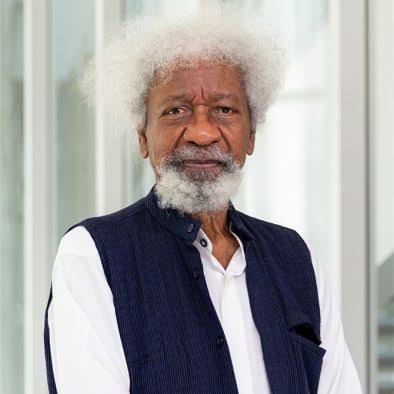
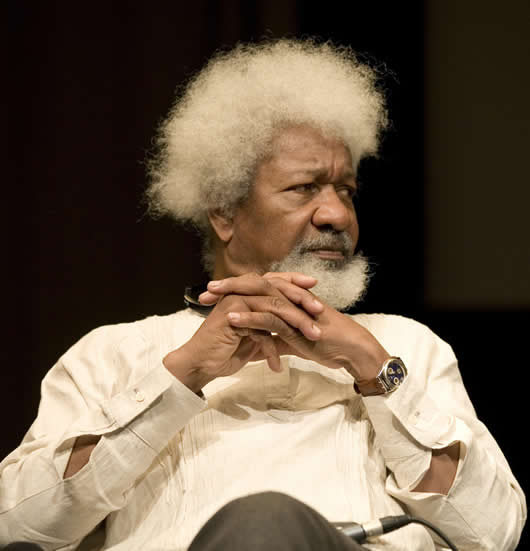
 Nigeria’s Nobel Laureate, Professor Wole Soyinka, has disclosed that the United States government has revoked his visa, effectively barring the globally revered playwright and activist from entering the country.
The esteemed intellectual, a perennial voice of conscience and critique, revealed the development during an interaction with journalists in Lagos, framing it not merely as a personal inconvenience but as a potent symbol of escalating geopolitical tensions.
While the U.S. State Department has yet to issue an official statement, Soyinka’s own interpretation points toward a chilling cause: the price of his own unwavering and caustic criticism of former President Donald Trump.
Professor Soyinka, who once memorably branded Trump as “the white version of Idi Amin,” a comparison to the notoriously brutal Ugandan dictator, suggested that his past condemnations are the most probable catalyst for the visa ban.
This connection, if accurate, raises profound questions about the boundaries of free speech and the potential for political retribution on an international scale.
The Nobel laureate was careful to delineate between the American government and its people, stating he holds no grudge against ordinary citizens. However, he expressed deep concern over what he termed “the growing hostility and double standards” of the U.S. government in its treatment of Africans and immigrants, a sentiment that resonates across a continent often scrutinizing the nuances of American foreign policy.
This action against one of Africa’s most distinguished literary figures is more than a diplomatic footnote; it is a dramatic escalation that pits state authority against intellectual dissent.
Soyinka, who has spent a lifetime confronting authoritarian regimes and speaking truth to power, now finds himself facing exclusion from a nation that has long positioned itself as a global beacon of free expression.
The revocation transforms him from a critic into a cause célèbre, amplifying his longstanding arguments about global power imbalances and selective enforcement.
As the story circulates globally, it forces a uncomfortable examination of whether a nation’s gates are being closed to those who dare to voice dissent, marking a significant and troubling moment in the complex relationship between the United States and the intellectual vanguard of Africa.