


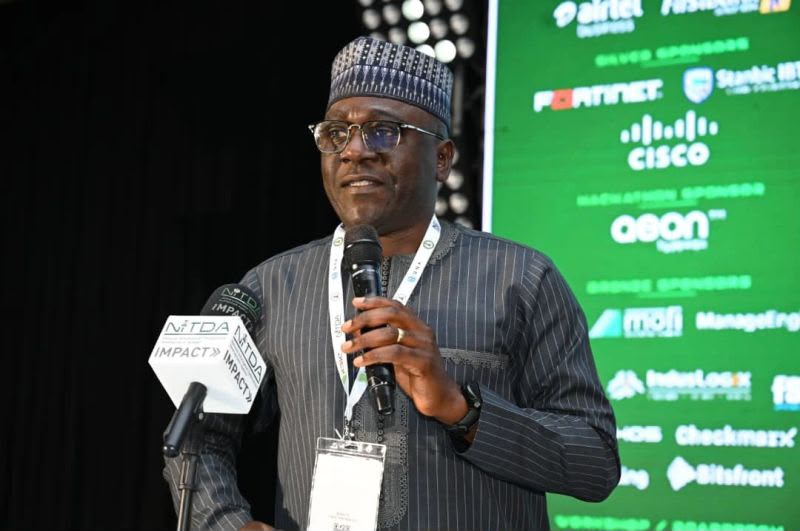
NCC Executive Commissioner Abraham Oshadami joins national and international stakeholders to advance cyber resilience, strengthen telecommunications security and protect Nigeria’s growing digital economy.
NCC Advocates Stronger Cybersecurity Collaboration at International Conference
The Nigerian Communications Commission (NCC) has reinforced the need for stronger cybersecurity collaboration, advanced digital protection frameworks and resilient telecommunications infrastructure as Nigeria confronts increasingly sophisticated cyber threats driven by Artificial Intelligence (AI).
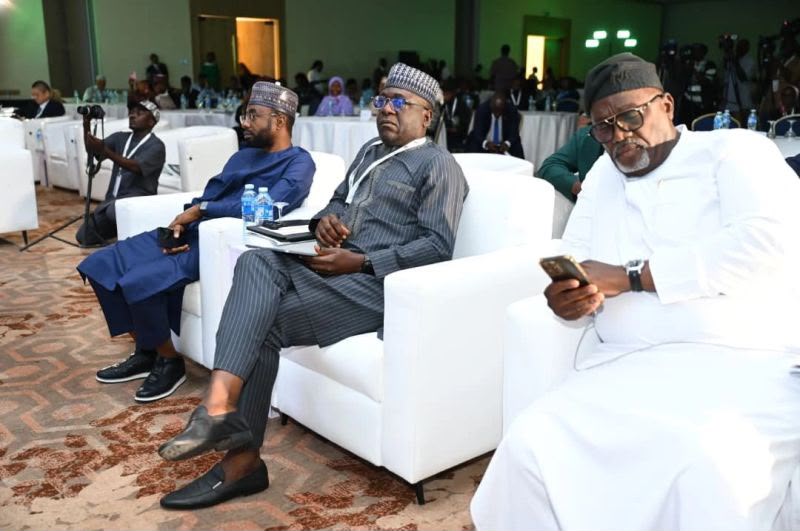
The commission’s Executive Commissioner, Technical Services, Engr. Abraham Oshadami, represented the Executive Vice Chairman and Chief Executive Officer, Dr Aminu Maida, at the second edition of the International Cybersecurity Conference (ICSC) 2026, held at the Abuja Continental Hotel from October 27 to 28.
The conference, themed “Cyber Resilience in the Age of AI: Defending Minds, Networks and Nations,” brought together government officials, legislators, industry leaders, cybersecurity professionals and international stakeholders to examine emerging digital threats and develop strategies for protecting Nigeria’s digital ecosystem.
Discussions focused on the growing influence of artificial intelligence on cybersecurity, the increasing sophistication of cyberattacks and the need for coordinated responses involving regulators, telecommunications operators, government institutions and other critical stakeholders.
The participation of the NCC highlighted the strategic importance of telecommunications infrastructure to Nigeria’s economic development and the need to protect the networks supporting financial transactions, public services, business operations and everyday communications.
NCC Highlights AI-Driven Cybersecurity Threats
In his keynote address delivered on behalf of the NCC Executive Vice Chairman, Dr Aminu Maida, Oshadami highlighted the growing risks posed by AI-powered cyberattacks and their potential consequences for Nigeria’s telecommunications infrastructure and wider economy.
The threats identified include AI-enabled phishing, automated credential attacks, deepfake technology and adaptive malware capable of changing their behaviour to evade conventional security systems.
According to the NCC leadership, the growing sophistication of these attacks requires a shift from traditional cybersecurity approaches towards proactive systems capable of detecting threats, responding rapidly and recovering from disruptions.
The commission also emphasised that telecommunications infrastructure has become critical to national development, with banking transactions, government services, business operations and personal communications increasingly dependent on reliable digital networks.
Consequently, a successful attack on telecommunications infrastructure could have wider implications for financial services, national security and public administration.
 NCC Strengthens Cyber Resilience Framework
As part of its efforts to strengthen Nigeria’s cybersecurity resilience, the NCC disclosed that it had established a Computer Security Incident Response Team (CSIRT) to improve threat monitoring, facilitate real-time intelligence sharing and strengthen incident reporting across the telecommunications sector.
The commission has also developed a Cyber Resilience Framework for the Nigerian communications sector, providing a common security baseline and guidance for licensed operators.
Oshadami, representing Maida, urged telecommunications operators to embrace stronger security measures, including zero-trust security architecture, continuous assessment of artificial intelligence systems and improved network recovery capabilities.
The zero-trust approach requires continuous verification of users, devices and access requests rather than automatically trusting connections within a network.
These measures are considered important to building Nigeria’s cybersecurity resilience as digital services become increasingly interconnected and cybercriminals adopt more sophisticated technologies.
NITDA, NCC and Stakeholders Call for Coordinated National Response
The conference also featured contributions from the Director-General of the National Information Technology Development Agency (NITDA), Kashifu Inuwa Abdullahi, who stressed that cybersecurity must extend beyond protecting computer systems and networks.
He explained that cyber resilience also involves the ability of individuals, organisations and governments to withstand attacks, recover from disruptions and adapt to emerging threats.
Abdullahi warned that AI-generated voices, videos and images were creating new opportunities for cybercriminals to manipulate information, exploit human vulnerabilities and undermine public trust.
He called for stronger national coordination, improved public awareness and mechanisms to identify manipulated digital content.
The NITDA chief also disclosed that the agency was working with the Office of the National Security Adviser and the National Assembly on efforts to review Nigeria’s cybercrime legislation and strengthen the country’s institutional response to emerging threats.
Meanwhile, Chairman of the Senate Committee on ICT and Cybersecurity, Senator Shuaib Afolabi Salisu, advocated greater collaboration among government institutions and proposed the development of a national cyber resilience index to measure organisations’ preparedness against cyber threats.
He also called for stronger cooperation among agencies, including NITDA, NCC, the Nigeria Data Protection Commission, the National Identity Management Commission and the Office of the National Security Adviser.
The proposal is intended to encourage institutional coordination, identify cybersecurity weaknesses and establish measurable standards for improving national digital security.
Industry Experts Seek Stronger Cybersecurity Standards
At the conference’s closing sessions, stakeholders further advocated stronger cybersecurity regulations, improved technical capacity and coordinated incident response mechanisms to protect Nigeria’s critical infrastructure.
NCC’s Head of Fixed Network and Converged Services, Technical Standards and Network Integrity, Musa Daibu, highlighted the dual impact of artificial intelligence, noting that while the technology could strengthen threat detection and accelerate cybersecurity responses, it could also enable criminals to execute sophisticated attacks on a larger scale.
He called for minimum cybersecurity requirements, stronger technical standards, periodic compliance audits and improved risk management measures among telecommunications operators.
Daibu also advocated a review of the NCC’s Cyber Resilience Framework and its implementation guidelines to address emerging threats associated with artificial intelligence and machine learning.
Representatives of the International Telecommunication Union (ITU) and the Central Bank of Nigeria (CBN) also highlighted the importance of specialised cybersecurity skills, improved threat intelligence sharing and stronger identity verification systems to combat AI-enabled impersonation and financial fraud.
Cyber Resilience Critical to Nigeria’s Digital Future
The discussions at the second International Cybersecurity Conference 2026 reinforced the importance of making cybersecurity a shared responsibility among government institutions, telecommunications operators, financial institutions, technology providers and citizens.
As Nigeria continues expanding its digital economy, the protection of critical information infrastructure and personal data remains essential to maintaining public confidence, supporting innovation and ensuring uninterrupted delivery of digital services.
For the NCC, participation in the conference reflects the importance of strengthening Nigeria’s cybersecurity resilience through collaboration, effective regulation, technical innovation and continuous preparedness against emerging digital threats.
The conference ultimately underscored a central message: Nigeria’s digital transformation must be accompanied by equally strong measures to protect its people, networks and national interests in an increasingly AI-driven world.