


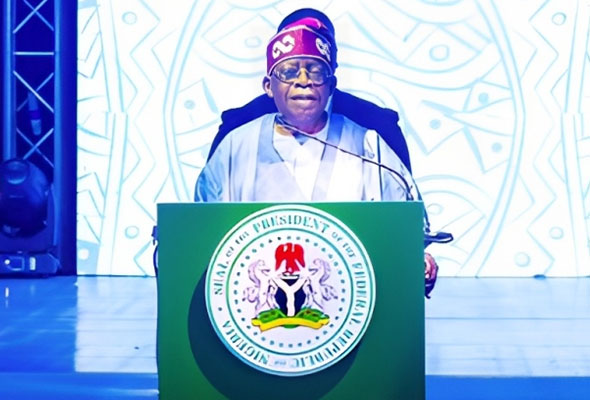
 The Federal Government has announced the disbursement of a colossal sum of ₦330 billion in direct cash transfers to the nation’s most economically fragile citizens. This monumental financial injection is the cornerstone of a revamped social protection programme, meticulously designed to act as a buffer against the relentless waves of rising living costs that have inundated poor and vulnerable households across Nigeria.
The initiative represents one of the administration’s most ambitious efforts to provide tangible relief, transferring ₦25,000 directly into the hands of beneficiaries on a monthly basis.
The scale of the operation is vast. According to the details released, a substantial 8.5 million households out of a targeted 15 million have already been reached by this programme of state-sponsored aid.
For these families, the support has not been a mere promise but a recurring intervention; many have already received up to three tranches of the payment, with each household slated for a total of three payments, culminating in a direct support of ₦75,000.
The government, in a pledge that seeks to offer hope to those still waiting, has assured the public that the remaining 7 million households on its registry will be integrated and will receive their due entitlements before the curtain falls on the current year.
Yet, despite the staggering figures and the ostensibly noble intent, this announcement has been met not with nationwide applause, but with a resonant and bitter chorus of public outcry. The official narrative of systematic disbursement has collided violently with the lived experiences of a significant portion of the populace.
A pervasive sense of skepticism has taken root, with many Nigerians crying foul, expressing feelings of exclusion and questioning the very transparency and integrity of the process. The airwaves and social media platforms are thick with anecdotes from citizens who identify as poor and vulnerable yet have received nothing, their voices forming a counter-narrative to the government’s report.
This disconnect has opened a deep chasm between policy and perception. For every statistic cited by officials, there is a countervailing story of frustration from someone who asks why they have been overlooked, how beneficiaries were truly selected, and where this enormous flow of cash is actually going.
The phrase “direct cash transfer” has become a lightning rod for broader societal grievances about inequality, opaque governance, and the effectiveness of top-down economic interventions. The government’s effort to cushion hardship, therefore, finds itself caught in a paradox: a policy measure of immense financial proportion whose success is being measured not just by the money it has distributed, but by the trust it has failed to secure among the very people it seeks to help.
The promise of reaching the remaining millions before year’s end now stands as a test not only of logistical capacity but of credibility itself.