
Renowned oil and gas industry expert, Dr. Jide Olufuyi, has stressed the importance of proactive planning, operational preparedness, and technical anticipation in reducing drilling complications and improving efficiency within Nigeria’s upstream petroleum sector.
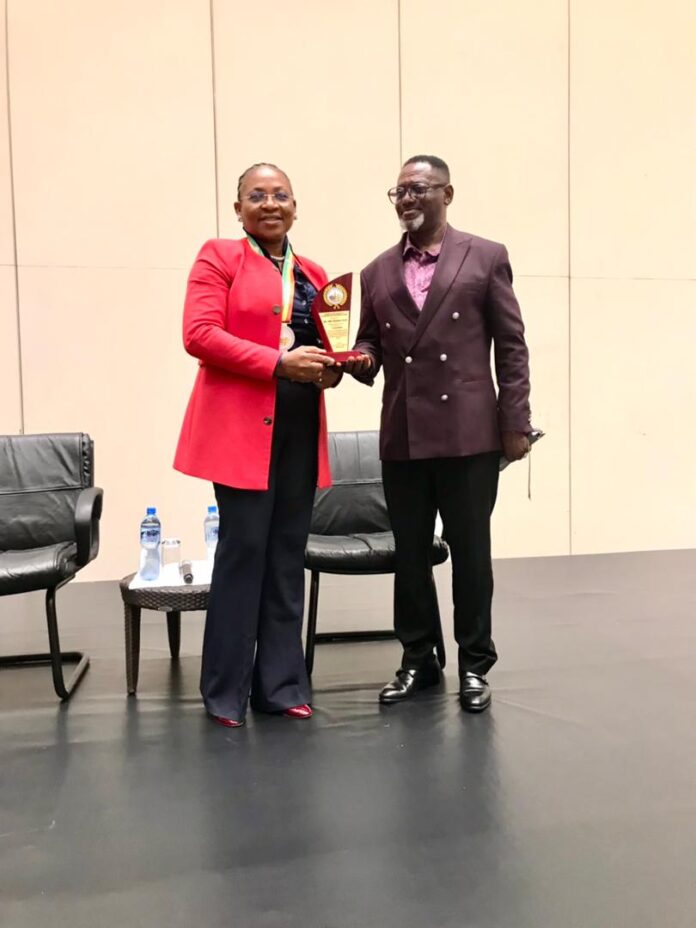
Speaking during the May Technical Meeting of the Nigerian Association of Petroleum Explorationists (NAPE), Dr. Olufuyi highlighted the growing need for operators and technical teams to better anticipate subsurface uncertainties, mechanical challenges, and directional drilling complexities capable of impacting well delivery timelines and operational costs.
According to him, despite extensive planning and advanced geosteering technologies, drilling operations remain vulnerable to unforeseen geological and mechanical conditions.
“You can do all your planning, but while going into geosteering and wellbore trajectory operations, you may encounter formations that create swelling, instability, or debris falling into the wellbore,” he explained.
“By the time you eventually land your well, you may discover several doglegs, and the severity of those doglegs becomes a major issue.”
Need for Anticipatory Planning in Drilling Operations
Dr. Olufuyi emphasized that the oil and gas industry must continue evolving toward predictive and anticipatory operational systems capable of minimizing non-productive time and drilling risks.
He explained that understanding the geological characteristics of drilling environments remains essential in addressing challenges associated with directional drilling and well trajectory management.
“When you are prepared and anticipate what could happen within a particular formation, it becomes easier to take preventive considerations into account before drilling,” he stated.
He noted that operators must increasingly distinguish between planned operational time and “trouble time,” stressing that unanticipated drilling complications can significantly impact project economics and operational safety.
Eight-Day Rig Delay Illustrates Operational Risks
Using a real-life drilling scenario to illustrate the financial and technical implications of operational disruptions, Dr. Olufuyi recounted an incident in which a drilling operation lost eight days due to mechanical complications involving damaged drill bit components.
According to him, parts of a drill bit reportedly detached and fell into the wellbore during operations, forcing operators to suspend drilling activities while retrieval and remediation efforts were carried out.
“It was not even a geological emergency. It was a mechanical issue,” he explained.
“Some of the drill bit components fell into the hole, and they could not abandon them there.”
He noted that regulatory requirements prevented operators from ignoring the incident, resulting in prolonged fishing operations and eventual milling procedures to retrieve the damaged components from the well.
The operation reportedly involved multiple technical interventions, including fishing attempts, retrieval basket deployment, and milling activities before the well could proceed safely.
Modern Drilling Economics Demand Greater Efficiency
Dr. Olufuyi pointed out that while historical drilling operations sometimes extended between six and nine months, modern drilling campaigns are now often completed within 15 to 20 days, making any operational delay significantly more expensive.
“In present-day drilling operations, losing eight days is a massive issue,” he stated.
He added that reducing operational failures, non-productive time, and drilling complications has become increasingly critical to the commercial success of upstream projects.
According to him, industry stakeholders are now focused on reducing drilling uncertainty rates from double-digit percentages toward minimal operational disruption levels.
“We want situations where these issues reduce from 17 percent to 9 percent, to 3 percent, and eventually toward 1 percent,” he said.
Industry Stakeholders Seek Safer and Uneventful Drilling Campaigns
The NAPE technical session brought together petroleum engineers, geoscientists, drilling experts, operators, and energy industry stakeholders to discuss emerging technologies, operational strategies, and technical innovations shaping Nigeria’s upstream oil and gas sector.
Dr. Olufuyi noted that operators would achieve greater operational confidence and commercial efficiency when drilling campaigns become increasingly “uneventful” through improved planning, predictive analytics, and stronger technical preparedness.
Industry analysts say discussions around drilling optimization, dogleg severity management, directional drilling efficiency, and well integrity remain central to improving operational performance amid rising energy transition pressures and cost-management demands within the global petroleum industry.
The NAPE May Technical Meeting also reinforced the growing importance of integrating geological intelligence, engineering precision, and risk management systems in modern exploration and production activities.