


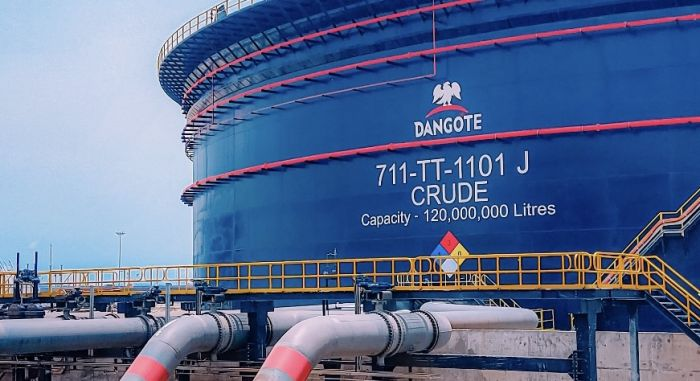
 In a move set to ease economic pressures on businesses and consumers, the Dangote Petroleum Refinery has announced a further reduction in the pump price of diesel. The price has been slashed by N55 per litre, bringing the new cost to N1,020 per litre, a decision that is expected to have far-reaching effects on the transportation, logistics, and industrial sectors in Nigeria.
This latest price adjustment comes barely weeks after the refinery initiated a similar cut, reinforcing Aliko Dangote’s commitment to stabilizing the Nigerian energy market and making petroleum products more affordable for Nigerians. The announcement has sparked widespread reactions across social media platforms such as Facebook, X (formerly Twitter), Instagram, and LinkedIn, with industry players and citizens hailing the move as a positive step toward reducing inflationary pressures on businesses and households.
Diesel is a critical fuel for many industries in Nigeria, particularly in manufacturing, agriculture, logistics, and power generation. With Nigeria’s unstable electricity supply, thousands of businesses and households rely on diesel-powered generators to keep operations running. Additionally, the transportation sector—especially long-haul trucking and commercial buses—heavily depends on diesel, meaning a price reduction could ease the cost of goods and services across various sectors.
Speaking on the price slash, an official from Dangote Refinery noted:
“This reduction is part of our continuous efforts to ensure that Nigerian consumers benefit from the local production of petroleum products. We are committed to supporting economic growth by offering competitive pricing that helps businesses and individuals manage their operational costs.”
Following the announcement, Nigerians took to social media to express their opinions on the price cut:
@BusinessInsiderNG (LinkedIn): “A welcome development! The transportation and logistics sectors will benefit greatly from this price cut. Hopefully, we will see this translate into lower costs of goods for the average Nigerian.”
@FuelWatchNigeria (X): “Good move by Dangote Refinery! But we need to see sustained reductions in fuel prices across the board, including petrol and aviation fuel.”
@NigerianTransportersForum (Facebook): “This is a relief for transporters who have been struggling with rising operational costs. Let’s hope fuel marketers and retailers pass on the benefits to consumers.”
However, some industry experts argue that while the price cut is a step in the right direction, more needs to be done to ensure fuel affordability across all sectors. Some analysts believe that with increased local refining capacity and improved regulatory policies, diesel prices could drop even further in the coming months.
Since commencing operations, the 650,000-barrels-per-day Dangote Refinery has positioned itself as a game changer in Nigeria’s energy sector. The refinery, which is the largest single-train refinery in the world, has been at the forefront of efforts to reduce Nigeria’s dependence on imported petroleum products.
By refining crude oil locally, Dangote Refinery has helped:
Lower foreign exchange pressure by reducing fuel importation.
Stabilize diesel supply within the country.
Create employment and boost industrial growth.
Improve fuel availability across Nigeria and West Africa.
The refinery’s ability to influence market prices and reduce Nigeria’s reliance on fuel imports is seen as a major economic breakthrough, with many expecting further price adjustments as local refining operations expand.
Economic analysts predict that as Dangote Refinery ramps up production and other local refineries—such as the Port Harcourt Refinery—resume operations, diesel and other fuel prices could drop further. However, factors such as exchange rates, global crude oil prices, and domestic supply chain efficiency will play a role in determining future price trends.
In the meantime, Nigerians are hopeful that this price reduction will have a trickle-down effect, reducing transportation costs, food prices, and overall inflation rates.