
 The Labour Party (LP) in Nigeria is currently embroiled in a significant leadership crisis, marked by factional disputes and conflicting interpretations of a recent Supreme Court ruling. This turmoil has led to the suspension of key figures and the establishment of parallel party structures, raising concerns about the party’s unity and future direction.
The crisis intensified following a Supreme Court decision that, according to the faction led by Senator Esther Nenadi Usman, nullified Julius Abure’s claim to the national chairmanship of the party. This interpretation has been contested by Abure, who maintains that the court’s ruling did not explicitly remove him from office. The Independent National Electoral Commission (INEC) has been urged to recognize the leadership transition as per the court’s decision.
In response to alleged financial misconduct and anti-party activities, the National Executive Council (NEC) aligned with Senator Usman suspended Julius Abure and former National Secretary Umar Farouk for six months. A six-member disciplinary committee has been established to investigate the allegations and recommend further actions.
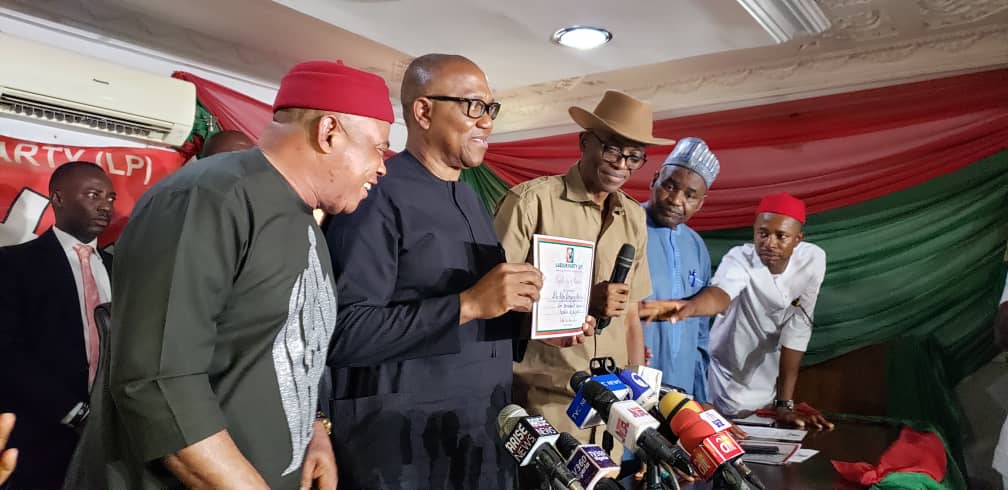
The Usman-led faction has initiated a comprehensive reorganization of the party, including plans to conduct ward, local government, and state congresses, culminating in a national convention within 90 days. A nationwide membership registration and revalidation exercise is also underway to strengthen grassroots engagement.
Key party figures, including Abia State Governor Alex Otti and 2023 presidential candidate Peter Obi, have called for unity and adherence to legal processes to resolve the leadership crisis. They emphasize the importance of focusing on the party’s goals and preparing for future elections.
The Labour Party’s internal conflict underscores the challenges of maintaining party cohesion amidst leadership disputes. As the party navigates this turbulent period, the outcomes of ongoing disciplinary actions and reorganization efforts will significantly impact its political trajectory and credibility among supporters.