

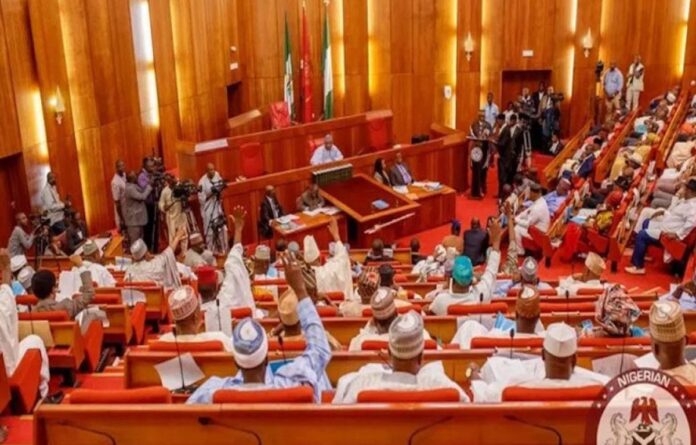
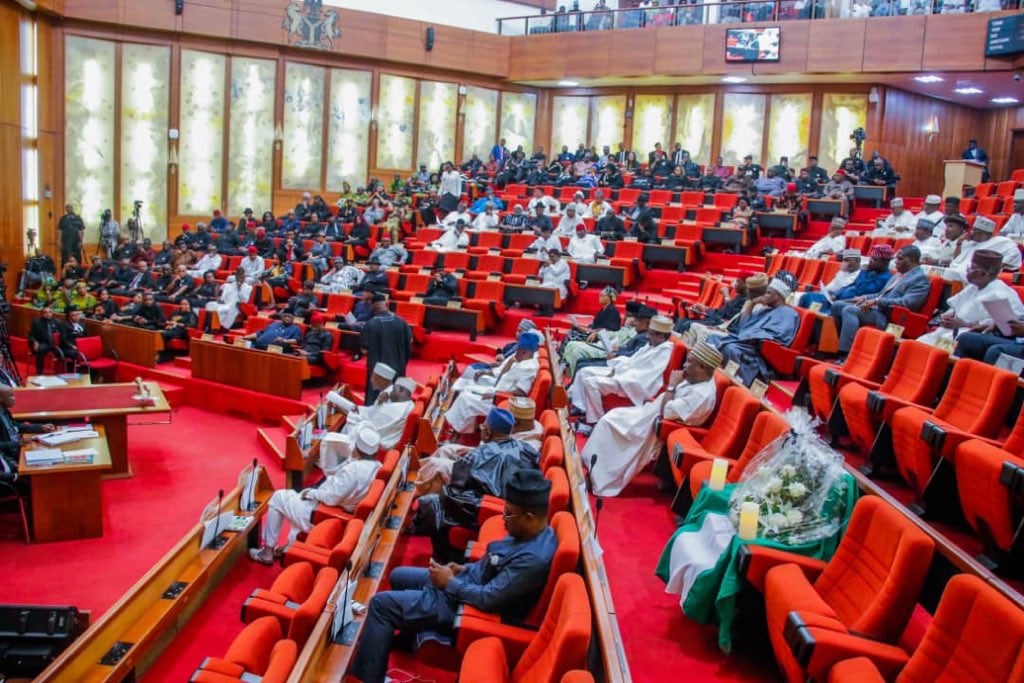
 The Senate has passed two bills on employees’ compensation and federal polytechnics after reconsidering their provisions to address ambiguities and strengthen the proposed legal frameworks.
The Nigerian Senate has passed the Nigerian Employees’ Compensation Trust Fund Agency Establishment Bill, 2026, and the Federal Polytechnics Act Amendment Bill, 2026, following a fresh review of the proposed legislation.
The bills were reconsidered during plenary on Thursday, October 15, 2026, after lawmakers rescinded their earlier decisions and recommitted them to the Committee of the Whole for further scrutiny and necessary amendments. Both measures were subsequently read for the third time and passed.
The exercise followed a motion by Senate Leader, Senator Opeyemi Bamidele, who said certain provisions required additional examination to ensure administrative clarity and establish a comprehensive legal framework.
Bamidele Seeks Clarity in Proposed Laws
Bamidele urged the Senate to rescind its earlier decisions on the bills and recommit them to the Committee of the Whole for further consideration.
Seconding the motion, Senator Kamarudeen Olalere Oyewumi, representing Osun West Senatorial District, said the review would help eliminate ambiguities and align the proposed legislation with laws establishing similar institutions.
The Senate subsequently examined the bills clause by clause and approved their provisions before completing the third-reading process.
New Employees’ Compensation Agency Proposed
According to Bamidele, the Nigerian Employees’ Compensation Trust Fund Agency Establishment Bill seeks to repeal the Nigerian Social Insurance Trust Fund Act and the Employees’ Compensation Act, 2010, and replace them with a new legal framework.
The proposed legislation is intended to provide compensation for death, injury, disease or disability arising from, or occurring in the course of, employment, alongside related matters.
If enacted, the new framework would reshape the legal and administrative arrangements governing employees’ compensation in Nigeria.
The bill’s stated objective places workers’ protection and compensation for employment-related harm at the centre of the proposed reform. Its practical impact will depend on the final provisions, implementation arrangements and administration of the framework.
Federal Polytechnics Act Amendment Bill Passed
The Senate also passed the Federal Polytechnics Act Amendment Bill, 2026, which seeks to revise the existing law governing federal polytechnics, including provisions relating to their functions and associated institutional matters.
The proposed amendment is intended to improve the legal framework under which federal polytechnics operate.
Technical and vocational education remains important to Nigeria’s economic development because of the need for skilled personnel across industry, manufacturing, technology and other sectors.
However, the precise changes introduced by the amendment should be assessed against the final text of the legislation.
Akpabio Highlights Workers’ Welfare and Technical Education
Senate President Godswill Akpabio commended Bamidele and other lawmakers for their contributions to the reconsideration and passage of the bills.
Akpabio said the legislation was intended to support workers’ welfare through compensation provisions while strengthening the role of technical institutions in meeting the country’s economic development needs.
His remarks underscored the two broad policy objectives of the measures: improving protection for employees affected by work-related death, injury, disease or disability, and reviewing the legal framework governing federal polytechnics.
What Happens After Senate Passage?
Although the Senate has passed both bills, passage by one chamber does not, by itself, make them law.
The measures must complete the applicable legislative process, including concurrence by the House of Representatives where required, before being transmitted for presidential assent.
The next stages will therefore be important in determining the final provisions and legal effect of the proposed reforms.
For workers, employers and technical education stakeholders, attention will turn to the final legislation and the arrangements that may follow if the bills complete the remaining constitutional requirements.
Follow DASCENARIO for more updates on Nigeria’s National Assembly, labour policy, workers’ welfare and education reforms.