
 The Head of the IOM Sub-office in Lagos, Ali Ali Ibrahim, linked ENBIC to the objectives of the ECOWAS Protocol on Free Movement of Persons, Residence and Establishment, describing the initiative as part of wider efforts to promote lawful, safe, orderly and regular mobility across the region.
Ibrahim also connected the initiative to the Global Compact for Safe, Orderly and Regular Migration, noting the importance of stronger migration governance and systems that facilitate legitimate movement while improving security.
He stressed that the impact of ENBIC should ultimately be measured not simply by the number of cards issued, but by whether the initiative improves safety, regional integration, economic opportunities and the experience of citizens moving across West African borders.
 NIS Highlights Balance Between Mobility and Border Security
Representing the Nigeria Immigration Service, Assistant Comptroller-General Titilayo Olaiya, who is responsible for Passports and Other Travel Documents, emphasised the need to balance the facilitation of legitimate movement with effective border security.
DASCENARIO reports that Olaiya called on journalists to help Nigerians understand the purpose of ENBIC, including eligibility requirements, application procedures and the use of the card at relevant points of entry and exit.
She also stressed the consequences of inaccurate information, particularly at border points, where misunderstanding of travel-document requirements could create difficulties for travellers.
Recent reporting from the workshop quoted Olaiya as warning that misinformation at points of entry benefits no one and urging stronger cooperation between the immigration authorities and the media.
 Seven ECOWAS Countries Have Deployed ENBIC
The sensitisation programme comes as ECOWAS advances the regional deployment of ENBIC.
According to ECOWAS and recent reports, seven of the bloc’s 15 member states have deployed the biometric identity card. They are Nigeria, Ghana, Benin, Senegal, Guinea-Bissau, The Gambia and Sierra Leone.
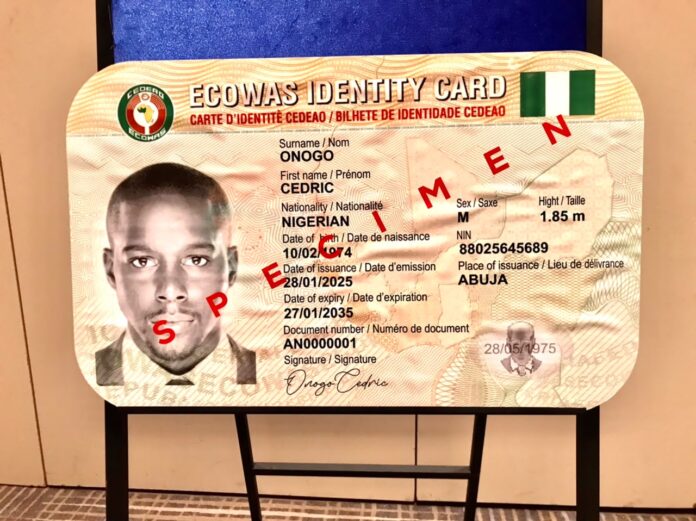
The ENBIC is designed as a machine-readable identity and travel document capable of allowing immigration authorities to electronically authenticate a traveller’s identity. It is intended to replace the traditional handwritten ECOWAS Travel Certificate and strengthen identity verification at border points.
The development is being positioned as part of ECOWAS’s broader efforts to strengthen free movement, regional integration, border management and security cooperation.
 ECOWAS Targets Mutual Acceptance by December 2026
A major issue highlighted during the sensitisation programme was the regional objective of achieving mutual acceptance of ENBIC at air, land and sea borders by December 2026.
ECOWAS has said member states are working towards ensuring that the card issued by one participating country can be recognised and accepted at relevant border points in other member states.
The ECOWAS Commission previously reported that ministers from member states had committed to working towards mutual acceptability of the biometric card across air, land and sea borders by December 2026.
 The proposed region-wide acceptance is expected to strengthen identity verification while supporting smoother movement for citizens, traders, workers, transport operators and other legitimate travellers.
 Nigeria Commenced ENBIC Rollout in 2025
Nigeria commenced its national rollout of the ECOWAS National Biometric Identity Card through the Nigeria Immigration Service in November 2025.
The initiative represents part of Nigeria’s wider effort to modernise migration management, strengthen identity verification and support the implementation of ECOWAS’s regional free-movement framework.
The NIS’s online ENBIC platform provides services connected with applications and related processes, including appointment scheduling, application tracking and data-related services.
The digital application process is intended to make access to the document more convenient while supporting a structured system for biometric enrolment and identity verification.
 Public Awareness Critical to ENBIC Success
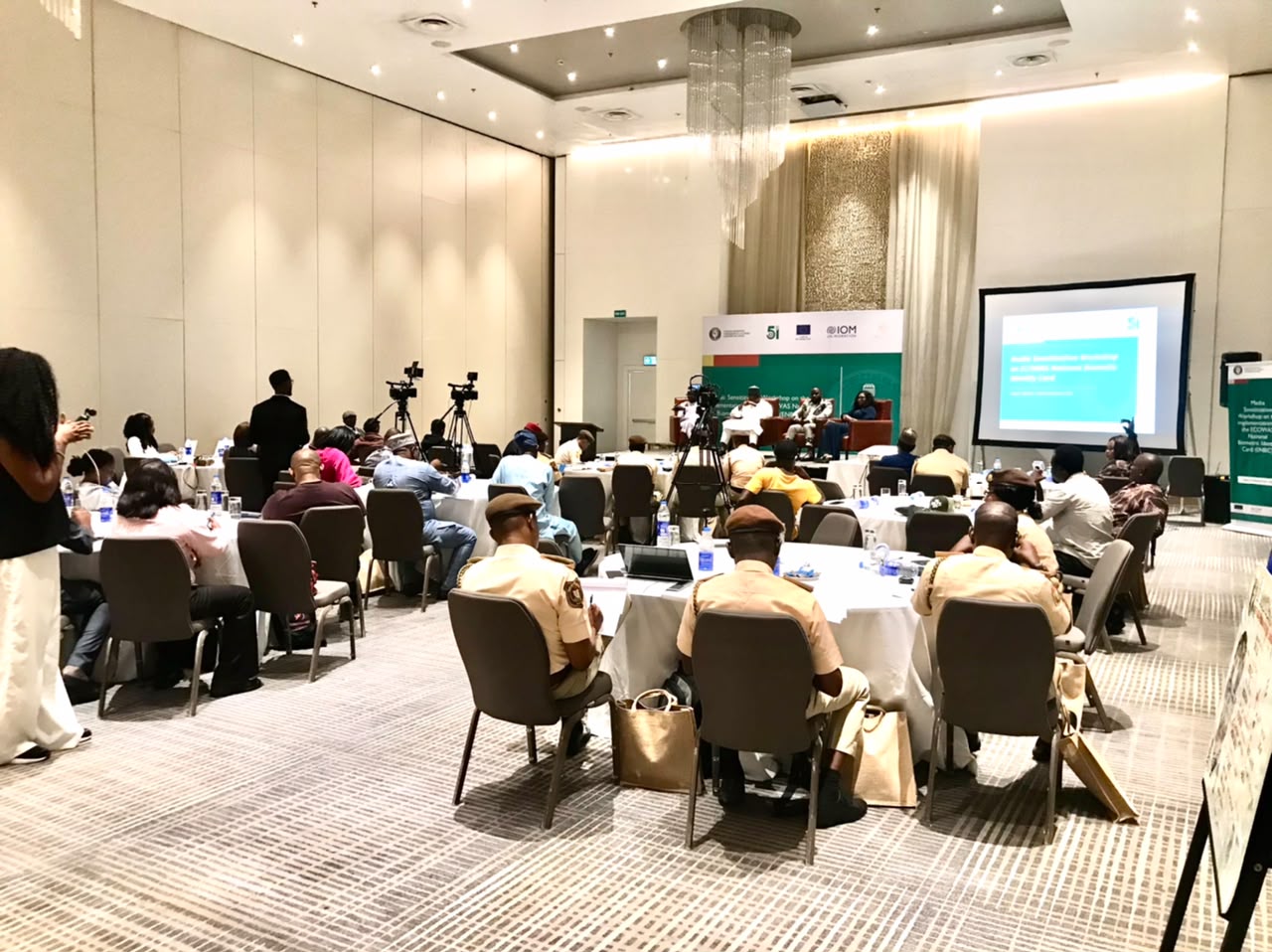
Participants at the Lagos workshop emphasised that effective implementation of ENBIC will require more than the deployment of technology and border infrastructure.
For citizens to benefit fully from the initiative, travellers need reliable information on who qualifies for the card, how applications are processed, what documentation is required and how the card relates to other recognised ECOWAS travel documents.
This places a significant responsibility on the media to distinguish verified information from speculation and to provide clear explanations to the travelling public.
Ajugwo’s appeal to journalists therefore underscored the importance of media institutions as a bridge between regional institutions and citizens, particularly at a time when misinformation can spread rapidly through conventional and digital platforms.
Fee Information Requires Verification
The workshop and subsequent reports have also drawn attention to the cost of obtaining the ENBIC.
However, published figures are not completely consistent. Some September media reports have cited figures around ₦35,000 to ₦35,500, while the NIS service information referenced for 2026 gives a different figure when the applicable charges are included.
Applicants are therefore advised to confirm the prevailing official fee directly through the Nigeria Immigration Service’s authorised ENBIC platform before making payment, rather than relying solely on figures published in secondary reports.
This distinction is particularly important for media organisations reporting on the initiative, as fees and applicable charges may be subject to official updates.
Media Stakeholders Urged to Sustain Public Education
The Lagos sensitisation programme ultimately reinforced the need for continuous public education as ECOWAS works towards broader implementation and mutual recognition of ENBIC.
For the initiative to deliver its intended benefits, citizens must understand both its opportunities and its requirements.
The participating institutions consequently urged journalists and media organisations to sustain accurate reporting on ENBIC and provide citizens with practical information capable of supporting informed and lawful cross-border travel.
As ECOWAS pursues its December 2026 objective for mutual acceptance of the biometric card across air, land and sea borders, the media is expected to remain a critical partner in building public awareness, trust and understanding of the initiative.