
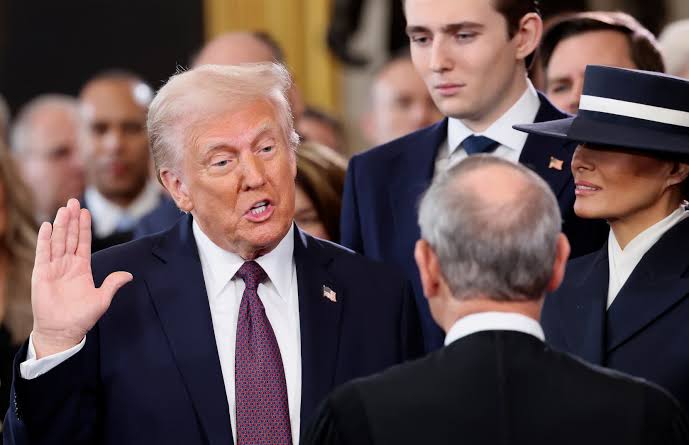
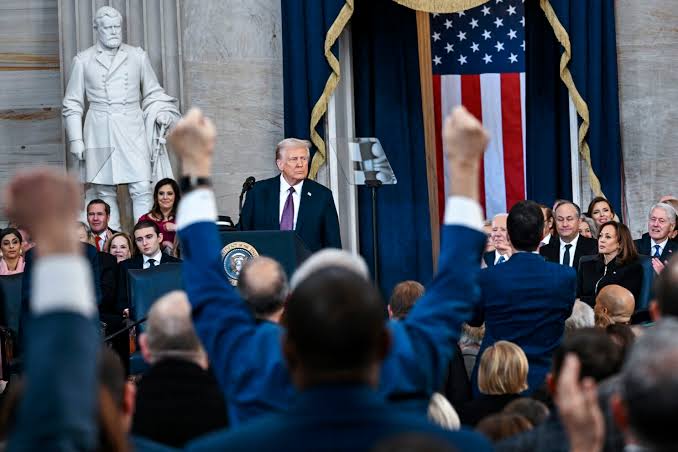
 On January 20, 2025, President Donald Trump was sworn in as the 47th President of the United States, marking the commencement of his second term in office. In his inaugural address, he declared the day as “liberation day” and announced a “revolution of common sense” aimed at restoring American prosperity and pride.
Central to his speech were commitments to address immigration issues and implement policies with significant ramifications for immigrants and African nations.
Immigration Policies and Their Impact
President Trump’s inauguration was immediately followed by a series of executive orders targeting immigration. He declared a national emergency at the U.S.-Mexico border, directing the deployment of troops to secure the border and labeling cartel organizations as “foreign terrorist organizations.” Additionally, he signed an order attempting to end birthright citizenship, a move that would require at least one parent to be a U.S. citizen or green card holder for a child born in the U.S. to obtain citizenship. Legal experts argue that such a change would necessitate a Constitutional amendment, making the executive order susceptible to legal challenges.
The administration also plans to reinstate the “Remain in Mexico” policy and end “catch and release,” aiming for large-scale deportations, particularly targeting immigrants with criminal records. Critics contend that these actions could adversely affect the U.S. economy by creating labor shortages in sectors like agriculture and construction, which rely heavily on immigrant workers.
President Trump’s “America First” approach is anticipated to influence U.S.-Africa relations in several domains:
Trade and Investment: The administration’s protectionist stance may lead to measures such as a universal 10% tariff on foreign goods, potentially impacting African exports. Programs like the African Growth and Opportunity Act (AGOA), which have facilitated African exports to the U.S., might face reevaluation. However, to counter China’s growing economic influence in Africa, initiatives like Prosper Africa and the Development Finance Corporation may continue to encourage U.S. investments on the continent.
Aid and Development: Historically, President Trump has expressed skepticism toward foreign aid, and there may be renewed efforts to reduce funding for programs such as the President’s Emergency Plan for AIDS Relief (PEPFAR), which has been instrumental in combating HIV/AIDS in Africa. Such cuts could have significant implications for health initiatives across the continent.
Security and Conflict: The administration’s approach to security aid is expected to be selective and transactional. While support may continue in regions where U.S. strategic interests are directly involved, broader assistance in conflict zones could be limited. The growing influence of other global powers in Africa may also shape U.S. engagement on security matters.
President Trump’s second term heralds a series of policy initiatives with profound implications for immigrants and African nations. The administration’s stringent immigration policies are poised to affect immigrant communities within the U.S., while the “America First” doctrine may reshape trade, aid, and security dynamics with African countries. As these policies unfold, close attention to their development and impact will be essential for stakeholders both domestically and internationally.