


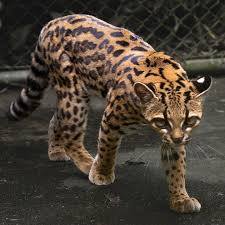
…Meet Tigrino, the Wildcat at the Centre of a Scientific Breakthrough
Scientists have identified Leopardus tilcayo, a tiny wildcat from Bolivia’s Andean Yungas forests, in a discovery that reshapes understanding of tiger cat diversity and highlights how much biodiversity may remain hidden in familiar animal groups.
Genetic analysis of South American wildcats has revealed five distinct tiger cat species, including Leopardus tilcayo, a roughly two-kilogram feline whose discovery underscores the importance of biodiversity research and wildlife conservation.
Leopardus tilcayo: The Tiny Wildcat Making Scientific History
A small wildcat weighing about two kilograms has made a major contribution to science after researchers identified it as a previously undescribed living cat species in Bolivia’s Yungas forests, part of the central Andes Mountains.
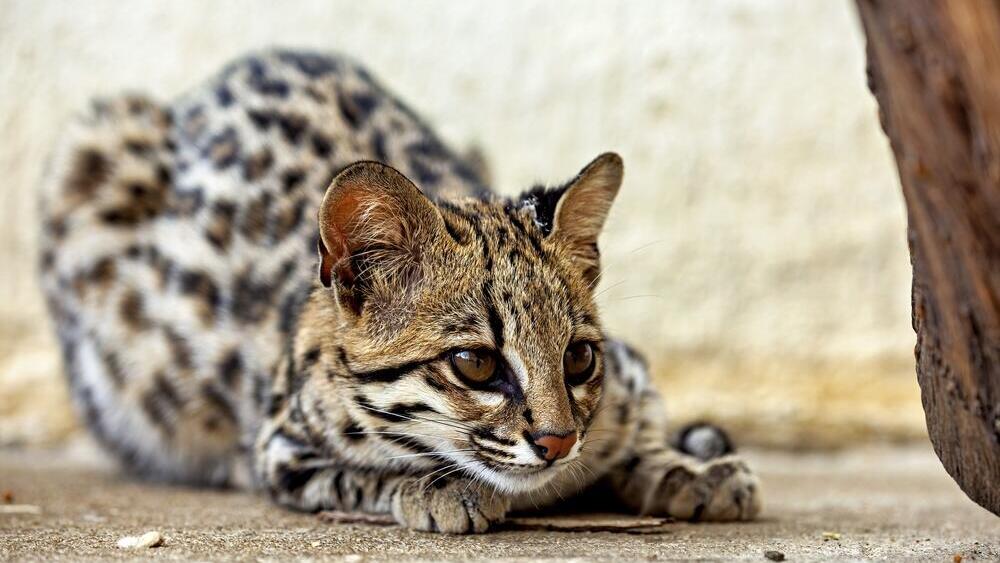
Named Leopardus tilcayo, the feline has a slender body, spotted fur and a ringed tail. Despite its diminutive size, the discovery has attracted international attention because researchers describe it as the first newly described living cat species in more than 100 years.
The research, published on September 17 in the scientific journal Current Biology, emerged from an investigation into the evolutionary relationships of tiger cats—small wild felines native to the tropical regions of the Americas.
Rather than setting out to discover a new species, the researchers were investigating how many distinct species existed within this group. Their genetic analysis revealed more diversity than they had anticipated, identifying five separate tiger cat species, including L. tilcayo.
The finding offers a striking reminder that even animals studied for generations can hold biological secrets that scientists have yet to uncover.
A Discovery Hidden in the Tiger Cat Family Tree
Tiger cats are small, elusive wild felines found across parts of Central and South America. Their similar appearance has made it difficult for scientists to determine precisely how many distinct species exist within the group.
According to evolutionary biologist Jonas Lescroart of the University of Antwerp in Belgium, the research team wanted to clarify one branch of the cat family tree.
The scientists analysed genetic information from 38 species within the Leopardus genus, which includes tiger cats and larger, more familiar wildcats such as the ocelot.
Before beginning the analysis, the researchers expected to identify two, three or perhaps four distinct tiger cat species. Instead, their findings pointed to five.
One of those was Leopardus tilcayo, a species that had not previously been formally described by scientists.
The discovery demonstrates how genetic analysis can reveal evolutionary differences that may not be obvious from an animal’s outward appearance alone.
It also shows why scientists must continue examining the relationships between closely related animals rather than assuming that similar-looking populations necessarily belong to the same species.
Only Two Known Individuals: The Story Behind Tigrino
The identification of Leopardus tilcayo is particularly intriguing because the scientific evidence is based on a very limited number of known individuals.
One is a male wildcat named Tigrino, who lives at the Senda Verde animal sanctuary in Bolivia. The other is a female that received treatment for injuries at a sanctuary before being released back into the wild. Genetic evidence from these animals helped researchers establish that they belonged to a previously undescribed species.
The breakthrough began when Bolivian cat conservationist and National Geographic Explorer Paola Nogales-Ascarrunz encountered Tigrino and noticed that his appearance did not match the tiger cats she expected to find in the region.
She arranged genetic testing and subsequently shared the findings with Lescroart and his colleagues, whose wider research examined the evolutionary relationships among South American tiger cats.
The discovery highlights the importance of combining field observations, genetic testing and collaboration among researchers.
An animal that might once have been classified as an unusual example of a known species can, through detailed scientific investigation, reveal a distinct evolutionary history.
Nevertheless, the small number of known individuals means researchers still have substantial questions to answer about the species’ distribution, population size, behaviour and ecological needs.
Why the Discovery of Leopardus tilcayo Matters
The discovery is significant for more than its place in the history of cat taxonomy.
Scientists have long recognised that some animals can be difficult to distinguish because closely related species share similar physical characteristics. Such species are sometimes described as cryptic species: distinct evolutionary lineages that may not be readily identifiable through appearance alone.
The new research illustrates how genetic evidence can help resolve these uncertainties.
By analysing 38 cat samples, including material from museum specimens, the researchers found that the tiger cat group comprises five distinct species rather than the smaller number traditionally recognised. The study also identified a new subspecies in Peru, named Leopardus tigrinus antisuyo.
The findings suggest that scientists may have underestimated the diversity within this group of wildcats.
They also raise important questions about conservation. If a population previously treated as part of a widespread species is recognised as a separate species, researchers may need to reassess its geographical range, population status and vulnerability.
For L. tilcayo, the immediate challenge is determining how many individuals survive in the wild and where they can be found.
 A Race to Understand and Protect Bolivia’s Yungas Forests
The Yungas forests of Bolivia form part of a biologically rich region where the Andes meet the Amazon basin. The landscape supports distinctive wildlife and provides habitat for species whose distribution and ecology remain incompletely understood.
However, habitat loss and human activities pose threats to many of the region’s wild animals. Reporting on the discovery has highlighted concerns about deforestation, agricultural expansion, fires and mining in habitats occupied by tiger cats.
For conservationists, identifying Leopardus tilcayo is therefore an important first step—not the end of the investigation.
Researchers need more field evidence to establish the species’ distribution and abundance. Camera traps, genetic sampling and careful examination of suitable habitats could help determine whether additional populations exist.
That information would be essential for assessing its conservation needs and deciding what protective measures may be appropriate.
The challenge is particularly pressing because a species can be vulnerable before scientists fully understand its population or ecological requirements.
At present, the limited evidence does not establish the total number of L. tilcayo in the wild or justify a definitive population assessment. Further research will be needed before its conservation status can be reliably determined.
Could Scientists Discover More Previously Unknown Cats?
The discovery of Leopardus tilcayo raises a broader question: how many other species remain unrecognised?
Lescroart and his colleagues were not conducting a targeted search for a new cat. They were investigating relationships within an existing group, and their findings revealed an unexpected species.
That is an important lesson in modern biodiversity research. Scientific discoveries do not always result from expeditions specifically designed to find new animals. Sometimes they emerge when researchers revisit familiar species using improved analytical methods and new evidence.
The discovery also demonstrates the value of combining traditional field knowledge with modern genetics. Tigrino’s unusual appearance prompted further investigation, while genetic analysis provided the evidence needed to distinguish the species from its relatives.
As researchers continue studying the world’s wildlife, comparable discoveries may help clarify evolutionary relationships and reveal species that have remained overlooked.
But identifying a new species is only part of the work. Understanding where it lives, what threatens it and how best to protect it is equally important.
The Bigger Picture: Biodiversity Is Still Full of Surprises
For more than a century, scientists had not formally described a new living cat species. The identification of Leopardus tilcayo has therefore attracted attention well beyond the specialist world of mammalogy.
The discovery challenges the assumption that familiar animal groups have already been fully documented. It shows that genetic research can reveal hidden diversity and that individual animals can provide crucial clues to evolutionary history.
It also offers a reminder that scientific recognition and conservation are closely connected. Once a species is identified, researchers can begin asking more focused questions about its survival and the conditions it needs to persist.
For Bolivia’s tiny tiger cat, those questions are only beginning to be answered.
As Lescroart noted in the original report, researchers cannot say whether another newly described cat species will take a century to emerge. For now, however, Leopardus tilcayo stands as a striking example of how much remains to be learned about the natural world.
The discovery’s most important message may be this: even in an age of advanced science, nature still holds secrets—and finding them is only the beginning of our responsibility to protect them.
Read more science, wildlife and environmental features on DASCENARIO.