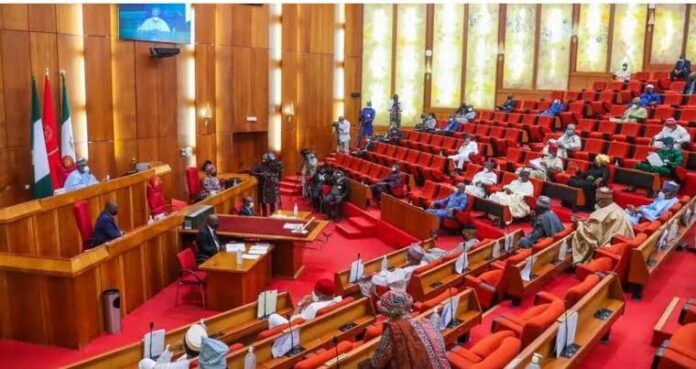
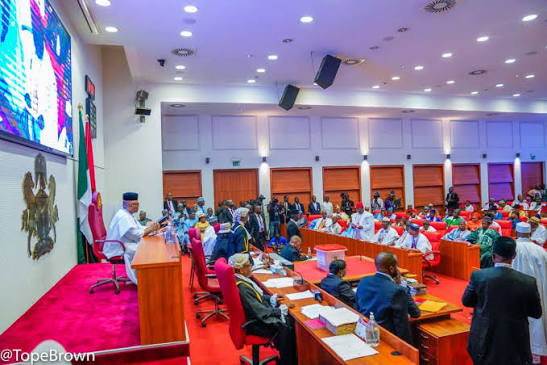
 Abuja, Nigeria – February 11, 2026 – In an unprecedented move signaling deepening legislative frustration with defence funding, the National Assembly Joint Committees on the Nigerian Air Force (NAF) have unanimously rejected the service’s 2026 budget proposal.
The decision, announced during a joint budget defence session involving the Senate and House of Representatives Committees on Air Force, was driven by what lawmakers described as grossly inadequate allocations that fail to match the scale of Nigeria’s escalating security crises.
The Chairman of the Joint Committee, Senator Osita Ngwu, declared the rejection after a detailed review of both the NAF’s 2025 budget performance and its proposed estimates for the 2026 fiscal year.
“The Committee unanimously reviewed the presentation by the Air Force and rejected the budget as proposed,” Ngwu stated.
“The budget is inadequate and insufficient to fund the Nigerian Air Force in maintaining the level of firepower and air capability required to curb insurgency at this critical time in the country.”
The Nigerian Air Force remains a linchpin of the country’s counterinsurgency and internal security operations, providing critical air support for ground troops, intelligence, surveillance, reconnaissance, and rapid response capabilities across multiple theatres of conflict.
From the Boko Haram and ISWAP insurgency in the North-East to sprawling bandit networks in the North-West and North-Central, and the rising threat of kidnapping and criminal gangs nationwide, the NAF’s operational tempo has rarely been higher.
Yet lawmakers argued that the proposed 2026 allocation reflected neither the urgency of the moment nor the tangible costs of sustaining air power in a challenging environment.
The rejection underscores a growing bipartisan consensus within the National Assembly that Nigeria’s security forces are being asked to do more with less, even as citizens demand decisive action against militant groups.
Rather than simply rejecting the proposal and returning it to the executive, the joint committee adopted a proactive stance. Senator Ngwu announced the formation of a six-member panel tasked with engaging key stakeholders, including the Federal Government, the Budget Office of the Federation, and the leadership of the National Assembly.
The panel’s mandate is to negotiate and craft a “more realistic and responsive” budget proposal that adequately reflects the NAF’s operational imperatives.
The revised proposal, once finalized, will be resubmitted to the Joint Committee on Air Force for consideration and approval.
“Nigerians urgently need effective action against insurgency,” Ngwu emphasized, calling on the Federal Government to fully cooperate with the legislative intervention.
A significant subtext to the budget rejection is the lingering issue of capital vote rollovers. Senator Ngwu acknowledged the fiscal constraints confronting the Federal Government, noting that approximately 70 per cent of the 2025 capital budget for ministries, departments, and agencies had been rolled over into the 2026 fiscal year as a matter of government policy.
However, he stressed that the rollover had not translated into meaningful funding releases, with a substantial portion of those allocations remaining unfunded.
This experience, lawmakers argued, informed their insistence that any allocation approved for the Air Force in 2026 must be not only sufficient on paper but also capable of prompt and full release.
The committee’s position, Ngwu clarified, “is based on the premise that whatever funding is provided in the 2026 budget must be sufficient to adequately support the operational needs of the Nigerian Air Force.”
Echoing Senator Ngwu’s sentiments, the Co-chairman of the joint committee, Rt. Hon. Kabiru Alhassan, underscored the direct link between funding and operational effectiveness. “The Nigerian Air Force requires substantial funding to effectively combat insurgency, banditry, and other criminal activities across the country,” he asserted.
Alhassan’s remarks reflect a broader legislative apprehension that the incremental, piecemeal funding approach of recent years has left the armed forces perpetually reactive rather than strategically proactive. With insurgent groups demonstrating resilience and adaptive capacity, lawmakers are increasingly insistent that the 2026 budget must represent a qualitative leap in resource allocation, not merely a marginal increase.
The rejection of the NAF budget is the latest indicator of escalating tension between the legislative and executive branches over defence prioritization. It signals that the National Assembly is no longer willing to approve defence estimates it considers performative rather than transformative.
The coming weeks will test whether the six-member panel can broker a compromise that satisfies both fiscal realism and operational necessity.
For the Nigerian Air Force, the message from the National Assembly is clear: the status quo is unacceptable.
As the country confronts an expanding constellation of security threats, the legislature has drawn a line, insisting that the price of inaction—measured in blood, displaced communities, and eroded state authority—is far greater than the cost of adequate funding. Whether the executive branch is prepared to meet that moment remains to be seen.