
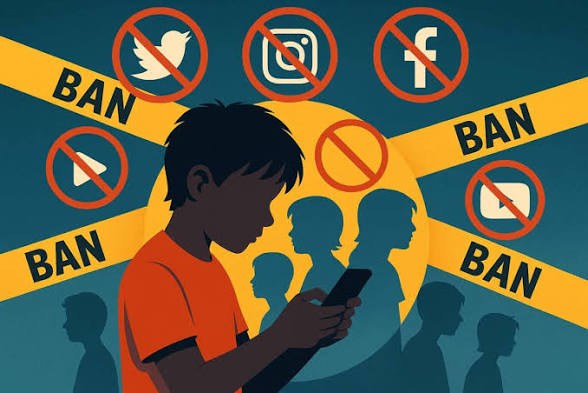

Abuja, Nigeria – March 11, 2026 – The Federal Government has launched a public consultation to gather opinions on potential measures to protect children online, including the possible introduction of age restrictions for social media platforms in Nigeria. The move, announced by the Minister of Communications, Innovation and Digital Economy, Dr. Bosun Tijani, signals a significant shift in the country’s approach to child safety in the digital space.
The initiative, announced via the Minister’s official X account on March 10, 2026, invites parents, teachers, educators, young people, and digital technology experts to participate in a survey that will shape future policy decisions on children’s access to social media .
Why the Government Is Considering Age Limits
According to Dr. Tijani, while the internet provides “significant opportunities for learning, creativity, and communication,” it also exposes children to several risks that cannot be ignored . These include:
– Cyberbullying
– Harmful or inappropriate content
– Online exploitation and grooming
– Misuse of personal data
– Addictive platform features
– Emerging challenges linked to artificial intelligence tools
“As Nigeria evaluates potential policy approaches for protection of children online, including age restrictions, improved age verification systems, platform accountability measures, and enhanced regulatory oversight, public input is essential to ensure that any framework adopted reflects national priorities, respects children’s rights, and responds to the realities of Nigeria’s digital landscape,” the Minister stated .
The Consultation Process
The Ministry of Communications, Innovation and Digital Economy, in collaboration with the Nigerian Data Protection Commission (NDPC), has launched a public poll seeking comprehensive input from stakeholders across the country . The consultation seeks feedback from:
– Parents and guardians
– Teachers and educators
– Young people themselves
– Digital and technology experts
– Digital professionals
The feedback gathered will help the government decide whether to introduce minimum age limits and stronger age-verification systems for platforms like TikTok, Instagram, Facebook, and X (formerly Twitter) .
What Age Limit Is Nigeria Considering?
Although no final age has been announced, the government is studying policies implemented in other countries to determine what might work best in the Nigerian context. Some nations are considering bans or restrictions for users under 16, placing responsibility on tech companies to enforce age verification .
Based on global trends, experts suggest Nigeria may consider one of three options:
| Possible Age | Context |
| 13 years | Matches existing platform policies worldwide |
| 16 years | Being considered or implemented in several countries for stronger protection |
| 15 years | Adopted by France and Denmark in recent legislation |
Most analysts believe Nigeria may adopt 13 or 16 as the minimum age to balance child protection with digital access rights.
Nigeria Joining Global Trend
With this move, Nigeria is set to join a growing list of countries that have either implemented or are about to implement age restrictions for social media . Prominent examples include:
– Australia: Implemented a ban on social media for under-16s in December 2025, forcing platforms like TikTok, Instagram, and YouTube to restrict access
– Indonesia: Announced a social media ban for children under 16, following similar global trends
– Denmark: Set to ban social media platforms for children under 15, with support secured from governing coalition parties and opposition parties
– France: Lawmakers passed a bill in late January 2026 that would ban social media for children under 15, with President Emmanuel Macron supporting the measure to protect children from excessive screen time
The Nigerian Digital Landscape
Nigeria has witnessed rapid growth in internet and social media usage over the past decade, driven largely by increased smartphone adoption and expanding mobile broadband networks . According to the National Commissioner of the NDPC, Dr. Vincent Olatunji, more than 40 million Nigerians spend an average of six hours daily on social media .
This widespread usage has raised concerns among policymakers and child protection advocates about the exposure of minors to harmful online content and digital exploitation . The government’s consultation seeks to address these concerns while balancing the educational and social benefits of internet access.
What the Proposed Policy Would Mean for Tech Platforms
If Nigeria eventually introduces social media age restrictions, it could significantly affect platforms such as TikTok, Instagram, Facebook, and X in several ways:
1. Mandatory Age Verification
Social media companies may be required to introduce stronger age-verification systems for Nigerian users. This could include:
– Phone number or NIN-linked verification
– Facial or AI age estimation tools
– Parent/guardian consent for minors
Users who cannot verify their age may lose access or face restrictions.
2. Account Restrictions for Underage Users
If Nigeria sets a minimum age, platforms may have to:
– Block new accounts created by users below the legal age
– Disable certain features for teenagers (live streaming, messaging strangers, targeted ads)
– Automatically remove accounts suspected to belong to children below the limit
This could affect millions of Nigerian teenagers who currently use social media without strict verification.
3. Penalties for Non-Compliance
The government may introduce regulatory penalties for companies that fail to enforce the rules. That could mean:
– Heavy fines
– Content restrictions
– Temporary suspension of services
Nigeria already regulates digital platforms through agencies like the Nigerian Communications Commission (NCC) and National Information Technology Development Agency (NITDA), which could enforce compliance.
4. Impact on Nigerian Content Creators
If strict age limits are adopted:
– Teen creators may lose access to monetisation
– Brands targeting youth audiences may shift marketing strategies
– Youth-driven trends on platforms like TikTok could decline
However, it could also increase parental control and child safety online.
The government emphasizes that this is still a consultation stage, meaning no law or restriction has been implemented yet . The responses gathered through the public poll will guide future regulations or legislation on social media use by minors.
Dr. Tijani urged parents, educators, young people, digital professionals, and all stakeholders to participate in the survey to shape evidence-based policies for safer online spaces for children in Nigeria .
“As Nigeria evaluates possible policy options, it is important that any approach reflects national priorities, respects children’s rights, and responds effectively to the realities of the country’s digital landscape,” the Ministry stated in a policy note accompanying the survey .
If implemented, the rule will likely force TikTok, Instagram, Facebook, and X to verify the ages of Nigerian users, restrict minors’ features, and possibly remove underage accounts. For now, Nigerians are invited to participate in the public poll and share their opinions on how children’s internet access should be regulated in the country.