
Nigerian Association of Petroleum Explorationists (NAPE) President Olamujoke Cecilia Ajayi has outlined a proposed industry-backed training initiative to equip fresh graduates with practical skills for Nigeria’s oil and gas sector, address employers’ demand for experienced personnel and strengthen the country’s energy security.
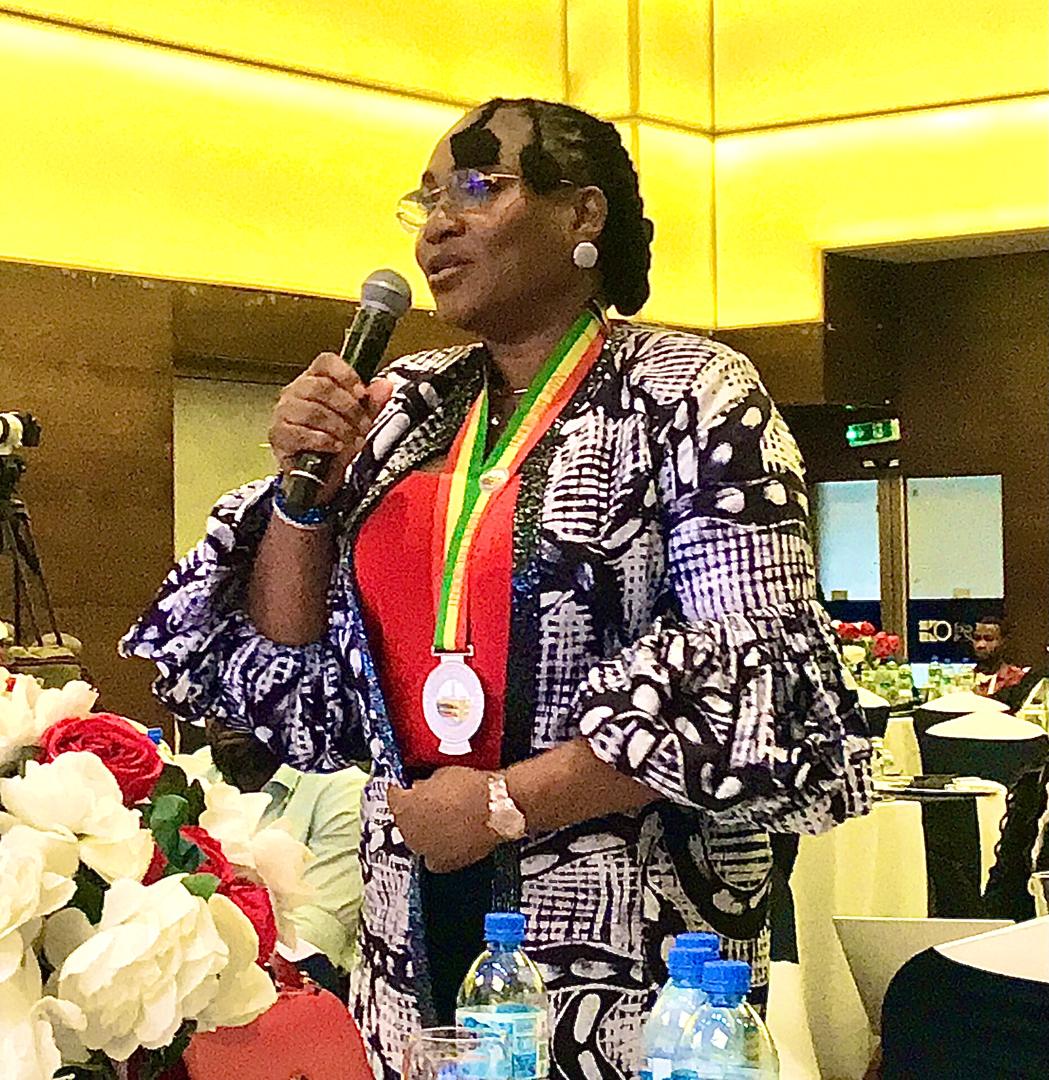
Speaking at a NAPE pre-conference workshop, Cecilia Ajayi highlighted plans for a shared energy training hub where companies could help train and recruit job-ready graduates while developing the technical expertise needed to unlock Nigeria’s hydrocarbon potential.
NAPE President Cecilia Ajayi Pushes Industry-Led Training to Bridge Oil and Gas Skills Gap
The President of the Nigerian Association of Petroleum Explorationists (NAPE), Olamujoke Cecilia Ajayi, has called for a collaborative approach to preparing Nigerian graduates for employment in the oil and gas industry, proposing an industry-backed training centre or energy academy to bridge the gap between academic qualifications and workplace requirements.
Ajayi made the remarks during a pre-conference workshop ahead of the 44th NAPE Annual International Conference and Exhibition, as the association discussed the future of Nigeria’s upstream petroleum sector, exploration and development strategies, local capabilities and energy security.
In her address, Ajayi explained that the proposed initiative would focus on training fresh graduates to become industry-ready, giving employers access to a pool of candidates equipped with practical skills and relevant technical knowledge.
She described a model in which participating companies could jointly support a central training hub instead of each organisation independently maintaining graduate training programmes.
Under the proposed arrangement, the centre would serve as a regular recruitment destination for industry employers, while graduates would have a clearer route into a sector where companies frequently seek candidates with prior experience.
The initiative, as outlined in Ajayi’s remarks, would seek to tackle two connected challenges: young graduates struggling to secure employment and employers seeking workers who can contribute effectively to operations from the outset.
Proposed NAPE Academy Could Give Young Graduates a Pathway Into the Industry
Ajayi acknowledged the difficulty companies face when recruiting for technically demanding roles, particularly when employers need personnel capable of operating assets and contributing to production and revenue generation with limited additional training.
She said she understood why businesses often prioritised experienced workers, especially when taking responsibility for operating petroleum assets and bringing them into cash flow.
However, she argued that the industry needed a more coordinated way to develop new talent rather than leaving individual companies to shoulder the full burden of training inexperienced graduates.
The proposed NAPE Academy would therefore offer a shared approach to workforce development, bringing industry participants together to support training and build a pipeline of professionals equipped for the sector’s evolving needs.
The idea aligns with NAPE’s wider efforts to strengthen technical capacity and connect professional development with industry requirements. In September 2026, the Guardian reported on the association’s proposed academy as an industry-owned pipeline for developing technically capable, job-ready energy professionals.
Although the full operational arrangements, funding structure and launch timeline were not established in the supplied speech, Ajayi’s remarks indicate that the association wants companies and relevant stakeholders to collaborate on developing the next generation of energy professionals.
NAPE Links Graduate Training to Nigeria’s Energy Security
Beyond employment, Ajayi connected workforce development with Nigeria’s long-term energy security and the need to expand petroleum exploration and production.
She noted that many experienced professionals who possess valuable industry knowledge are approaching retirement age, making it important to transfer their expertise to younger generations.
Her concern was that Nigeria could face a capacity gap if it failed to develop enough new professionals to sustain exploration, manage petroleum assets and support future production.
“We are talking of bringing out more barrels. We are talking of exploring further,” Ajayi said in the supplied address, emphasising the connection between technical expertise, exploration and energy security.
Her argument was that increasing reserves and production requires more than investment in equipment and assets. It also depends on having skilled people who understand the technical and operational demands of the industry.
The proposal reflects a central challenge for Nigeria’s upstream petroleum sector: strengthening indigenous capabilities while attracting investment, improving exploration performance and developing the human capital needed to sustain operations.
NAPE’s 44th Conference Focuses on Reserves Growth and Local Capabilities
The workshop sits within the broader programme of the Nigerian Association of Petroleum Explorationists, whose 44th Annual International Conference and Exhibition is scheduled for November 8–12, 2026, at Eko Hotel & Suites, Victoria Island, Lagos.
The conference theme is “Unlocking More Barrels: Driving Reserves Growth through Exploration, Local Capabilities, & Adaptive Technology.” The programme is designed to bring together energy professionals and other stakeholders to discuss exploration, technology, industry development and the future of the sector.
Ajayi’s emphasis on an industry-backed training academy fits into this wider discussion by highlighting the role of people and professional expertise in achieving reserves growth.
For Nigeria, a more coordinated training system could help companies access skilled entry-level professionals while providing graduates with a clearer pathway into an industry where practical experience is highly valued.
However, the proposed academy’s ultimate impact will depend on how it is funded, governed and implemented, as well as the extent to which employers participate in training and recruitment.
Industry Collaboration Seen as Key to Developing Nigeria’s Energy Workforce
Ajayi expressed satisfaction that stakeholders were supporting the idea and working together to move it forward. In her remarks, she also referred to the involvement of the Minister and SCE.
Her message was that addressing the skills gap requires collaboration rather than isolated training initiatives.
If successfully developed, the proposed academy could provide a structured platform for preparing graduates for technical roles, supporting knowledge transfer between experienced professionals and younger workers, and helping employers identify suitable candidates.
It could also strengthen the connection between education and industry by ensuring that training responds to the practical requirements of exploration, production and petroleum asset management.
For NAPE, the challenge now is to translate the concept into a sustainable programme with clear training standards, industry participation and measurable employment outcomes.
Ajayi’s address ultimately placed human-capital development at the centre of Nigeria’s energy ambitions: the country’s ability to unlock more barrels and strengthen energy security will depend not only on its petroleum resources, but also on the skills and expertise of the people responsible for developing them.
Read more energy-sector developments on DASCENARIO.