


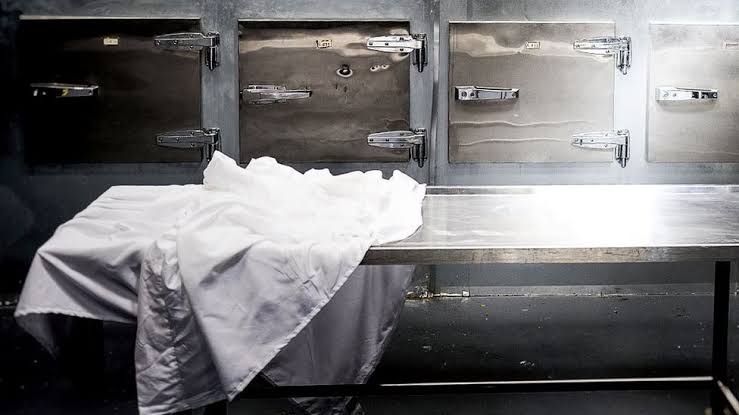
 Fifty-six-year-old Chijoku Ihunwo has spent the last nine months in a torment no husband should endure. Since his wife, Chinyere, passed away on May 6, 2025, he has navigated the familiar grief of loss.
What he never anticipated was the grotesque twist that would follow: the disappearance of her corpse from a mortuary and a subsequent ordeal with police officers who, he alleges, demanded N200,000 from him—the grieving widower—to investigate the case.
In an emotional interview, the Rivers State indigene recounted a story that reads like a tragic thriller, exposing the vulnerabilities of families who entrust their deceased loved ones to private mortuaries and the frustrating labyrinth of Nigeria’s criminal justice system.
When Chinyere Ihunwo died on May 6, 2025, her husband acted swiftly, driven by the desire to preserve her remains with dignity. He chose Pamax Hospital Mortuary in Omagwa, Ikwerre Local Government Area, a facility close to his home in Igwurita.
On the day of deposit, the mortuary owner personally handled the registration, collecting N50,000 from the N70,000 quoted for embalming.
“My wife and I were very close while she was alive. Each time I went to the mortuary, my relatives noticed that I was always crying. I was later told not to go there again,” Ihunwo recalled, his voice heavy with remembered grief. “I started sending my children to the place.”
Over the following months, Ihunwo made incremental payments, struggling to gather funds for a proper burial while ensuring his wife’s body remained in safe keeping. On June 6, 2025, he paid N25,000.
In August, his children visited and confirmed seeing their mother’s corpse. In September, they skipped a visit. When they returned on October 8, they were told the body was being “treated.” They made another payment of N30,000 that day.
Unbeknownst to the family, their regular visits were about to uncover a nightmare.
With a burial date fixed for December 13, 2025, Ihunwo sent his children and relatives to the mortuary in November to calculate the outstanding balance. The phone call that followed shattered him.
“My children called me to say that my wife’s corpse was nowhere to be found. I was shocked. I asked them if they were joking. They said they were not joking. They entered the mortuary again and checked; they called me again to say that they did not see my wife’s body,” he narrated.
Ihunwo rushed to the facility and confronted the owner. She demanded his tally card and assured him that the body must be inside. Accompanied by the mortician, she went into the mortuary. Within three minutes, the mortician bolted through the back door, scaled the fence, and vanished.
“The woman (mortuary owner) later came out and asked for the whereabouts of the mortician. We told her that he ran away. She called him, but he did not respond,” Ihunwo said.
Ihunwo immediately reported the matter at the Omagwa Police Station. Officers arrested the mortuary owner. On November 27, 2025, the case was transferred to the State Criminal Investigation Department (SCID) in Port Harcourt for further investigation. Initially, Ihunwo felt a glimmer of hope that justice would prevail.
But hope quickly curdled into frustration. At the SCID, officers began demanding money from him—the victim—to fund the search for his wife’s body.
“They were asking me to bring money, which they would use to find the corpse. I told them that I don’t have money. When they insisted, I told them to go and ask the woman (owner of the mortuary) to give them money,” he said.
Without his knowledge, the mortuary owner was released from custody. Ihunwo only discovered this when his video detailing the ordeal went viral online, prompting a new invitation from the SCID.
Last Friday, Ihunwo met with the Investigating Police Officer (IPO), Inspector Isaac, and his boss. What they told him left him speechless.
“They told me that I should take the mortician to court. But I said I did not arrest the mortician; the person arrested was the owner of the mortuary where I deposited my wife’s body. I told them I never had any problem with the mortician; my problem is with the owner of the mortuary,” Ihunwo recounted.
The officers then delivered what he perceived as an ultimatum. “They told me that if I take the mortician to court, the maximum sentence he would get is two years’ imprisonment. Inspector Isaac and his boss told me that I would not be able to do anything about it, and that they had investigated and had ‘removed the woman from the matter.’ I began to wonder if they collected money from the woman who owns the mortuary.”
Then came the demand: N200,000. “They told me to bring N200,000. I was surprised that the police were asking me, the victim whose wife’s body went missing inside the mortuary, to bring the sum of N200,000. I told them that I didn’t have any money and that I was not going to give them one naira.”
Ihunwo walked out of the station, his faith in the system shattered.
Beyond the trauma of his wife’s disappearance, Ihunwo carries the weight of a family now entirely dependent on him.
A 56-year-old employee of a Chinese company in Trans-Amadi, he recalls how Chinyere, even in illness, was the backbone of their children’s education.
“It was only my wife who helped me train the children while she was alive. Three of my children are graduates. The last one is an undergraduate. The entire burden now is on me,” he said, the exhaustion evident in his voice. His wife was just 50 years old.
Our correspondent attempted to reach the owner of Pamax Hospital Mortuary for comment. Multiple calls to the facility’s listed numbers went unanswered. An employee who answered initially promised to connect us to management but later switched off the phone. The mortician, whose identity remains unknown, has not been seen since his flight from the facility in November.
With no money to pay police demands and no body to bury, Ihunwo has turned to the court of public opinion and the conscience of government. He appeals directly to the Rivers State government to intervene in a case that exposes the vulnerability of ordinary citizens navigating a justice system where, he alleges, victims are asked to pay for investigations while suspects walk free.
“I don’t have anybody to help me in this matter,” he said simply. “If there is any way you can make the state government aware of this matter, I will be happy.”
Chinyere Ihunwo’s disappearance raises haunting questions: Where is her body? Who is responsible for its removal? Was it sold for illicit purposes, dumped, or destroyed? And why are police officers, sworn to protect the vulnerable, demanding payment from a grieving husband to investigate a case that clearly demands urgent attention?
As Valentine’s Day passes and the world celebrates love, Chijoku Ihunwo grieves not only the loss of his wife but the loss of her very remains—a second death that has denied his family the closure of a proper burial. For nine months, he has paid, pleaded, and petitioned. All he has received is silence, evasions, and a price tag on justice.