
By Alfred Abiodun
There are moments in the life of a nation when the number of dead should be enough to stop everything.
Thirty-seven people.
Thirty-seven human beings who were alive when they were taken into custody but did not live to walk out.
Thirty-seven families who, instead of waiting for their loved ones to return from detention, were confronted with the news of their deaths.
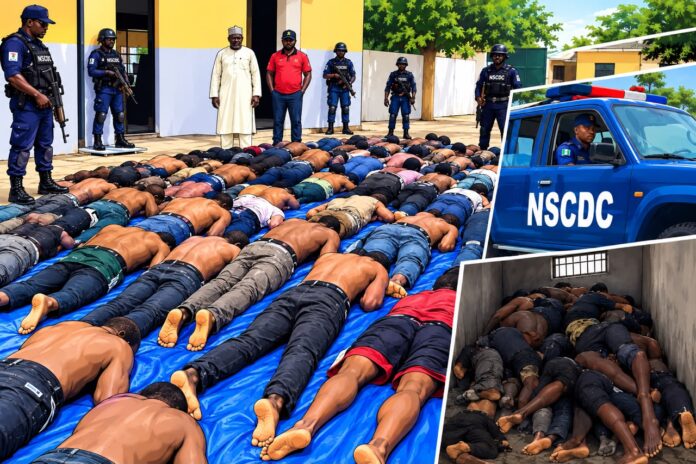
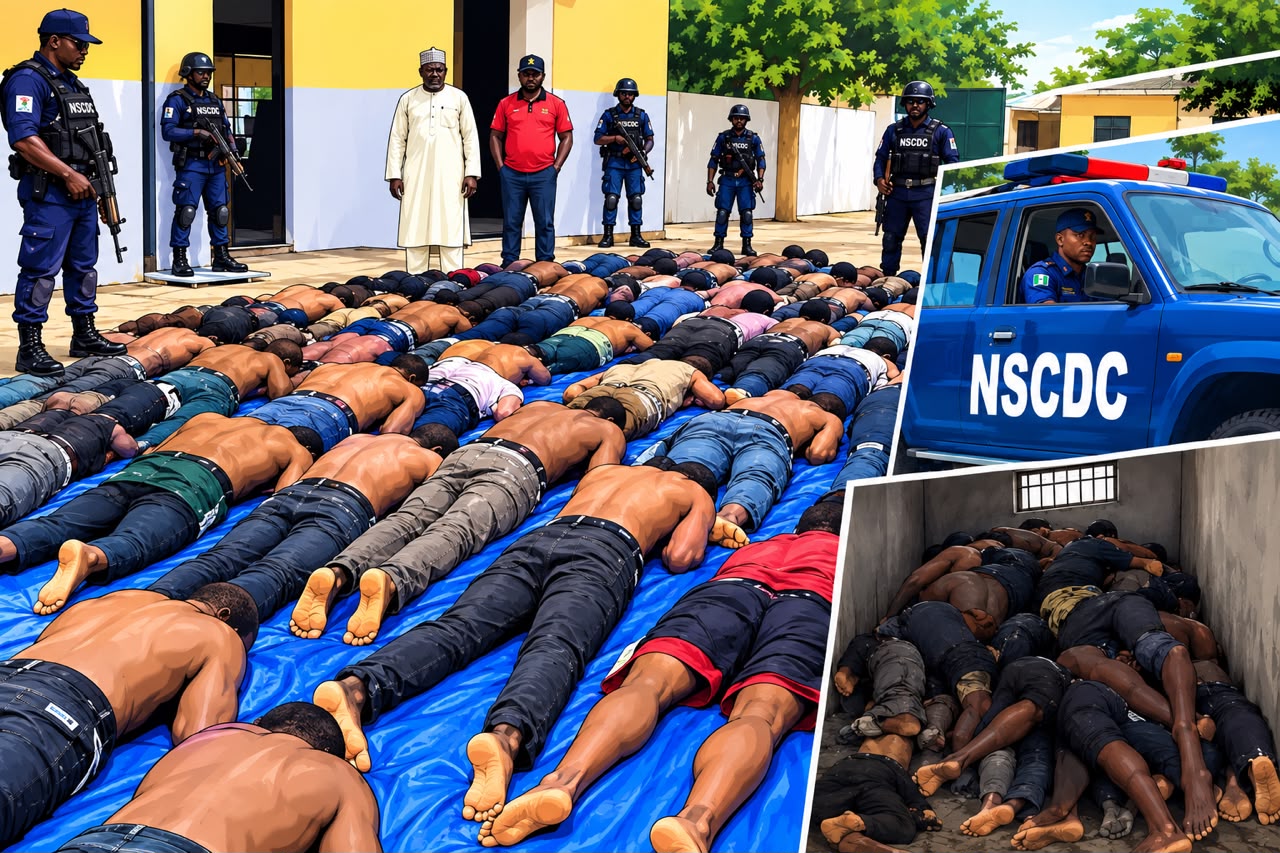
This is the disturbing reality surrounding the deaths of 37 suspected illegal miners who died in the custody of the Nigeria Security and Civil Defence Corps (NSCDC) in Minna, Niger State.
And perhaps the most disturbing part of this tragedy is not only that 37 people died.
It is that we are once again confronted with the question that Nigeria has repeatedly failed to answer: what happens to human life when the state takes responsibility for a person’s custody?
The victims were among scores of people arrested during NSCDC operations against suspected illegal mining in the M.I. Wushishi and Lukoto areas of Niger State on September 15 and 16, 2026. The NSCDC initially said some detainees were found dead following what it described as a suspected disease outbreak. The Corps subsequently maintained that the actual cause of death had not yet been established and that medical examinations were required.
But then came accounts from survivors.
And those accounts demand that Nigerians ask harder questions.
The Story Behind the Official Story
According to survivor accounts reported by several news organisations, the detainees were held in an overcrowded cell with inadequate ventilation.
One survivor, Dauda Shehu, told the Associated Press that about 65 detainees had been packed into a poorly ventilated cell and that people began struggling to breathe.
Another survivor alleged that an unidentified substance was sprayed inside the cell shortly before some detainees began collapsing.
That allegation has not been established as fact. It must therefore be investigated, not converted into either a convenient official explanation or a convenient public conclusion.
That is precisely why a transparent investigation matters.
Because when 37 people die inside the custody of a government security agency, Nigerians are entitled to know exactly what happened.
Not rumours.
Not public relations.
Not convenient explanations.
The truth.
Disease, Suffocation or Something Else?
The first explanation attributed to the NSCDC was a suspected disease outbreak.
But other accounts have raised the possibility of suffocation linked to overcrowding and poor ventilation, while survivors have also alleged that an unidentified substance was sprayed inside the detention facility.
At the time of writing, the definitive cause of death remains a matter for investigation.
Niger State Governor Mohammed Umaru Bago confirmed the deaths, declared three days of mourning and announced an inquiry. Authorities also ordered medical examinations and investigations into the circumstances surrounding the deaths.
The Federal Government has now gone further.
Following President Bola Ahmed Tinubu’s directive, the Interior Ministry announced an independent 10-member committee to investigate the deaths, while 20 NSCDC officers connected with the incident were suspended pending the outcome of the investigation.
That development is significant.
But an investigation is only the beginning.
The real test will be what happens after the investigation.
Who Were These Young Nigerians?
Another uncomfortable question must be asked.
Who were these people?
What brought them into illegal mining?
Who recruited them?
Who profited from their labour?
Who supplied the equipment?
Who bought the minerals?
Who controls the networks that keep sending young Nigerians into dangerous mining environments?
And where are the real beneficiaries of the illegal mining economy?
It is easy to arrest the young man at the mining site.
It is much more difficult to pursue the people financing, organising and profiting from the operation.
Yet if Nigeria is serious about ending illegal mining, the focus cannot stop at the weakest link.
The young miner at the bottom of the chain may be the easiest person to arrest, but he may not be the person who makes the money.
When Poverty Pushes Children Underground
Reports indicate that some of those detained were teenagers, with accounts putting the ages of some survivors and victims between about 14 and 18.
That possibility should trouble every Nigerian.
A child should be in school.
A child should be learning a trade under safe conditions.
A child should be protected from exploitation.
A child should not be part of a dangerous mining economy in which survival depends on digging into the earth under hazardous conditions.
If children are entering mining sites because poverty has pushed them there, then the illegal mining problem is also an education problem.
It is a poverty problem.
It is a child-protection problem.
It is a governance problem.
And ultimately, it is a question about what kind of society we are building.
The Question of Custody
There is a fundamental difference between being arrested and being sentenced to death.
A person suspected of an offence remains entitled to humane treatment while in custody.
That principle does not disappear because the person is accused of illegal mining.
Illegal mining is a serious national problem. It has been associated with environmental destruction and, in some parts of Nigeria, criminal networks and insecurity. The government has a legitimate responsibility to enforce the law.
But law enforcement cannot become lawlessness.
The authority to arrest is not the authority to abuse.
The authority to detain is not the authority to expose detainees to conditions that may endanger their lives.
And the fight against illegal mining cannot become an excuse for abandoning basic human dignity.
The Extortion Allegations Must Also Be Investigated
There are also allegations that some families were asked to pay money for the release of detained relatives.
These allegations require serious investigation.
Reports have carried accounts from relatives who claimed that money was demanded for the release of detainees. Those claims have not been established as proven facts and should therefore be tested by investigators.
But if any security officer demanded money from families in exchange for freedom, that would raise an entirely different and grave question about the abuse of state power.
It would mean that the detention system itself had allegedly become an opportunity for private profiteering.
That is why the investigation must examine not only how the 37 people died, but also:
How were they arrested?
Who ordered their detention?
How many people were held in each cell?
What medical attention was available?
What happened inside the facility before the deaths?
Who was on duty?
Were complaints made by detainees?
Were families asked for money?
Were children among those detained?
Who authorised the detention conditions?
And, most importantly:
Who is accountable?
Mourning Is Not Accountability
Declaring three days of mourning is appropriate in the face of such a tragedy.
Condolences are appropriate.
Prayers are appropriate.
But mourning cannot be the final destination.
Nigeria has become too familiar with official condolences.
We mourn.
We investigate.
We set up committees.
We issue statements.
We promise accountability.
And then another tragedy arrives.
That cycle must end.
The families of the 37 deserve more than sympathy.
They deserve answers.
They deserve the truth about what happened to their loved ones.
And where wrongdoing is established, they deserve justice.
The Religious Question
There is also a moral dimension to this tragedy that Nigeria cannot afford to avoid.
Every week, millions of Nigerians gather in churches and mosques.
We pray for prosperity.
We pray for protection.
We pray for divine intervention.
We pray against enemies.
We pray against poverty.
We pray for our children.
But what is the value of prayer if compassion does not follow it?
What is the meaning of religious devotion if a fellow human being can be treated without dignity simply because he is poor, detained or powerless?
This is not an indictment of Christianity or Islam.
It is a question directed at all Nigerians who profess faith but participate in, tolerate or ignore injustice.
Religion cannot become a Sunday and Friday ritual disconnected from the way we treat people.
The real test of conscience is not how loudly we pray.
It is how we behave when nobody is watching.
Nigeria Must Not Move On
The greatest danger now is not only the possibility that the truth may be delayed.
It is that the nation may simply become distracted.
A new headline will arrive.
A new political controversy will dominate television.
A new scandal will occupy social media.
And the 37 names will gradually disappear from public consciousness.
That must not happen.
Because these were not statistics.
They were sons.
They were brothers.
They were fathers.
They were children.
They were people with names, families, dreams and unfinished lives.
Whether they were illegal miners or not, whether they were guilty of any offence or not, they were human beings in state custody.
And the state had a responsibility toward them.
The Bigger Failure
The tragedy in Minna should therefore force Nigeria to look beyond the immediate incident.
Why are teenagers entering illegal mining?
Why does poverty continue to push young people into dangerous work?
Why are illegal mining networks allowed to flourish?
Why are the powerful people behind the networks so difficult to identify?
Why do detention facilities become overcrowded?
Why are allegations of extortion repeatedly associated with law enforcement?
Why does accountability so often seem to begin with outrage and end with silence?
These are not questions for the NSCDC alone.
They are questions for government.
They are questions for the security architecture.
They are questions for the justice system.
They are questions for political leaders.
They are questions for religious leaders.
They are questions for civil society.
And, uncomfortable as it may be, they are questions for all of us.
This Must Not Become Another Forgotten Tragedy
The 37 deaths in NSCDC custody should not be reduced to another breaking-news story.
The independent investigation must be allowed to work without interference.
Its findings should be made public.
Those found responsible for wrongdoing, negligence or misconduct should face the appropriate consequences.
The conditions in which detainees are held must be examined.
The allegations of extortion must be investigated.
The presence of minors among suspected illegal miners must receive specific attention.
And the wider system that pushes vulnerable Nigerians into illegal mining must be confronted.
Nigeria does not need another performance of outrage.
Nigeria needs accountability.
We have mourned enough.
We have issued enough statements.
We have constituted enough committees whose reports sometimes disappear into government archives.
This time, Nigerians must insist on one thing:
Let the truth come out.
Because 37 people died.
And the country owes their families an answer.
May the souls of the departed rest in peace.