

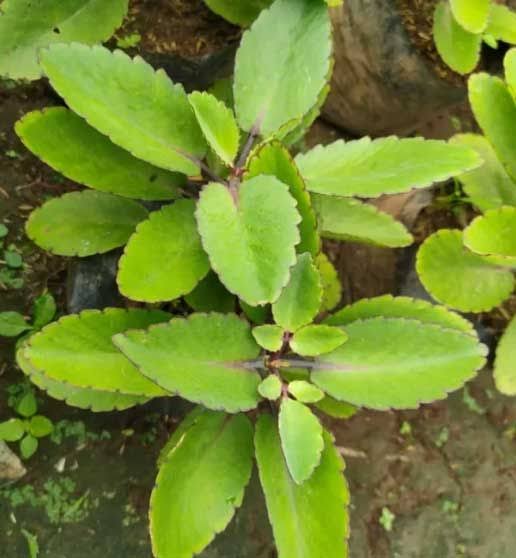
Miracle leaf, known in Nigeria as Abamoda in Yoruba and Odaa-opue in Igbo, is widely used in traditional medicine. Research suggests potential anti-inflammatory, antioxidant and antimicrobial properties, but concerns about toxicity and limited human studies mean that its benefits and risks deserve careful attention.
The name “miracle leaf” is used for different plants in different countries. In Nigeria and other parts of West Africa, it often refers to Bryophyllum pinnatum, also known as Kalanchoe pinnata, leaf of life, air plant or never-die plant. However, the name can refer to other plants, so identifying the correct species is important.
Miracle leaf is known by several names, depending on the language, community and species. In Nigeria, Bryophyllum pinnatum (also called Kalanchoe pinnata) is commonly referred to in English as Leaf of Life, Life Plant, Resurrection Plant or Never-Die Plant. However, traditional names vary between communities, and the name “miracle leaf” may also refer to other medicinal plants, so it is important to identify the species before associating a local name with it.
In Nigeria, the plant is called Ewé Abamoda or Odùndún in Yoruba, Odaa-opue (also written Odaa opuo) in Igbo, Karan masarachi in Hausa, Danweshin or Ekpokpo among some Edo communities, Afiayo in Efik, and Umbu in Ijaw-Izon communities. Across other parts of Africa, documented names include Afama djomakou in Benin and Akpollébiè, Kokolè, Lala, Pakolo and Kpotroko among different communities in Côte d’Ivoire. In English, it is widely known as Leaf of Life, Miracle Leaf, Resurrection Plant, Air Plant, Never-Die Plant and Wonder of the World. Local names and spellings can vary by community, and these names should be linked to Bryophyllum pinnatum (syn. Kalanchoe pinnata) only when the plant has been correctly identified.
Potential health benefits of miracle leaf
The plant contains biologically active compounds, including flavonoids and other phytochemicals. Laboratory and animal studies suggest several possible health effects, but many traditional uses have not been confirmed by strong clinical studies in humans.
1. May help reduce inflammation
Miracle leaf extracts have shown anti-inflammatory activity in experimental studies. This has prompted interest in their traditional use for swelling, pain and inflammatory conditions.
What this means: The findings are promising, but they do not establish that eating the raw leaves will effectively treat arthritis, chronic pain or other inflammatory diseases.
2. Contains antioxidants
The plant contains flavonoids and other compounds that have demonstrated antioxidant activity in laboratory research.
Antioxidants can help neutralise certain reactive molecules in experimental systems. However, the presence of antioxidants does not automatically mean that consuming the plant will prevent cancer, heart disease or ageing-related illnesses.
3. May support wound healing
Some laboratory and animal studies suggest that extracts of Bryophyllum pinnatum may support wound-healing processes.
However, there is insufficient evidence to recommend raw leaf juice as a substitute for cleaning wounds, treating infections or obtaining appropriate medical care.
4. May have antimicrobial properties
Research has investigated whether extracts can inhibit certain bacteria and other microorganisms under laboratory conditions.
These findings do not prove that drinking miracle leaf juice can cure bacterial infections or replace prescribed antibiotics.
5. May have effects on blood sugar
Researchers have investigated possible effects of the plant on glucose metabolism, particularly in experimental models.
However, there is not enough reliable clinical evidence to recommend miracle leaf for treating diabetes. Anyone taking diabetes medication should not use it as a substitute for treatment or assume that combining the two is safe.
6. Traditional use for stomach complaints
Miracle leaf has traditionally been used for digestive complaints, including stomach discomfort and ulcers. Some research has explored its anti-inflammatory and other biological effects.
Nevertheless, there is insufficient evidence to establish that consuming the leaves safely treats stomach ulcers, gastritis or Helicobacter pylori infection.
If you have an ulcer, appropriate testing and treatment are important because untreated H. pylori infection and some medications can cause serious complications.
7. Possible effects on blood pressure and kidney health
Traditional medicine uses the plant for several urinary and kidney-related complaints. Researchers have also investigated possible effects on kidney function and blood pressure in experimental studies.
These findings do not establish that miracle leaf treats kidney disease, dissolves kidney stones or safely lowers blood pressure in humans. People with kidney disease should consult a healthcare professional before using it medicinally.
Possible side effects of miracle leaf
An important concern is that the safety of the plant has not been adequately established for every preparation, dose or duration of use. The quantity of active compounds can vary according to the plant, how it is grown and how it is prepared.
1. Potential toxicity
Some Kalanchoe species contain compounds known as bufadienolides, which can have potentially toxic effects. Their presence raises concerns about the safety of consuming unstandardised preparations, especially in large quantities or over prolonged periods.
The actual risk depends on the species and preparation. Research does not establish a universally safe dose for homemade miracle leaf juice.
2. Possible interactions with medicines
Herbal products can interact with prescription medicines, and the extent of these interactions is not always known.
Be particularly cautious if you take medicines for:
- High blood pressure or heart conditions.
- Diabetes.
- Kidney disease.
- Any condition requiring regular prescription medication.
Do not stop prescribed treatment to use the plant.
3. Allergic reactions
As with other plants, contact with or consumption of miracle leaf could cause an allergic reaction in susceptible individuals. The frequency and specific risk associated with this plant are not well established.
Stop using it and seek medical advice if you develop a rash, swelling or other unusual symptoms. Difficulty breathing or swelling of the tongue or throat requires emergency medical attention.
4. Possible stomach or digestive discomfort
The safety evidence is too limited to establish the frequency or full range of digestive side effects associated with homemade preparations. Nausea, vomiting or abdominal discomfort after consuming it should not be dismissed as a normal reaction.
Stop taking it if you become unwell and seek medical advice, especially if symptoms are severe or persistent.
5. Pregnancy and breastfeeding
Avoid medicinal use during pregnancy or breastfeeding unless your healthcare professional specifically advises otherwise. Safety has not been adequately established for homemade preparations, and the plant has been studied for biological effects relevant to pregnancy. Traditional use does not establish that it is safe.
6. Risks from excessive or prolonged use
There is insufficient evidence to define a safe daily quantity or a safe long-term duration for consuming raw leaves, juice or concentrated extracts.
Avoid assuming that a plant is harmless because it is natural. Concentrated preparations may expose you to different amounts of active compounds than ordinary food.
Who should be especially cautious?
Consult a healthcare professional before using miracle leaf medicinally if you:
- Have heart disease, an abnormal heartbeat or kidney or liver disease.
- Take medication for blood pressure, diabetes or another chronic condition.
- Are pregnant or breastfeeding.
- Are considering giving it to a child.
- Intend to use it to treat an ulcer, infection, diabetes, high blood pressure or another diagnosed illness.
If you experience fainting, chest pain, a markedly irregular heartbeat or severe vomiting after taking a herbal preparation, seek urgent medical attention.
How should miracle leaf be used?
There is no universally established, evidence-based dose for homemade miracle leaf juice or raw leaves. I would not recommend a specific number of leaves, a daily dosage or a preparation method for medicinal consumption without first establishing the plant’s identity and the intended use.
If you want to use it for a particular health concern, it is safer to discuss that concern with a healthcare professional rather than relying on an unstandardized herbal preparation.
General Recommendation
Miracle leaf is scientifically interesting because preliminary studies suggest anti-inflammatory, antioxidant, antimicrobial and wound-healing properties. However, these findings should not be confused with proof that the plant can cure diseases in humans. Researchers continue to identify important gaps in clinical evidence and safety data.