

 A dramatic human rights and sporting saga is unfolding in Australia, where five members of the Iranian national women’s football team have reportedly broken away from their delegation to seek asylum.
The players, who risked severe retribution by silently protesting against the Tehran regime during the national anthem at the AFC Women’s Asian Cup, are now under police protection in Queensland as the Australian government weighs their fate.
The five athletes have been identified as Fatemeh Pasandideh, Zahra Ghanbari, Zahra Sarbali, Atefeh Ramazanzadeh, and Mona Hamoudi.
According to multiple sources, including family members and activists within the Iranian-Australian community, the players successfully evaded their team’s handlers and are currently being protected by police.
Australian government sources have confirmed that Home Affairs Minister Tony Burke has flown to Brisbane to meet with the women.
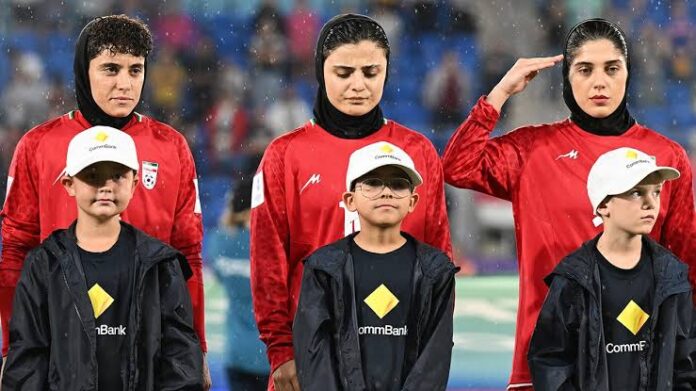
The controversy erupted during the team’s opening match against South Korea. In a moment of powerful, silent defiance, the players stood motionless and refused to sing Iran’s national anthem .
The act came against the backdrop of escalating regional turmoil, as U.S. and Israeli airstrikes on Iran had recently killed Supreme Leader Ayatollah Ali Khamenei .
The reaction from Tehran was swift and ominous. A commentator on Islamic Republic of Iran Broadcasting (IRIB) branded the players “wartime traitors” and labeled their protest the “pinnacle of dishonour.” Calls emerged for them to be “dealt with more severely” upon their return.
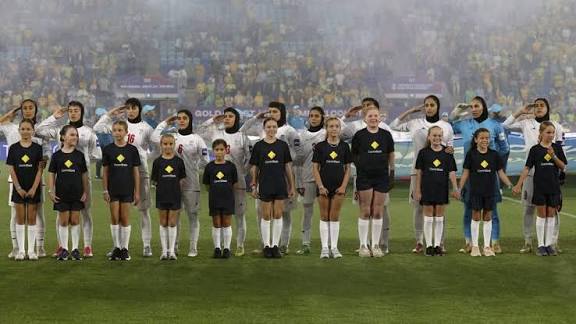
Following the backlash, the team sang and saluted the anthem during their subsequent matches against Australia and the Philippines, a move that human rights campaigners widely interpreted as being coerced by government “minders” accompanying the squad . Reports emerged that the players were under intense pressure, with their communications restricted and their movements tightly controlled by security personnel.
“We’re constantly under control. They won’t let us leave the hotel alone,” one player reportedly told a Persian-language broadcaster before their escape.
The team’s campaign ended on Sunday with a 2-0 loss to the Philippines, eliminating them from the tournament . As the team bus attempted to leave the stadium, a crowd of approximately 200 supporters surrounded it, banging on the sides and chanting “Save our girls! ” and “Let them go!.
It was after this match that the five players managed to make their move. One family member, overwhelmed with relief, told the ABC: “I want to kiss the hands of everyone who helped. I pray to god we all go back to a free Iran soon.”
The exiled Crown Prince of Iran, Reza Pahlavi, confirmed on Instagram that his office had been informed of the defection, stating that the players had “joined Iran’s national Lion and Sun Revolution.”
The crisis has drawn high-level international attention. U.S. President Donald Trump has waded into the debate, issuing a stark warning to Australian Prime Minister Anthony Albanese on his Truth Social platform.
“Australia is making a terrible humanitarian mistake by allowing the Iran National Woman’s Football team to be forced back to Iran, where they will most likely be killed, ” Trump wrote. “Don’t do it, Mr. Prime Minister, give ASYLUM. The U.S. will take them if you won’t.”
Global players’ union FIFPRO has also raised serious concerns for the players’ welfare, noting the grave danger they would face if returned to Iran .
In Australia, a coalition of 13 civil society organizations, including Amnesty International’s Iran network, has signed a joint letter to Minister Burke urging the government to guarantee the players’ safety and not force them to depart.
However, the Iranian team’s head coach, Marziyeh Jafari, has publicly stated her desire to return home. “We want to come back to Iran as soon as we can,” she told reporters, though it remains unclear if this sentiment is shared by the players who have fled.
The players are now navigating Australia’s refugee system. Athletes seeking asylum during international events typically apply for protection, which allows them to remain in the country on a bridging visa while the Department of Home Affairs assesses their claims .
Australian officials have remained tight-lipped on the specifics. Assistant Minister for Foreign Affairs Matt Thistlethwaite stated that the government cannot “go into individual circumstances for privacy reasons” . However, the confirmed flight of Minister Burke to meet with the women suggests the case is being handled at the highest levels of government.
For the five footballers, a moment of silent protest has led to a desperate fight for freedom, with the world watching to see if Australia will offer them refuge.