
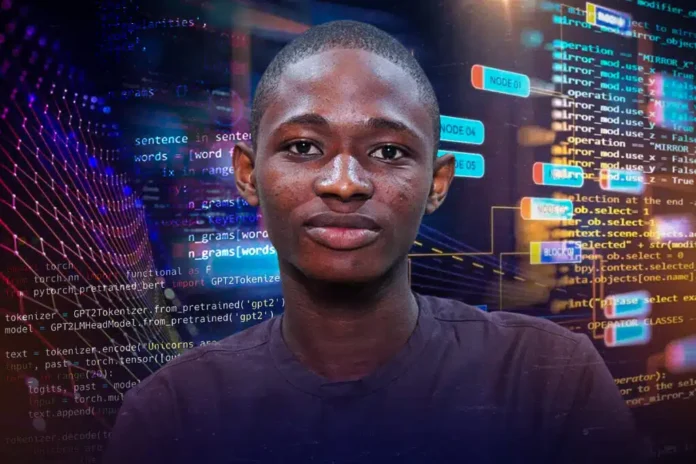
 In November 2024, University of Lagos student Saheed Azeez introduced Naijaweb, a dataset comprising 230 million GPT-2 tokens sourced from Nairaland, Nigeria’s largest online forum. Azeez modestly described the project as straightforward, stating, “It’s just web scraping.”
Building upon this foundation, Azeez embarked on a more ambitious endeavor: YarnGPT, a text-to-speech AI model designed to articulate text in authentic Nigerian accents. This innovation addresses a significant gap in AI, which often lacks representation of diverse linguistic presentation.
Challenges in Capturing the Nigerian Accent
Developing YarnGPT presented unique challenges. Accurately replicating the Nigerian accent required extensive data collection and sophisticated modeling techniques. Azeez sourced audio from Nigerian films, extracting dialogues and aligning them with subtitles to create a comprehensive dataset. However, issues with audio quality and subtitle accuracy necessitated supplementing this data with high-quality datasets from platforms like Hugging Face.
Training the model posed additional hurdles. Without personal access to high-performance computing resources, Azeez relied on cloud services such as Google Colab, incurring significant costs. An initial investment of $50 yielded suboptimal results, prompting a shift to alternative platforms like Oute AI, which offered autoregressive modeling techniques better suited to the project’s needs.
Technical Insights and Methodology
YarnGPT’s development involved intricate processes, including audio tokenization—dividing continuous sound waves into discrete units for the model to process. Azeez utilized a wave tokenizer and integrated resources from Hugging Face and Oute AI to enhance the model’s performance. The training process spanned three days and required an additional $50 investment.
Community Engagement and Future Prospects
To showcase YarnGPT, Azeez produced a two-minute video explaining the model’s capabilities, which garnered significant attention on social media platforms. YarnGPT not only reads English text in Nigerian accents but also supports indigenous languages such as Hausa, Igbo, and Yoruba. Potential applications include voice-overs for content creators, localized navigation instructions, and improved accessibility for non-English speakers.
 Nigeria’s Position in the Global AI Landscape
Despite individual achievements like Azeez’s, Nigeria faces challenges in the global AI arena due to limited resources and infrastructure. Azeez emphasizes the importance of localizing existing AI models to serve Nigerian linguistic and cultural contexts, suggesting that adaptation and customization are viable paths forward.
With support from governmental initiatives and the contributions of innovators like Azeez, there is optimism for Nigeria’s growing influence in AI development.