
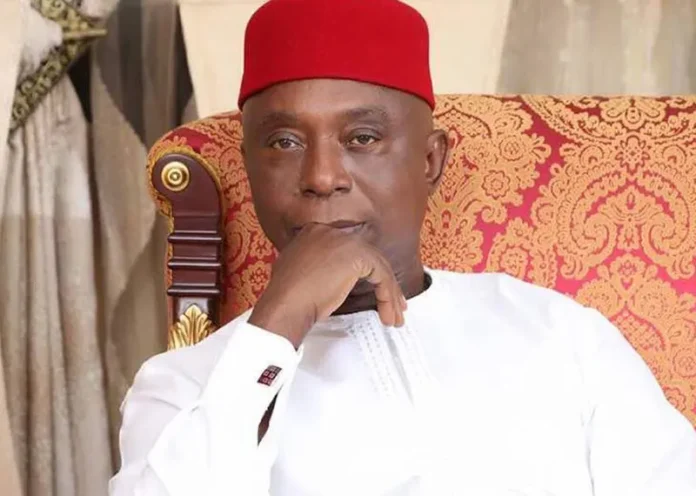
 In a major political shake-up, Senator Ned Munir Nwoko, representing Delta North Senatorial District, formally defected from the Peoples Democratic Party (PDP) to the ruling All Progressives Congress (APC) during a Senate plenary session on Wednesday, February 5, 2025. His decision marks yet another high-profile defection, signaling a growing shift in Nigeria’s political landscape as the country gears up for future elections.
Official Defection Announcement
Senate President Godswill Akpabio read Nwoko’s letter of defection, titled “Notice of Departure from the Peoples Democratic Party (PDP) to the All Progressives Congress (APC).” In the letter, Nwoko detailed his reasons for leaving the opposition party, citing persistent internal crises, lack of clear leadership, and the weakening of the PDP’s role as an effective opposition.
“The PDP, which once stood as a formidable platform for democratic participation and national development, has unfortunately been engulfed in persistent crises, ranging from internal divisions to a lack of clear leadership and direction,” Nwoko wrote in his defection letter.
Concerns Over Nigeria’s Political Future
Beyond internal party issues, Nwoko warned of a looming threat to Nigeria’s democracy, cautioning that without a strong opposition, the country risks evolving into a one-party state, which could have severe consequences for governance and national stability.
“If urgent steps are not taken to address this national emergency, Nigeria risks sliding into a dangerous one-party system, which history has shown to be detrimental to governance and national stability,” he stated.
To address these concerns, the Senator proposed the establishment of an Ad-Hoc Senate Committee tasked with investigating the crisis within the PDP and recommending solutions to strengthen Nigeria’s multi-party democracy. He urged the committee to engage political stakeholders, analyze the root causes of the PDP’s struggles, and propose strategic reforms to ensure a viable and competitive opposition remains in the country’s political framework.
Political Implications of Nwoko’s Move
Nwoko’s defection comes at a time when the PDP continues to battle deep-seated internal strife, with factions within the party engaged in leadership disputes, conflicting interests, and a series of high-profile defections to the APC. His departure is particularly significant as he was elected under the PDP platform in 2023, raising questions about the party’s stability ahead of the 2027 general elections.
Public Reaction and Social Media Buzz
Following Nwoko’s defection, social media platforms have been flooded with reactions from political analysts, party loyalists, and the general public:
- Facebook: Political discussion forums and PDP-supporting groups expressed disappointment, accusing Nwoko of betraying the party that brought him to power. Others, however, argued that his departure reflects a deeper problem within the PDP’s structure.
- Instagram: Influential political commentators posted infographics analyzing recent defections, with some comparing Nwoko’s move to similar shifts in previous election cycles. His supporters shared messages praising his decision, while critics labeled it opportunistic.
- X (formerly Twitter): Hashtags such as #NwokoDefection, #PDPcrisis, and #OnePartyNigeria began trending, with users debating whether his defection signals the collapse of the PDP or a strategic political move ahead of 2027. Some users accused the APC of “poaching” opposition lawmakers to consolidate power, while others argued that the PDP had failed to keep its house in order.
- LinkedIn: Political analysts and governance experts shared professional insights, warning about the dangers of a weak opposition in a democracy. Some experts urged PDP stakeholders to focus on internal restructuring to prevent further losses.
Nwoko’s Commitment to Delta North Constituents
Despite his switch to the ruling APC, Nwoko reassured his constituents in Delta North that his defection would not affect his commitment to delivering on his legislative duties and developmental projects. He pledged to continue serving their interests and contributing to national progress while aligning himself with the policies and direction of the APC.
He further requested that his new party affiliation be officially recorded in the Senate’s documentation, solidifying his membership in the APC.
A Growing Trend of Political Realignment
Nwoko’s defection underscores a broader trend of political realignment in Nigeria, where opposition figures continue to cross over to the ruling party. While some argue that such movements are driven by self-interest and survival within the corridors of power, others see them as necessary adjustments in an evolving political climate.
As the PDP grapples with internal instability and power struggles, more defections could be on the horizon, further tilting the balance of power in favor of the APC. With the 2027 elections approaching, the question remains: Can the PDP recover from its internal crises and remain a formidable opposition, or is Nigeria indeed heading towards a one-party dominance?
Only time will tell.