

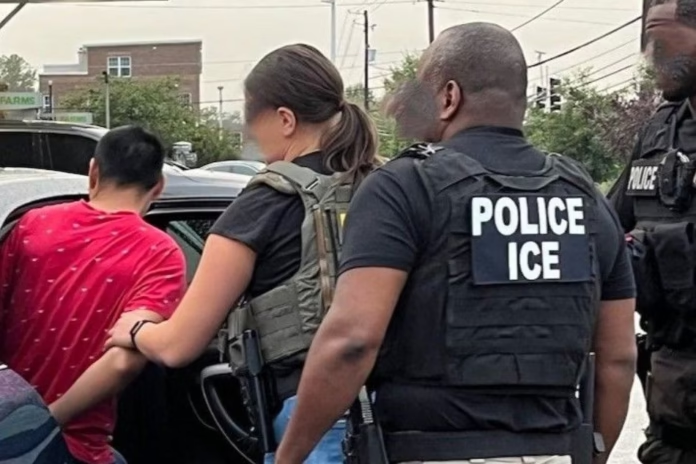
 The Trump administration has mandated a significant escalation in immigration enforcement, setting a daily arrest quota of at least 1,800 for Immigration and Customs Enforcement (ICE). Each of the agency’s 25 offices is now required to make a minimum of 75 arrests per day. This directive follows ICE’s reported 4,500 arrests since President Trump’s return to office, with operations concentrated in major sanctuary cities such as New York, Denver, Chicago, Los Angeles, and Boston.
White House Deputy Chief of Staff Stephen Miller confirmed the arrest quotas during a CNN appearance, stating, “The numbers you cited are a floor, not a ceiling. The goal is to arrest at least that many, but hopefully many more.” Officials now anticipate ICE to conduct between 1,200 and 1,500 arrests daily across the nation.
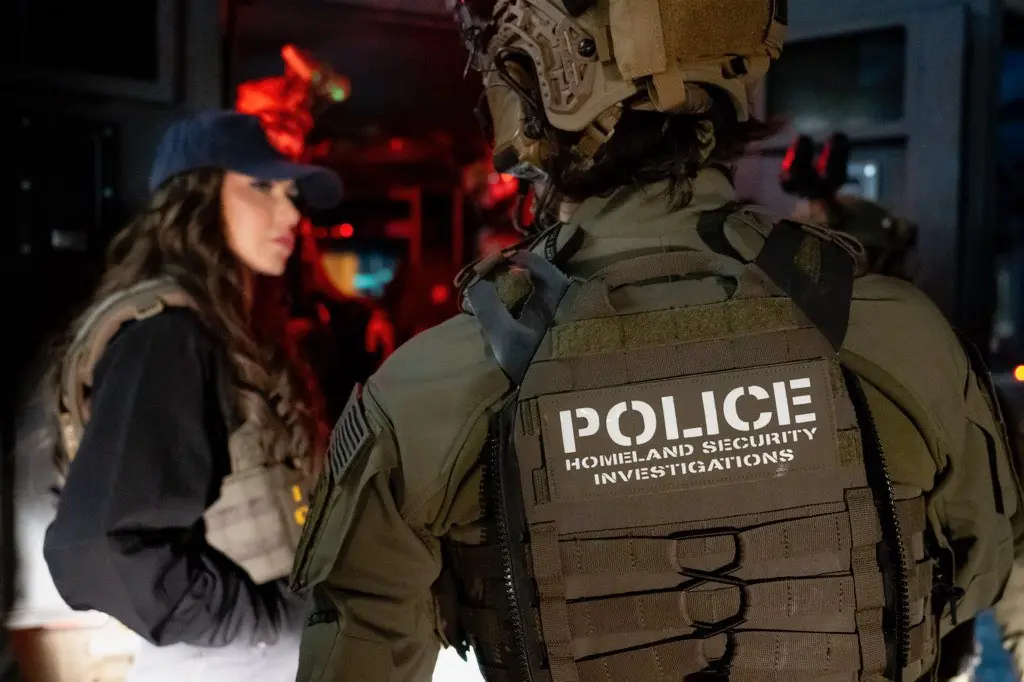
In a recent operation in New York City, Homeland Security Secretary Kristi Noem participated in pre-dawn raids alongside ICE, Homeland Security Investigations (HSI), and Drug Enforcement Administration (DEA) agents. These raids led to the arrest of Anderson Zambrano-Pacheco, an alleged leader of the Tren de Aragua gang, apprehended in The Bronx near PS 11, the Highbridge School.
 Additionally, ICE agents have arrested over 500 undocumented migrants in sanctuary cities, including New York City, targeting individuals with outstanding criminal charges.
The administration’s push underscores its intensified immigration enforcement agenda. Acting Homeland Security Secretary Kristi Noem emphasized the importance of removing dangerous individuals to protect American families from violence and drug-related issues. She expressed confidence in the manpower required for such operations and mentioned the cooperation of NYC Mayor Eric Adams and the NYPD, despite limited support due to sanctuary laws.
The administration’s actions have sparked significant debate. Critics argue that the aggressive enforcement tactics may lead to increased fear and mistrust within immigrant communities. Legal challenges are anticipated, particularly concerning the enforcement of arrest quotas and operations in sensitive locations such as schools and hospitals.
The Trump administration’s implementation of stringent ICE arrest quotas and nationwide enforcement operations marks a significant shift in immigration policy. As these initiatives progress, they are expected to have profound implications for immigration enforcement practices and the broader discourse on immigration in the United States.