
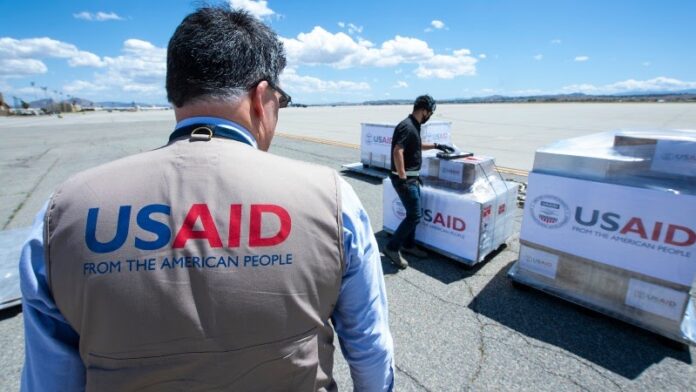
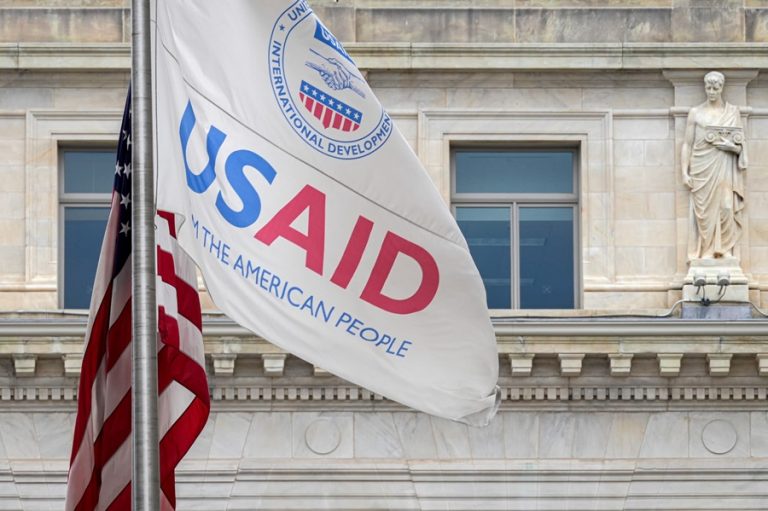
 In a dramatic shift in U.S. foreign policy, the United States Agency for International Development (USAID) has announced that it will place its global workforce on administrative leave and recall employees from overseas postings. The decision, set to take effect shortly before midnight on February 7, 2025, comes as part of a controversial downsizing initiative spearheaded by former President Donald Trump and backed by billionaire entrepreneur Elon Musk.
Sweeping Cuts to U.S. Foreign Aid Operations
According to an official statement from USAID, only personnel involved in mission-critical functions, core leadership, and specially designated programs will be exempt from the indefinite administrative leave. This marks one of the most aggressive attempts to curtail foreign aid spending in modern U.S. history, a move that has ignited fierce debate among lawmakers, human rights organizations, and international allies.
Democrats and humanitarian advocates have condemned the decision, warning that it could cripple life-saving programs in some of the world’s most vulnerable regions. USAID, which operates in over 120 countries, plays a pivotal role in addressing global poverty, health crises, and disaster response. Critics argue that scaling back its operations would undermine America’s global leadership and hand strategic influence to rivals like China and Russia.
Elon Musk’s Role in USAID Overhaul
Billionaire Elon Musk, a staunch Trump ally and outspoken critic of USAID, has emerged as a central figure in the push to dismantle the agency’s operations.
On social media platform X (formerly Twitter), Musk celebrated the move, claiming that USAID had become “a viper’s nest of radical-left Marxists who hate America.” He has also accused the agency—without evidence—of conducting “rogue CIA work” and funding “bioweapon research”, including baseless allegations that USAID was involved in COVID-19-related projects.
Musk’s influence on Trump’s policy decisions has been well-documented. As a major financial backer of Trump’s campaign and holder of lucrative government contracts, Musk reportedly personally cleared the USAID shake-up with the former president.
The decision aligns with long-standing Republican and libertarian narratives that foreign aid spending is an unnecessary drain on U.S. resources. Conservative voices have pushed for redirecting international aid funds toward domestic priorities, arguing that taxpayer money should be spent at home rather than in distant countries.
What’s at Stake? Global Impact of the USAID Rollback
The looming freeze on USAID operations has raised alarm bells among world leaders, particularly in nations that rely heavily on U.S. foreign assistance.
In 2023, the agency’s largest aid recipients included Ukraine, Ethiopia, Jordan, Afghanistan, South Sudan, Syria, and the Democratic Republic of Congo, according to data from the Congressional Research Service.
- Ukraine, embroiled in a prolonged war with Russia, received over $16 billion in macroeconomic support from USAID—funds that could now be in jeopardy.
- African nations, already battling humanitarian crises, conflict, and food insecurity, stand to lose vital aid in health, education, and infrastructure.
- Middle Eastern allies, including Jordan and Syria, face uncertainty as USAID-funded stability programs may be put on hold.
With an annual budget of $40 billion, USAID represents a fraction of the U.S. government’s nearly $7 trillion yearly spending. However, the United States remains the world’s largest provider of official development assistance, according to the Organization for Economic Cooperation and Development (OECD).
Social Media Reactions: Outrage and Celebration
The USAID decision has triggered a firestorm on social media, with X (Twitter), Facebook, Instagram, and LinkedIn becoming battlegrounds for opposing views.
- Progressive activists and humanitarian groups took to social media to denounce the move, using hashtags like #SaveUSAID, #ForeignAidMatters, and #HumanitarianCrisis to highlight the agency’s impact.
- Musk’s supporters and Trump loyalists celebrated the decision, with some calling it “a necessary step to eliminate globalist influence” and others pushing for further reductions in foreign spending.
- LinkedIn discussions among policy analysts and global development experts emphasized the long-term geopolitical risks of the decision, particularly its potential to erode U.S. influence in strategic regions.
What Happens Next? The Future of U.S. Foreign Policy
As USAID staff prepare for administrative leave, questions remain about the broader implications for U.S. foreign policy.
- Will Congress intervene to protect critical aid programs?
- How will international allies react to the withdrawal of American assistance?
- Could this decision lead to an expanded role for China and Russia in global development efforts?
With USAID at the heart of U.S. soft power strategy, its potential dismantling could mark a turning point in America’s global engagement. Whether this move strengthens or diminishes the United States on the world stage remains to be seen.
One thing is certain—the battle over U.S. foreign aid has just begun.