
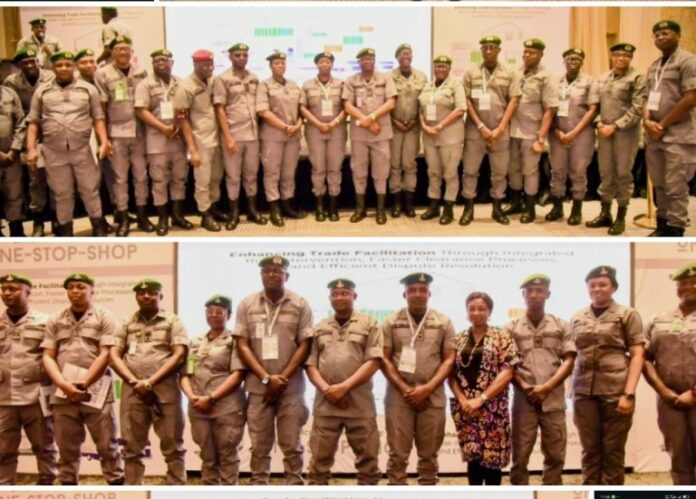
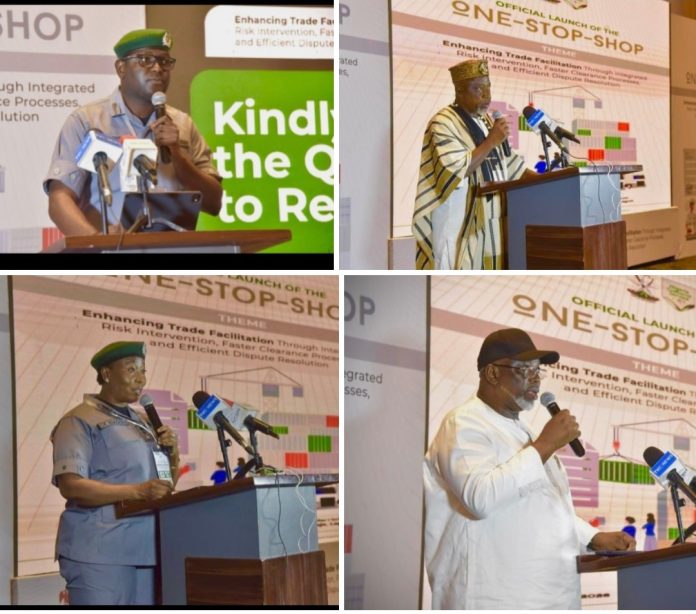
 The Nigeria Customs Service (NCS) has taken a bold leap into the digital era with the launch of a One-Stop-Shop (OSS) platform designed to dismantle bureaucratic roadblocks at the nation’s ports and slash cargo clearance time to just 48 hours.
Unveiled in Lagos on Friday, February 13, 2026, the platform signals what the Comptroller-General of Customs, Adewale Adeniyi, described as a sweeping structural reform aimed at repositioning Nigeria’s border operations for speed, transparency, and global competitiveness.
According to Adeniyi, the initiative aligns with the economic reform agenda of President Bola Ahmed Tinubu and reflects global best practices under the World Trade Organization Trade Facilitation Agreement, which projects that efficient border reforms can reduce trade costs in developing countries by more than 14 percent.
More than just a technology upgrade, the OSS platform represents a philosophical shift in customs administration — from fragmented checks to coordinated governance, from manual discretion to data-driven precision, and from isolated enforcement to institutional collaboration.
“This is about building smarter systems that support legitimate trade while safeguarding national interests,” Adeniyi declared. “We are moving deliberately toward a fully paperless customs environment.”
The Service confirmed that the first phase of end-to-end digital clearance and documentation processes will go live before the end of the second quarter of 2026, setting the stage for a fully automated workflow.
Deputy Comptroller-General in charge of Tariff and Trade, Caroline Niagwan, explained that the OSS consolidates all port risk interventions into a single electronic interface — effectively collapsing multiple checkpoints into one seamless digital window.
“We listened to stakeholders,” she said. “We understand how overlapping inspections and risk alerts disrupt business operations. This platform eliminates duplication and promotes efficiency under one digital umbrella.”
A technical briefing by the NCS Trade Facilitation Unit outlined the roadmap: reduce the current average cargo clearance time from 21 days to approximately 48 hours through harmonised risk management, improved inter-agency coordination, and real-time digital processing.
With the launch of the OSS, the Nigeria Customs Service is not merely deploying software — it is redrawing the architecture of trade governance, signaling a decisive pivot toward efficiency, accountability, and economic acceleration at Nigeria’s gateways.
Stakeholders at the engagement expressed strong support for the initiative, noting that the platform would facilitate legitimate trade. An interactive session also provided clarifications on operational procedures and expectations for the OSS rollout.