
By ALFRED ABIODUN
…High-level Public-Private Dialogue in Lagos calls for stakeholder inclusion, transparency in disbursement of government funds
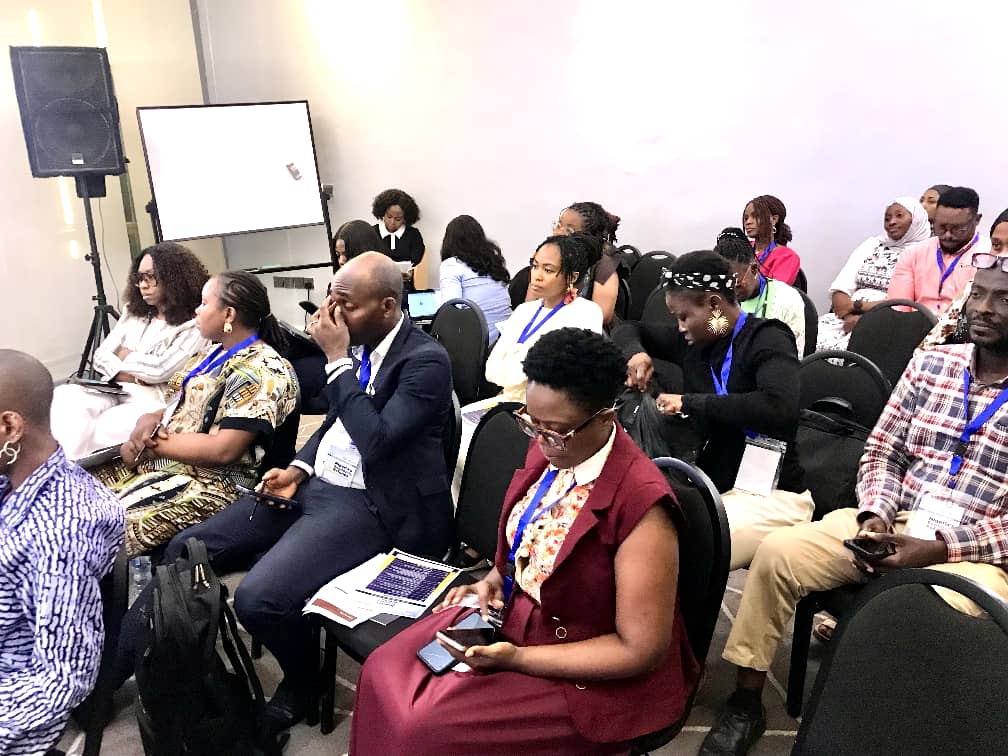
LAGOS, NIGERIA – Economic experts, policymakers, and private sector leaders converged in Lagos for the 2026 edition of the Public-Private Dialogue: Nigeria’s Economic Reforms, where speakers delivered a mix of cautious optimism and sharp criticism of the current reform trajectory.
Themed “Advancing Evidence-Driven Policy Solutions,” the dialogue was jointly hosted by the Yar’Adua Foundation, the Nigerian Economic Summit Group (NEST), and UK International Development, drawing a diverse cross-section of stakeholders determined to bridge the gap between policy formulation and grassroots impact.
 Opening Statement: A Call for Evidence Over Ideology
Delivering the opening and partner’s statement, Dr. Henry Adigun– Team Lead for Nigeria Economic Strategy and Transformation – set the tone with a demand for data-driven governance.
“For too long, economic policy in this country has been driven by political expediency rather than empirical evidence,” Dr. Adigun told the gathering. “The path to sustainable growth lies not in ideological posturing but in rigorous, inclusive, and transparent policymaking.”
Dr. Adigun, widely regarded as an economic guru, highlighted the progress made under President Bola Tinubu’s administration while cautioning that reforms must be felt at the household level to gain lasting legitimacy.
Researched Solution: According to the World Bank’s Nigeria Development Update (October 2025), evidence-based reforms in countries like Rwanda and Ghana reduced policy failure rates by approximately 34% when stakeholder consultations preceded implementation. Dr. Adigun’s call mirrors this global best practice.
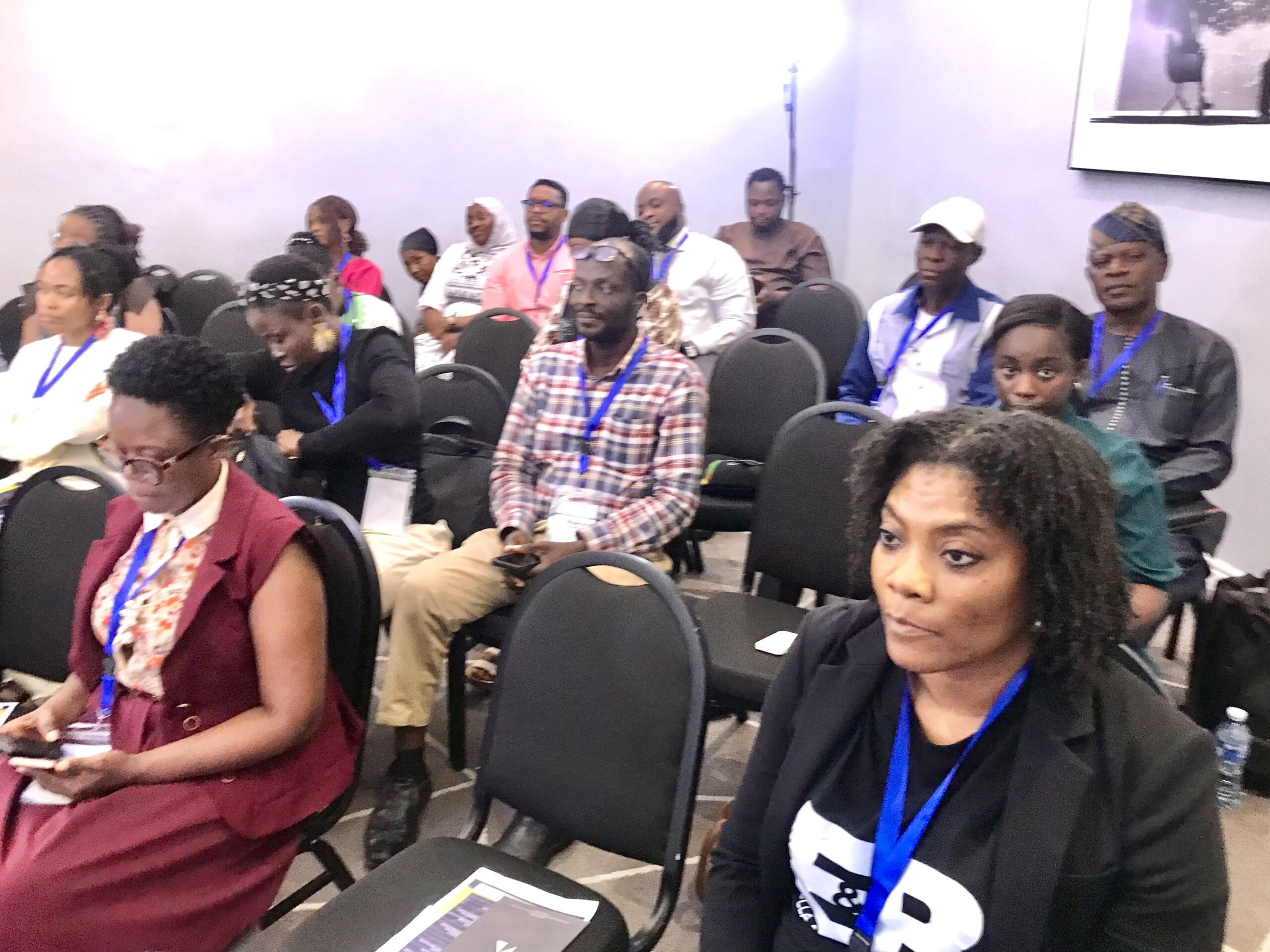
Setting the Scene: Legitimacy as the Missing Link
Ms. Glory Eze, Public Dialogue & Reform Legitimacy Lead at NEST, took the stage to frame the day’s discussions. She argued that public trust in economic reforms has eroded due to a lack of meaningful engagement.
“Reforms are not just about spreadsheets and projections,” Ms. Eze stated. “They are about people. When citizens do not understand why a policy exists or how it benefits them, legitimacy collapses – and so does compliance.”
Analysis: Ms. Eze’s remarks underscore a fundamental challenge facing the Tinubu administration. While the removal of fuel subsidies and unification of exchange rates are economically sound on paper, communication gaps have fuelled public resentment. The dialogue’s emphasis on “legitimacy” suggests that even policymakers recognise this disconnect.
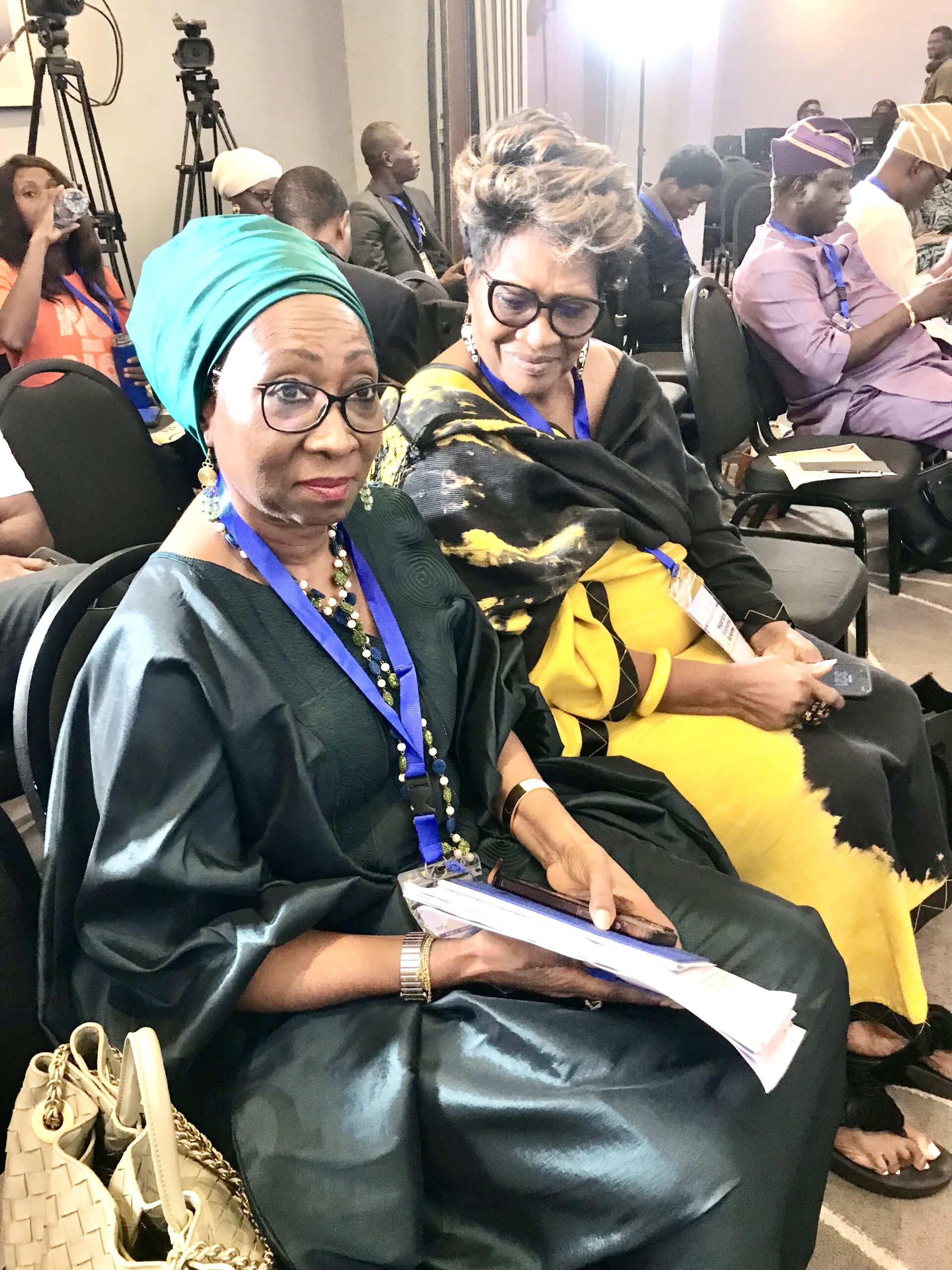 Key Reform Insights: Data Speaks Louder Than Rhetoric
Ms. Chisom Udora, Research Associate at Innovision Global Consulting, presented the Key Reform Insights, offering a data-heavy snapshot of Nigeria’s current economic landscape.
She highlighted three critical areas:
1. Inflationary Pressures – Moderating but still above 24% as of Q1 2026
2. Foreign Direct Investment (FDI) – Showing a 12% uptick following forex market liberalisation
3. Poverty Incidence – Remains stubbornly high at 38% of the population
“The numbers tell us that some reforms are working, but the benefits are not yet evenly distributed,” Ms. Udora noted. “Targeted interventions are not optional – they are existential.”
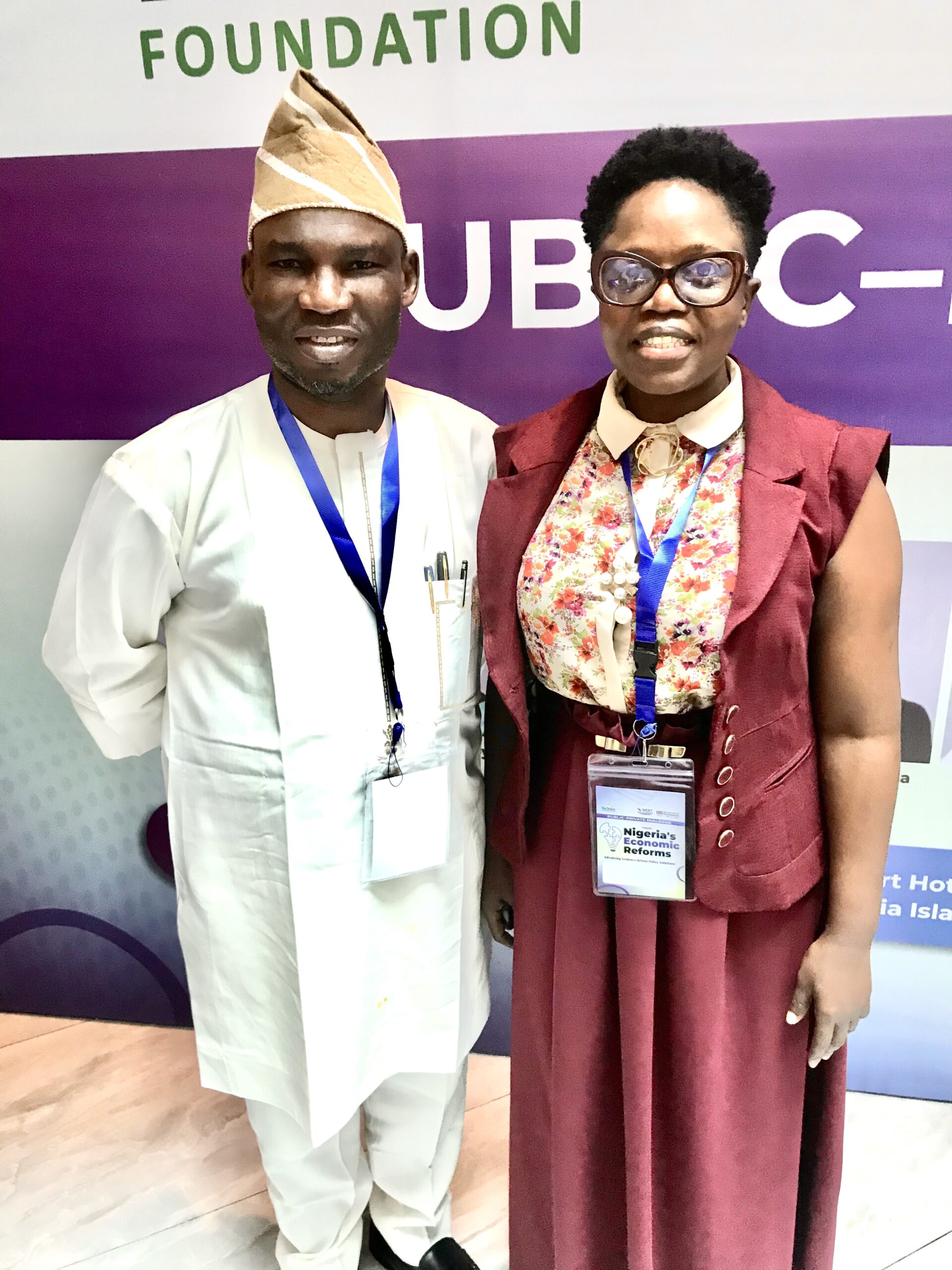 Fireside chat: Investment Outlook & Reform Confidence
Two hours after the tea break, following technical breakout sessions and a plenary report-back, the highly anticipated Fireside chat session – titled Investment Outlook & Reform Confidence – took centre stage.
Dr. Tope Fasua, Special Adviser to President Tinubu on Economic Affairs, was the featured guest. The session was deftly moderated by Mr. Amara Nwankpa, Director-General of the Yar’Adua Foundation.
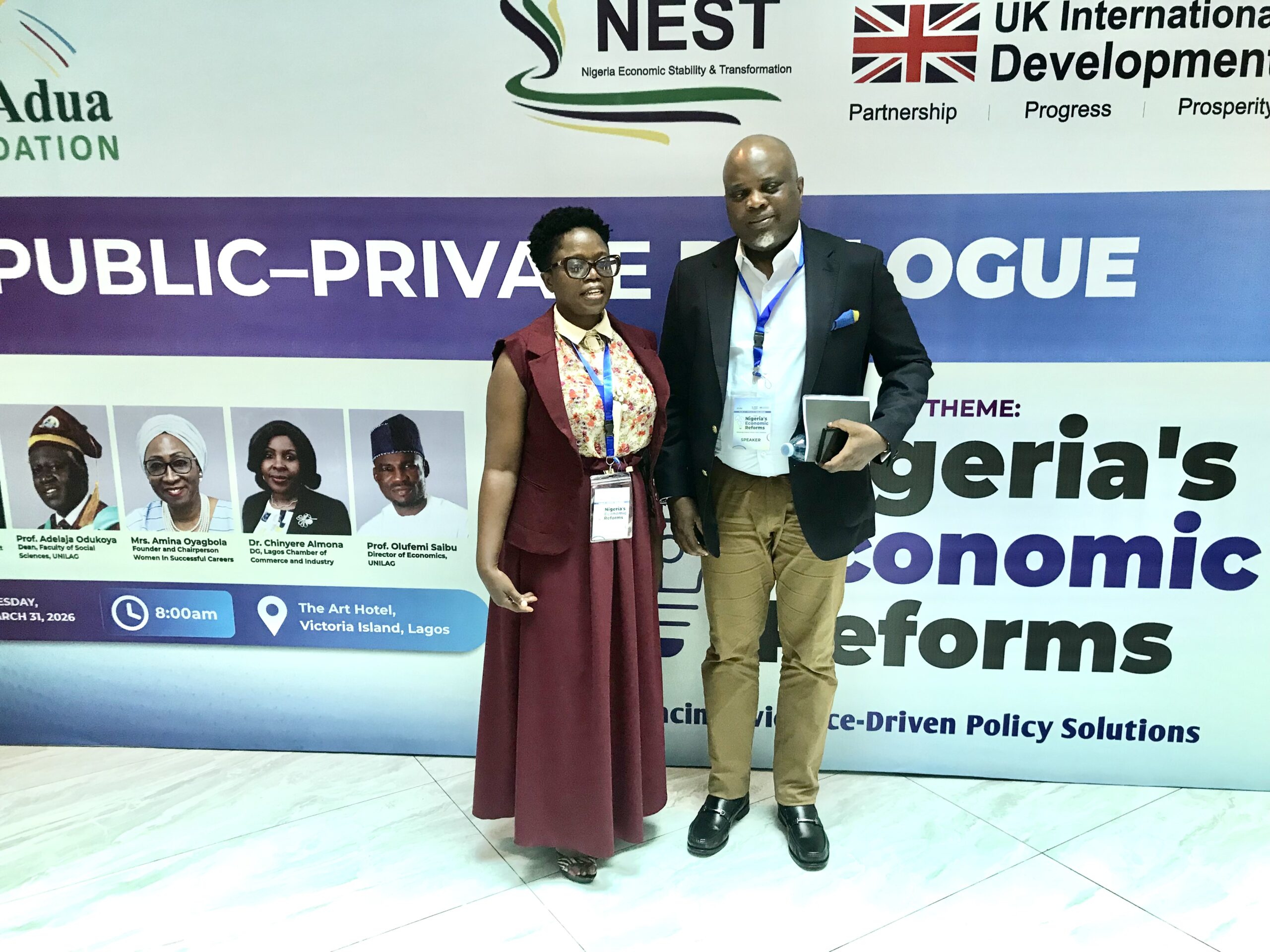 Dialogue Excerpt:
Nwankpa: “Dr. Fasua, investors on the sidelines are watching. What single reform should give them the confidence to commit capital to Nigeria today?”
Fasua: “The forex unification, without question. For the first time in nearly a decade, we have a transparent, market-reflective exchange rate. That is not a small victory – it is foundational. But we must now build on it with fiscal discipline and infrastructure investment.”
Nwankpa: “Critics say the reforms have unleashed pain without gain. How do you respond?”
Fasua: “I do not dismiss the pain. It is real. But the alternative – continuing with unsustainable subsidies and a phantom exchange rate – would have been catastrophic. We are in the difficult middle of a necessary transition. The gains will come, but patience is required.”
Analysis: Dr. Fasua’s defence of the administration’s reforms is consistent with Treasury briefings, but his acknowledgment of “pain” signals a shift in tone. Economists at the Centre for the Study of African Economies (CSAE, Oxford) note that similar transitions in Argentina and Egypt took 18–24 months before households felt net positive effects. Nigeria is roughly 12 months into this cycle.
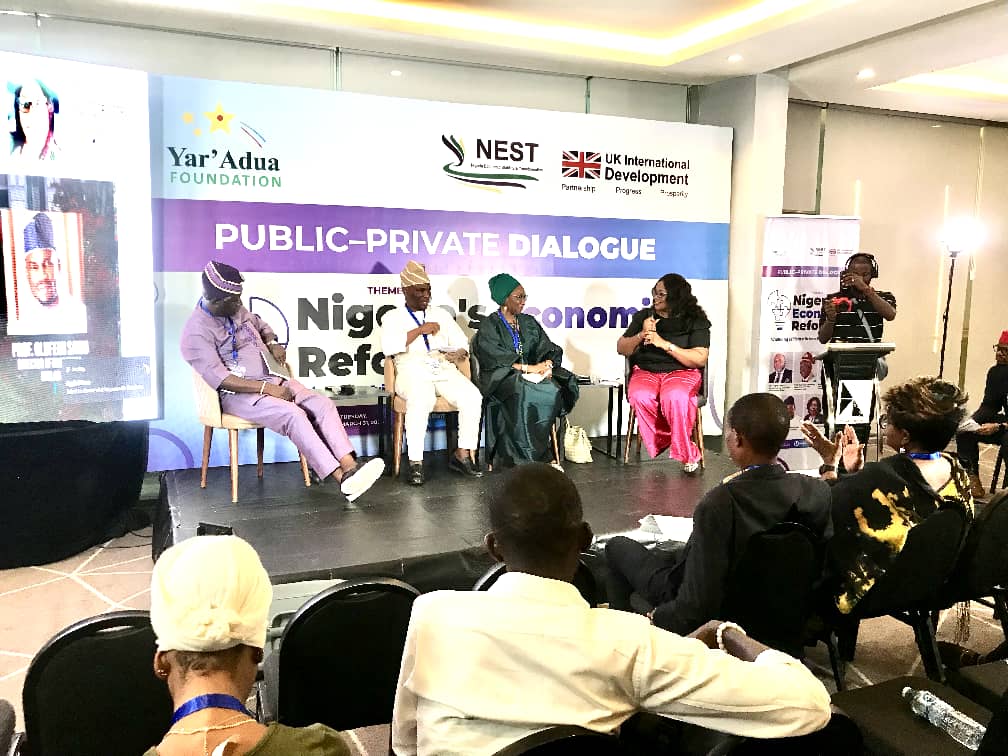 Networking Lunch: Informal Deals, Formal Impact
Following Dr. Fasua’s engaging session, attendees broke for a Networking Lunch – a carefully designed opportunity for cross-sectoral relationship building. Several small business owners and fintech startup founders were observed exchanging contact details with development finance representatives, underscoring the dialogue’s practical value beyond rhetoric.
High-Level Panel: Converting Dialogue to Policy Action
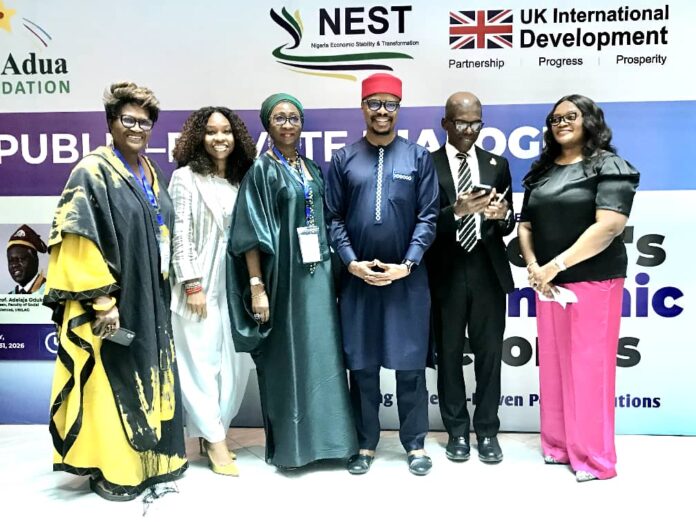
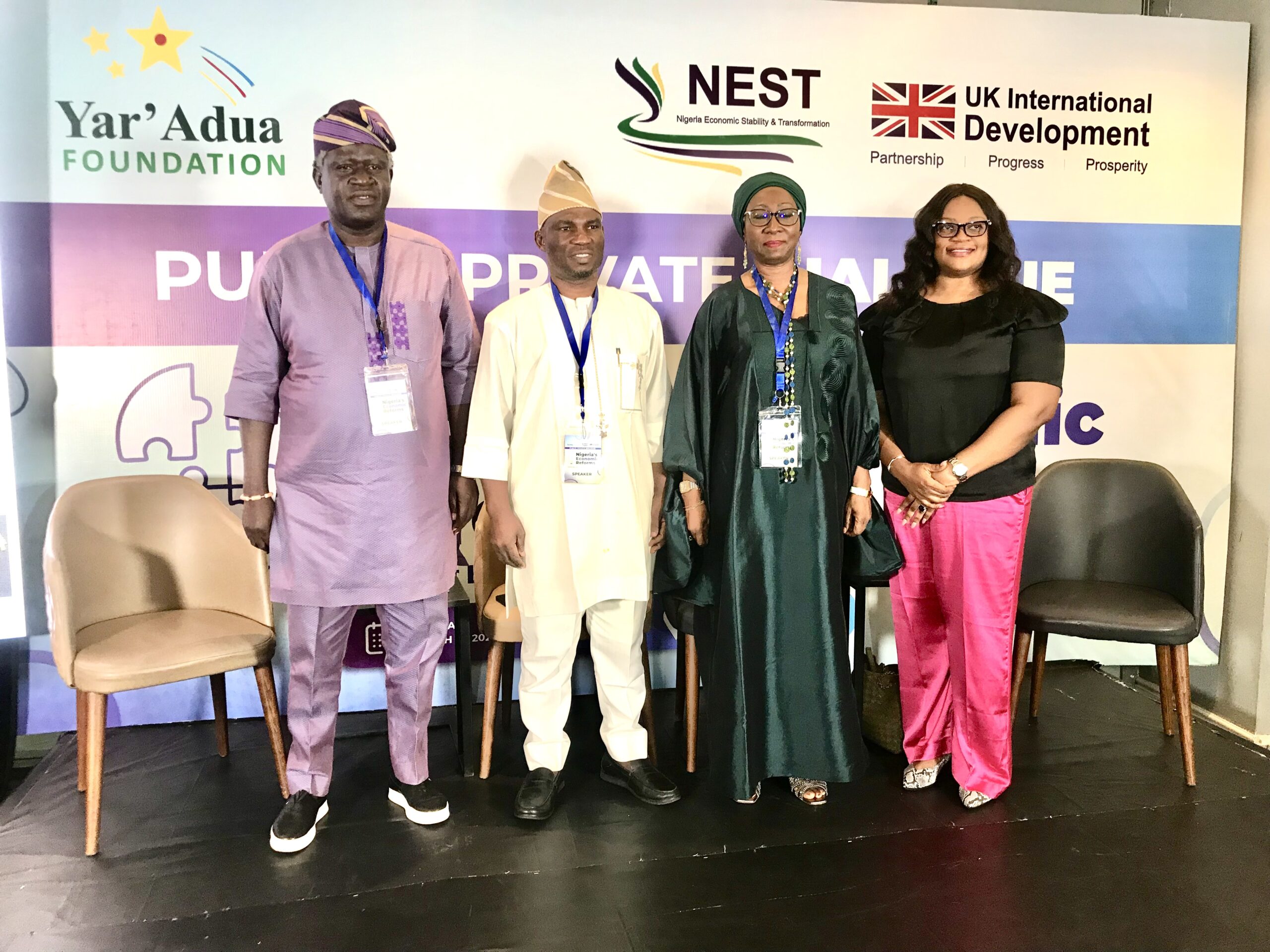
The day’s most substantive session was the High-Level Panel: Converting Dialogue to Policy Action, featuring a distinguished lineup:
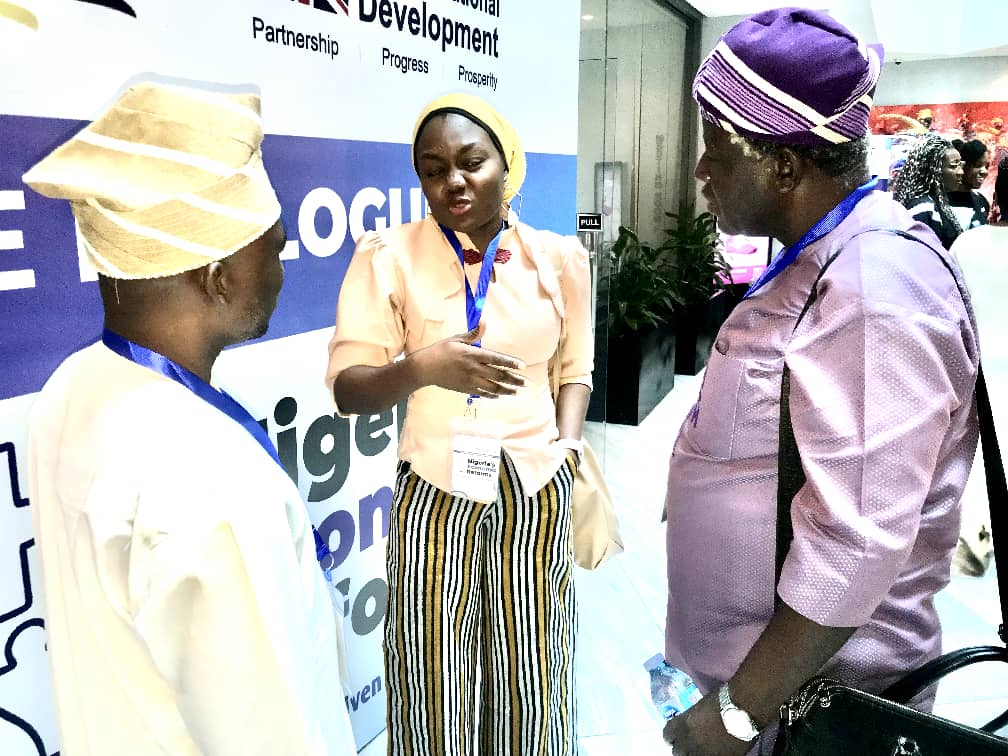
– Prof. Adelaja Odutola Odukoya – Professor of Companies Political Economy; Dean, Faculty of Social Sciences, University of Lagos (UNILAG)
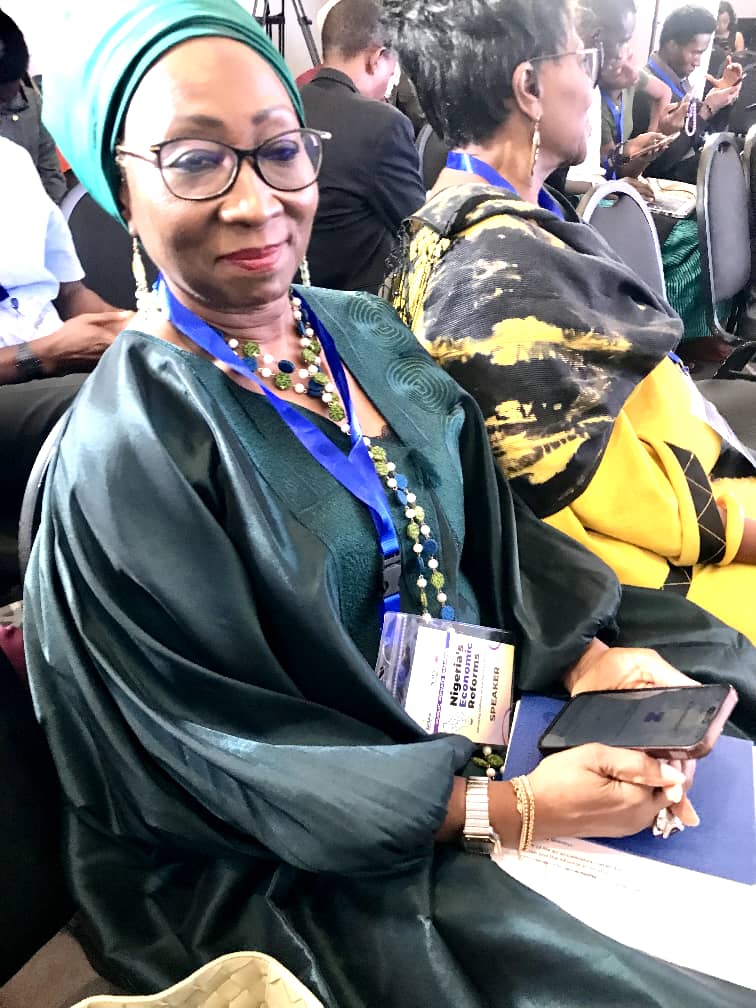
– Mrs. Amina Oyagbola– Founder and Chairperson, Women In Successful Careers (WISCAR)
– Prof. Olufemi Saibu – Director of Economics, UNILAG
The session was moderated by Dr. Chinyere Alumona, Director of the Lagos Chamber of Commerce and Industry (LCCI).
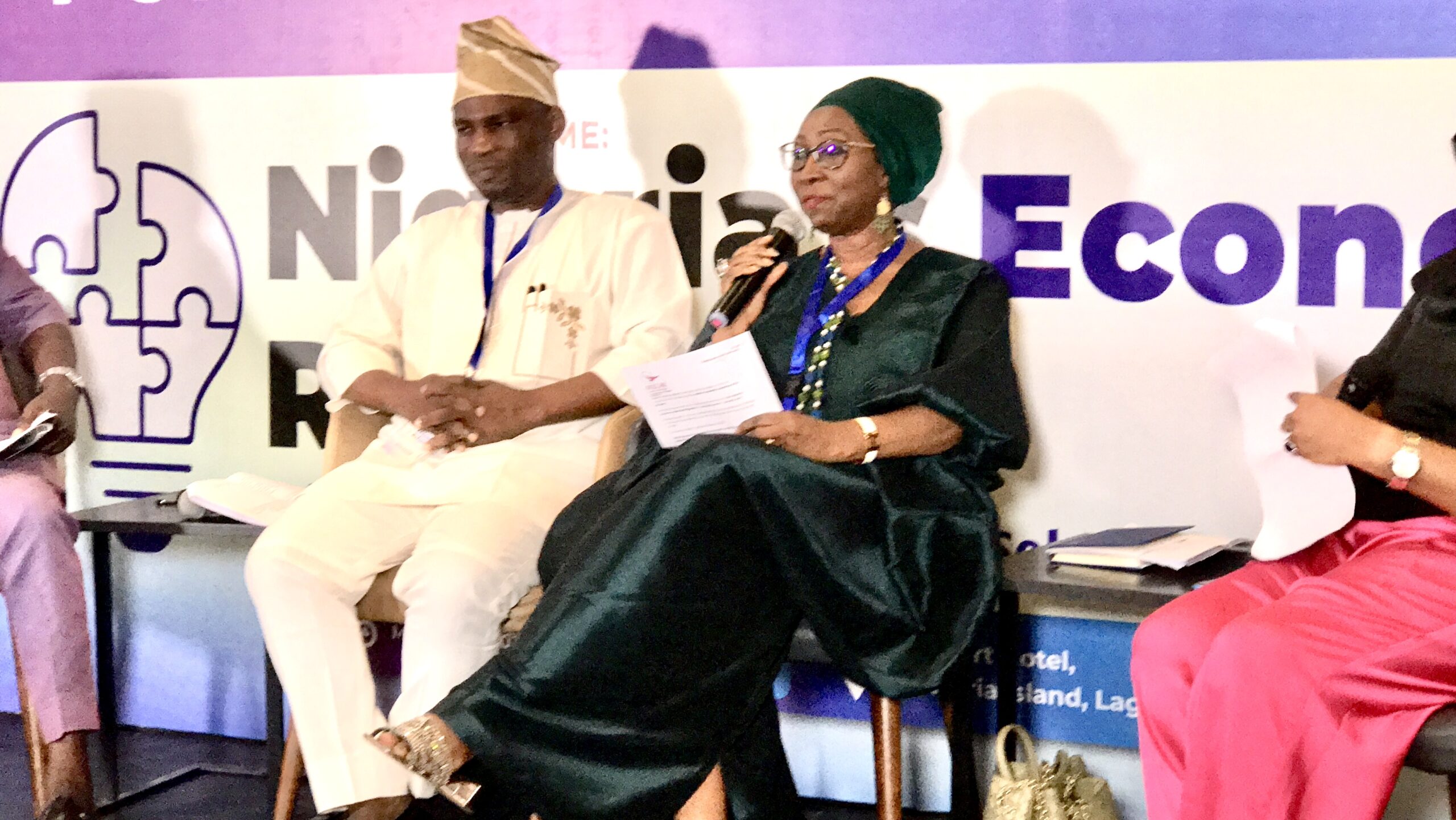 Mrs. Amina Oyagbola: The Inclusion Imperative
DASCENARIO reports that Oyagbola delivered one of the most compelling interventions of the day, drawing from decades of corporate and leadership experience.
“Stakeholder engagement cannot be an afterthought – it must be built into the architecture of every reform,” she said. “Too often, policies are designed in Abuja boardrooms and imposed on Lagos markets. That model has failed. We need co-creation, not imposition.”
Researched Solution: A 2025 study by the Overseas Development Institute (ODI) found that policy initiatives in sub-Saharan Africa that incorporated structured stakeholder engagement from design through implementation were 2.7 times more likely to achieve their stated objectives. Mrs. Oyagbola’s call aligns with this evidence.
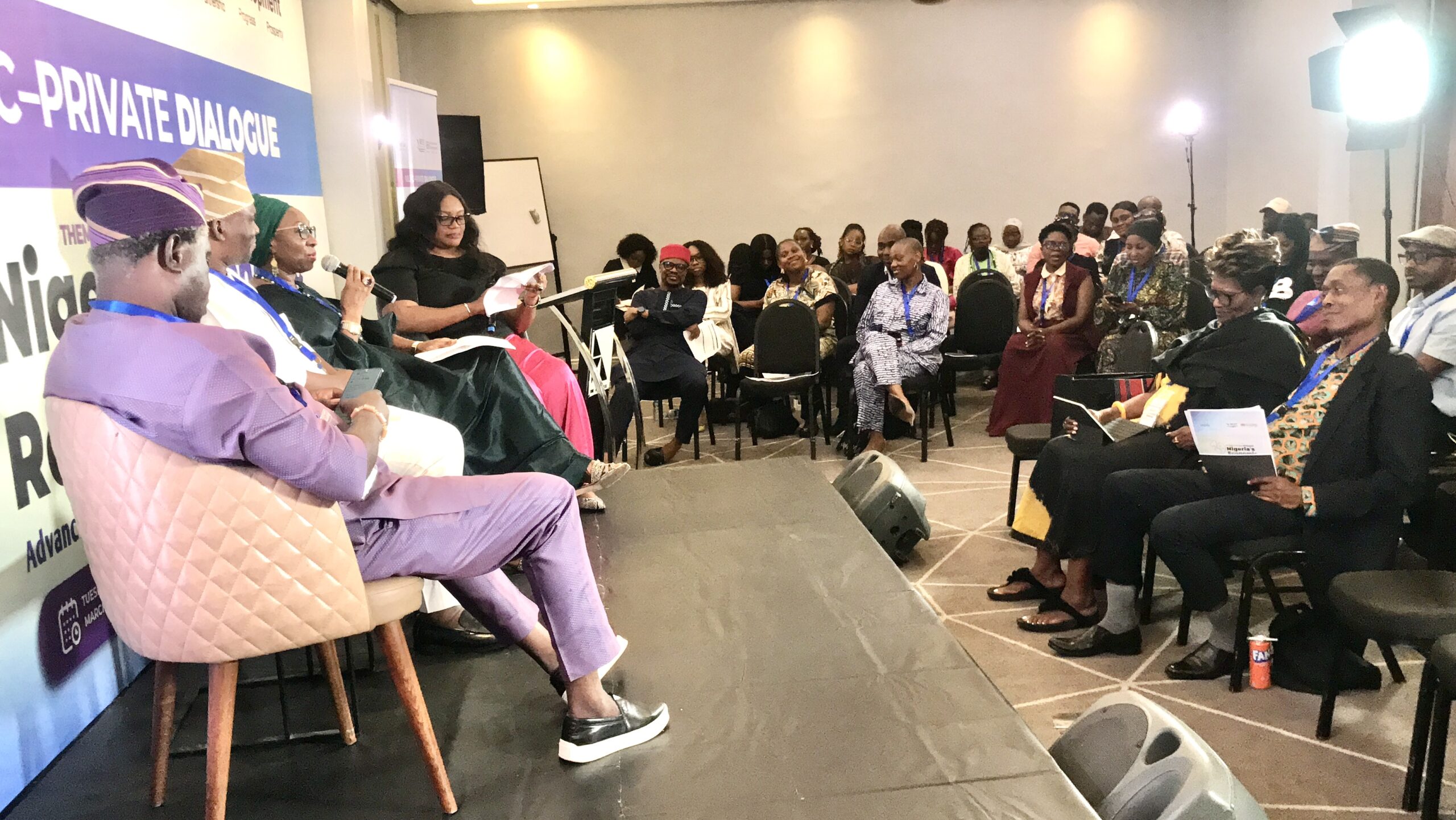 Prof. Adelaja Odukoya: A Scathing Indictment
In remarks that drew audible reactions from the audience, Prof. Odukoya did not mince words.
“We are witnessing not just poverty but economic enslavement,” he declared. “The social oppression of the Nigerian people under the weight of these reforms is unacceptable. When citizens cannot afford three meals a day, when a loaf of bread costs what a week’s wages used to buy – we have a moral crisis, not just an economic one.”
The analysis is unusually strong for a university dean speaking at a policy dialogue. It reflects a growing frustration among academics and civil society that the human cost of reforms is being downplayed. While Dr. Fasua earlier acknowledged “pain,” Prof. Odukoya insisted that pain has crossed into suffering, and suffering demands an urgent policy response.
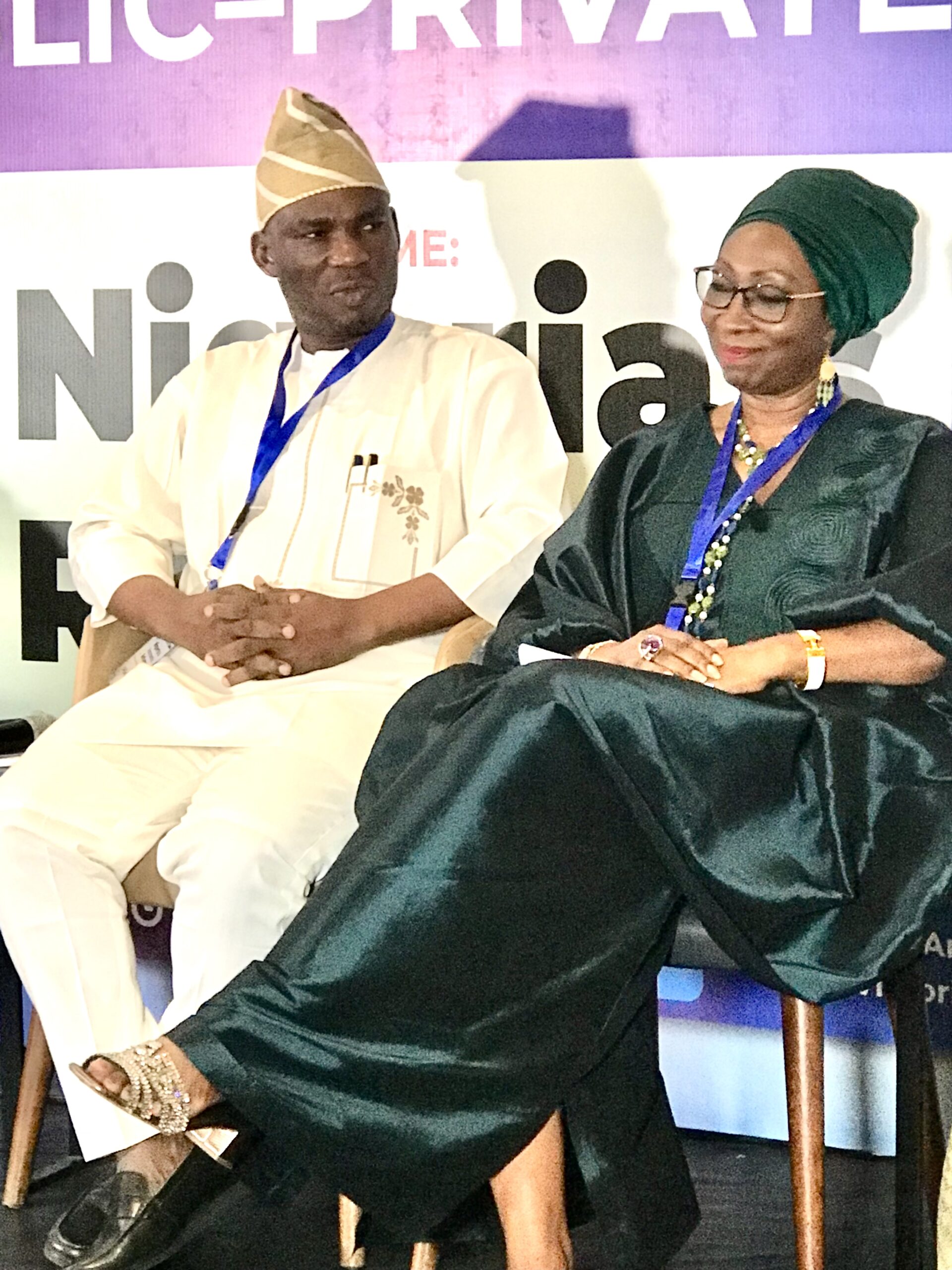 Prof. Olufemi Saibu: The Technical Dissection
Prof. Saibu took a more analytical approach, dissecting the technical mechanics of reform implementation.
“Let me give you a specific example,” he said. “Government funds are allocated for mass empowerment programmes – micro-enterprise grants, agricultural support, skills training. But by the time these funds pass through layers of contractors, agents, and intermediaries, a significant portion has been lost to fraudulent levies and illegal deductions.”
He paused for effect.
“Some high-ranking officials are complicit in this racket. They enrich themselves dishonestly while the intended beneficiaries – ordinary Nigerians – receive a fraction of what they are owed. This is not a leak; this is a heist.”
Researched Solution: Transparency International’s Global Corruption Barometer (2025)* ranked Nigeria 145th out of 180 countries on perceived corruption. However, digital disbursement platforms like the Government Electronic Payment System (GEPs) – successfully piloted in Lagos and Kaduna – have reduced leakage by up to 67% according to the National Bureau of Statistics (NBS). Scaling such systems nationwide was a recurring recommendation from panelists.
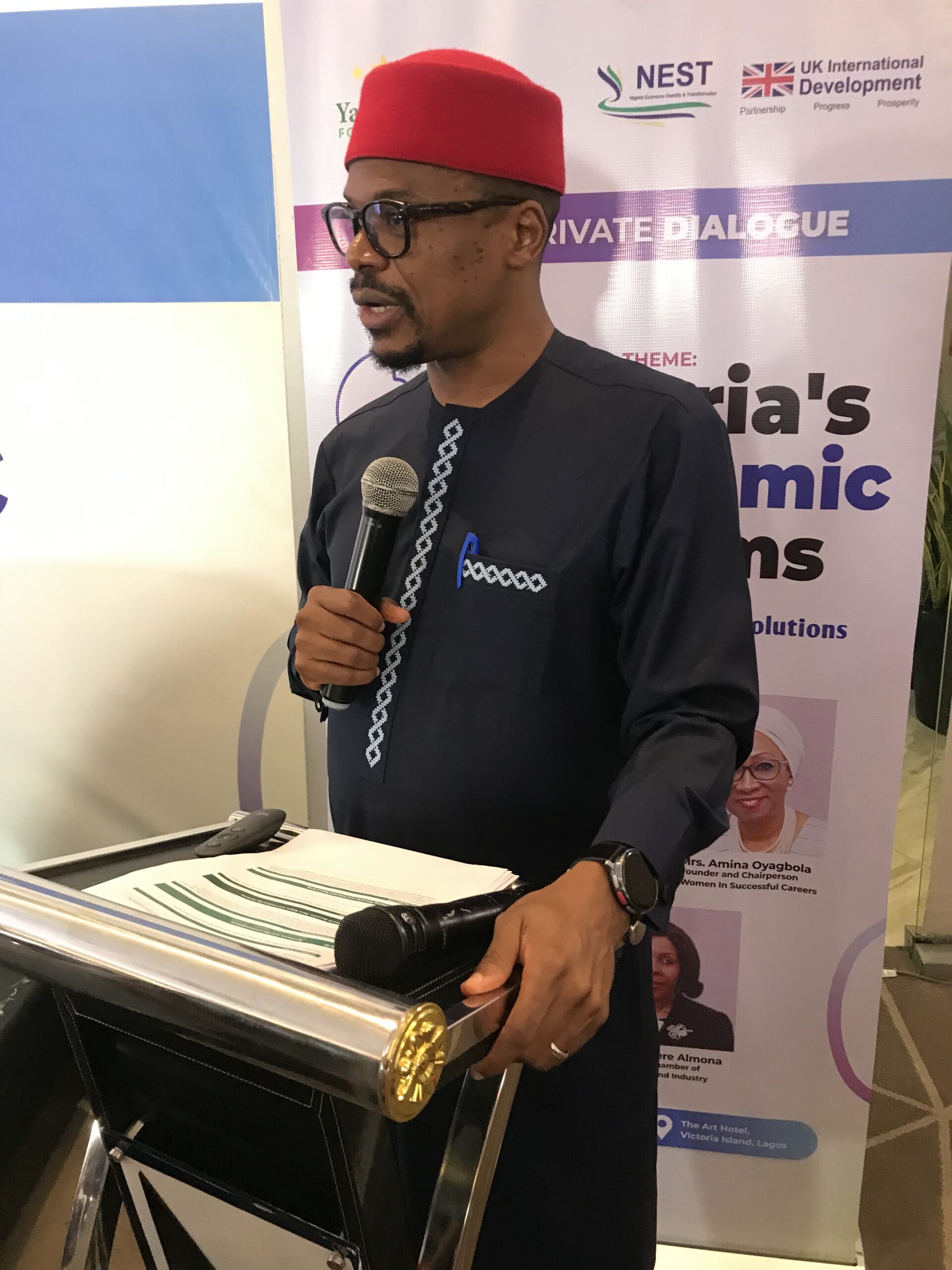 Dialogue Excerpt – Panel Exchange:
Audience Question: “Professor Saibu, what is the single most effective solution to this disbursement fraud?”
Prof. Saibu: “Direct digital transfers to verified beneficiaries, bypassing intermediaries entirely. The technology exists. The political will to implement it – that is what is missing.”
Mrs. Oyagbola: “And I would add independent, real-time audit trails. When every kobo can be tracked, those who would steal think twice.”
Prof. Odukoya: “But let us not pretend corruption is only at the agent level. The culture starts at the top. Until leaders are held accountable – genuinely, not rhetorically – nothing will change.”
Synthesis and Recommendation: The Mentimetre Innovation
One of the most innovative segments of the dialogue was the Synthesis and Recommendation session, conducted via Mentimetre – an audience response platform.
Attendees scanned an onscreen QR code and registered their opinions on the economic reforms in real time. This data was collated instantly, providing organisers with a rich dataset of stakeholder sentiment.
Key Findings from the Mentimetre Poll (as displayed on screen):
– 68% of attendees agreed that reforms are “directionally correct but poorly communicated”
– 72% said stakeholder engagement remains “inadequate”
– 55% expressed “low confidence” that recommendations from the dialogue would translate into policy action
– 81% supported the creation of a permanent public-private dialogue mechanism
Analysis: The Mentimetre results reveal a striking paradox: most stakeholders support the substance of the reforms but distrust the process of implementation. This gap between policy direction and public confidence is precisely what the Yar’Adua Foundation and NEST seek to bridge.
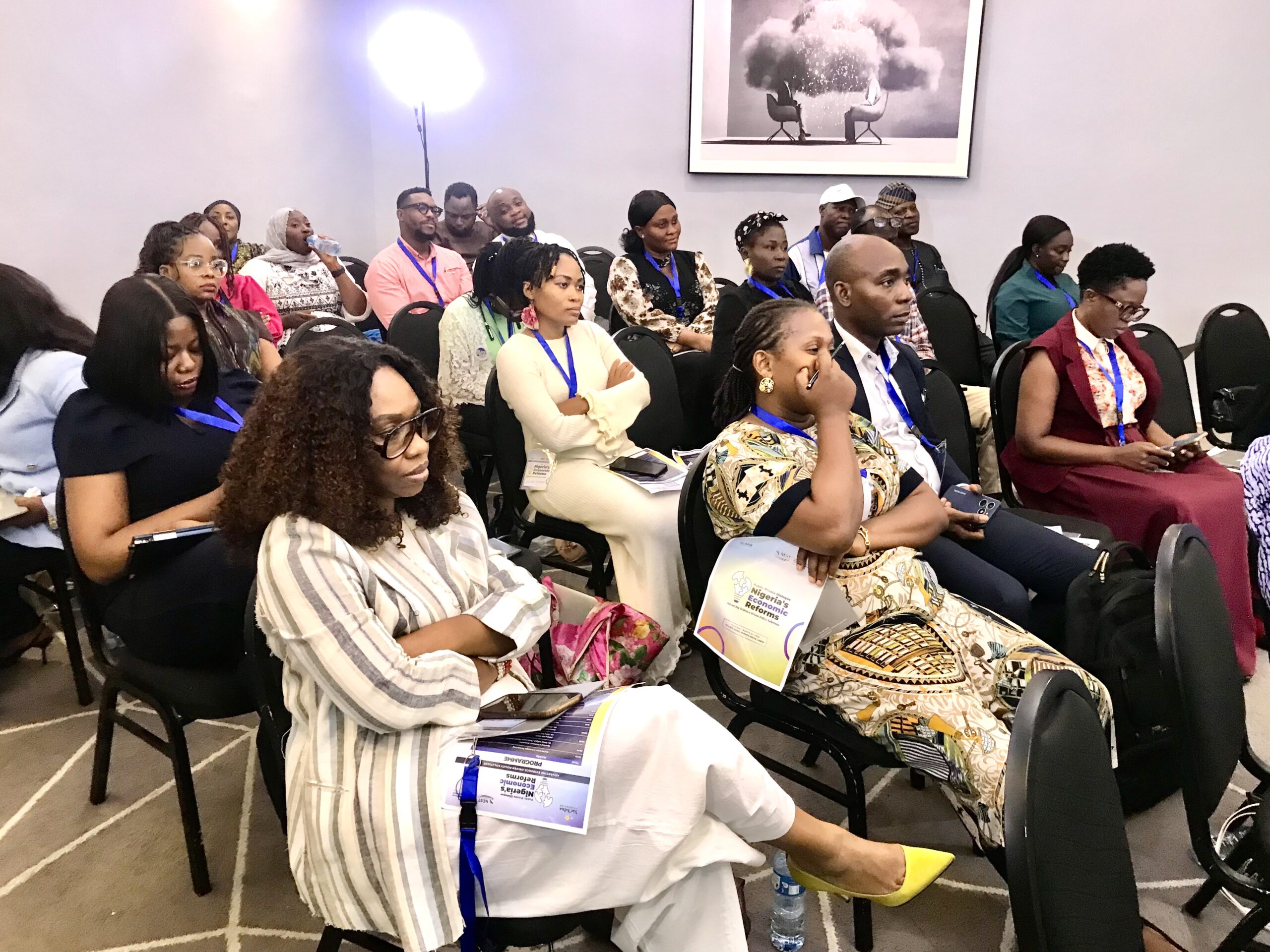 Commitment Session: Next Steps and Follow-Up Actions
The dialogue concluded with a Commitment Session, where organisers outlined concrete next steps:
1. Formation of a Technical Working Group to refine the dialogue’s recommendations
2. Publication of a White Paper distilling insights from all sessions
3. Quarterly Review Forums to track implementation progress
4. Submission of the Mentimetre Data to relevant government agencies, including the Ministry of Budget and Economic Planning
Closing: A Scrumptious Buffet and a Sense of Urgency
As the formal proceedings ended, attendees were invited to a scrumptious buffet– a well-deserved conclusion to a day of intense deliberation.
But the mood was not merely celebratory. If anything, the dialogue left participants with a heightened sense of urgency. Nigeria’s economic reforms are underway, but their success depends not on technocratic design alone but on legitimacy, transparency, and genuine inclusion.
As one attendee – a small business owner from Ikorodu – put it during the networking lunch:
“We have had enough dialogues. We need action. My business is surviving, not thriving. When will I feel these reforms in my pocket?”
That question – unanswered but not unacknowledged – lingered in the air as the buffet was declared open.
 Editor’s Note: This report is based on proceedings of the Public-Private Dialogue: Nigeria’s Economic Reforms, hosted by the Yar’Adua Foundation, NEST, and UK International Development in Lagos, 2026. Direct quotes are attributed where captured. Analysis and researched solutions are original to this publication.